Subscribe
Headliners

Alpha roars, Teletubbies & ‘Boots’: How Johnnie Burn crafted the terrifying soundscape of 28 Years Later

The writing was on the wall, literally, in 2002’s seminal ‘zombie’ film 28 Days Later: The end was extremely fucking nigh. But what happens after the end is nigh? 28 Years Later sound designer, Johnnie Burn, delves into his sonic choices for the highly anticipated return of the living dead.

Warning! This article is riddled with spoilers…

Picking up the post-apocalyptic story almost 30 years later, producer and director Danny Boyle and writer Alex Garland teamed up once more for 28 Years Later to explore how the UK is fairing almost three decades after a highly contagious and deadly rage virus spread rapidly from person to person, bringing out the worst base instincts in the infected and the uninfected alike, and causing a complete breakdown of society.

Regarded as one of the best zombie films of all time (although the infected are technically not zombies, Boyle has always maintained), 28 Days Later was a huge box office success and immediately revived the zombie genre – and evolved it. Gone were the lumbering, vacant-eyed reanimated corpses of horror past. In their place came ‘the infected’: fast-moving, feral, and fuelled by a primal rage that spreads like wildfire through a single drop of blood. And the sounds they made are hard to forget – all guttural chokes and spraying blood, set against frantic cuts and flailing limbs.

It’s hard to recall a time when zombie films weren’t all the rage, but after 28 Days Later came Shaun of the Dead, I Am Legend, Planet Terror, Zombieland, World War Z, The Walking Dead, Train To Busan, to name only a handful, while the genre is still a hit with audiences 20-odd years on, with The Last Of Us season three confirmed to air in 2027. The team knew the 2002 film would be a tough act to follow.

“I think 28 Days Later was the seminal zombie film, wasn't it?” agrees Burn, speaking to Headliner from his Brighton studio. “I would wager that pretty much every horror film that's come after it has links to that, and there was some truly horrific – in the right way – sound design within that.”
We were very aware of the love that people have for 28 Days Later and the responsibility to honour that.

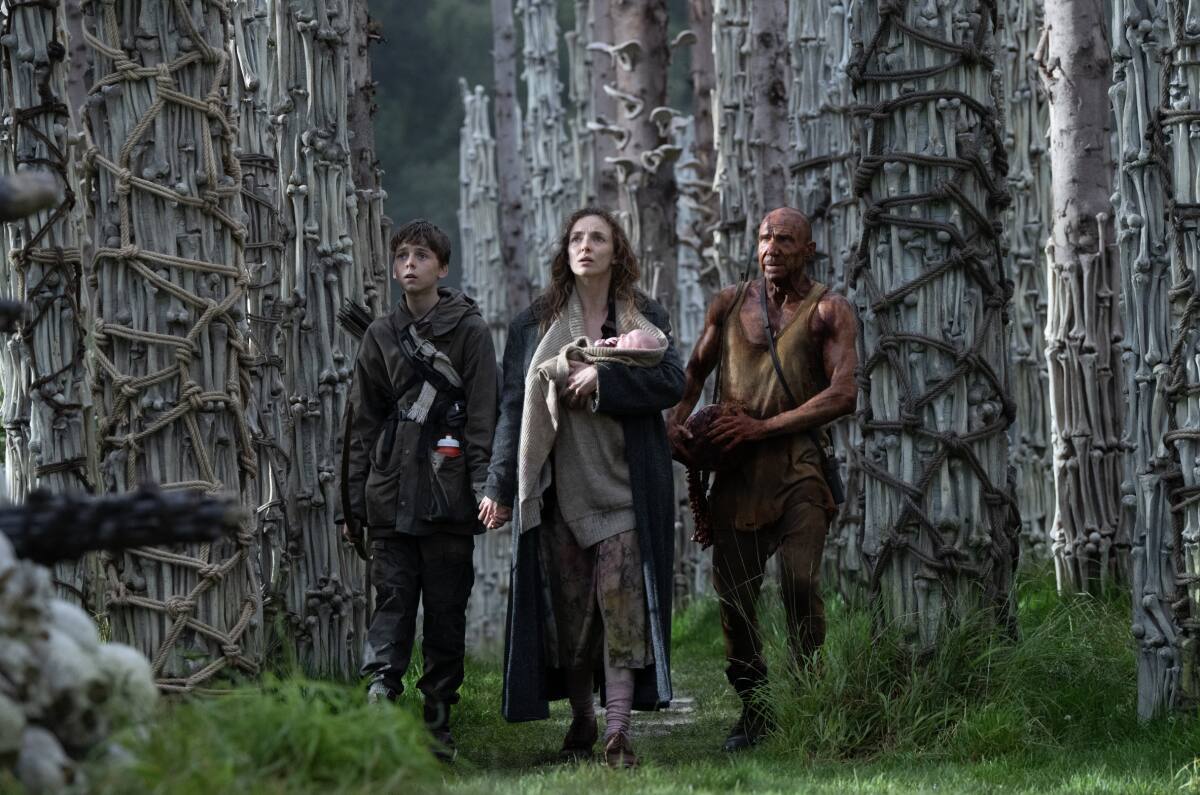
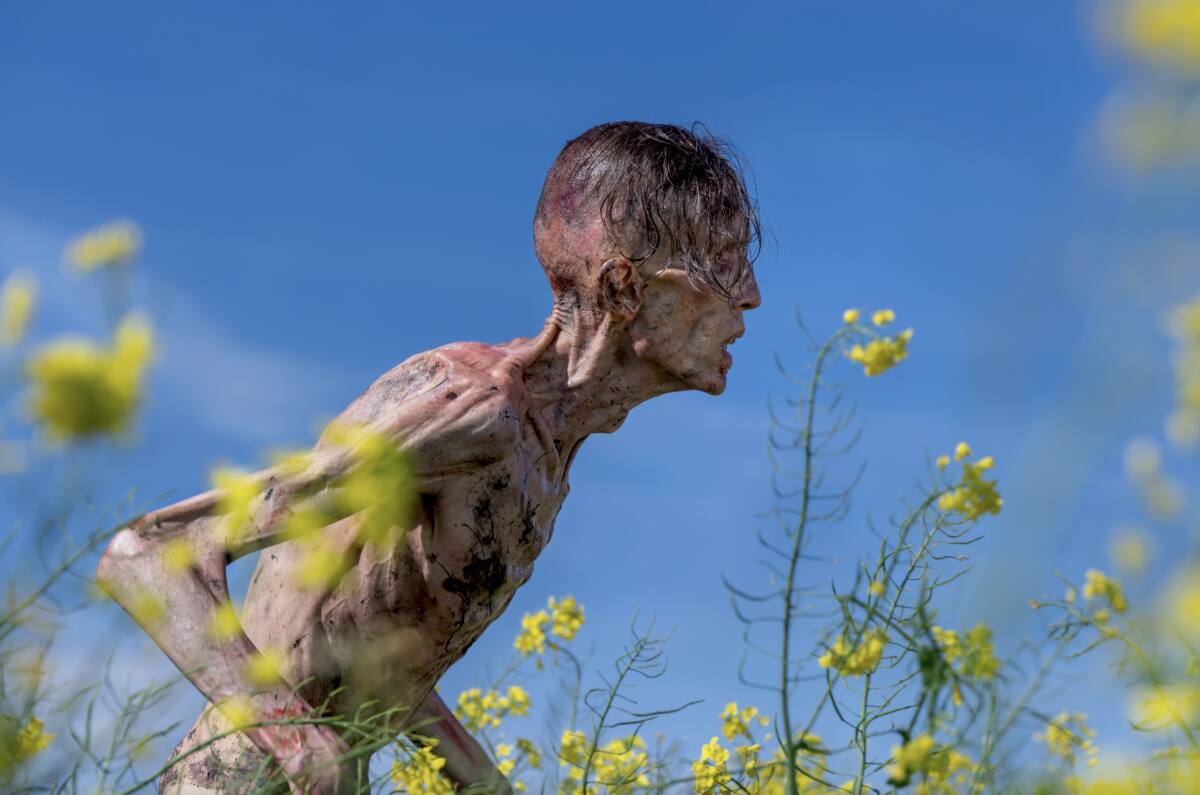
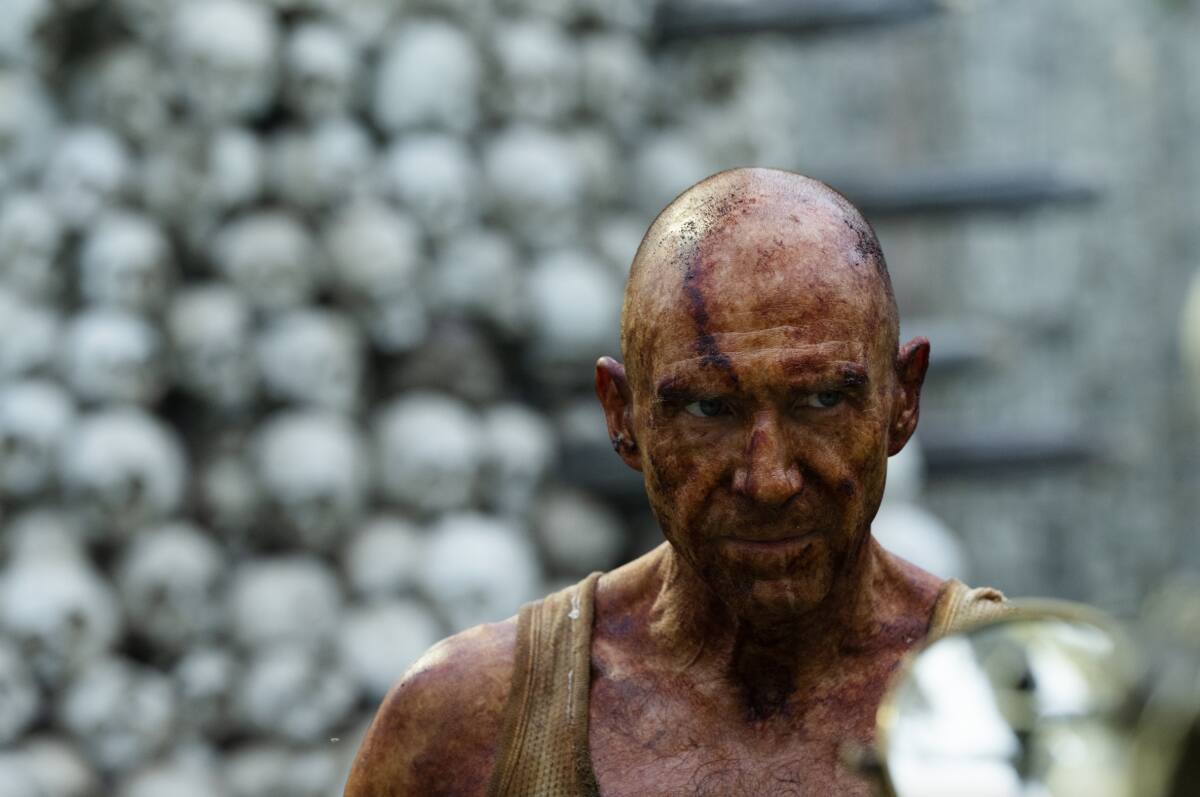
28 Years Later follows a group of survivors who live on a small island, separated from the UK mainland by a fortified causeway. Meanwhile, the infected have also survived, and in some cases, mutated. Some of the grossly bloated infected crawl laboriously on their bellies through the English countryside, while others – nimble packs led by Alphas – have evolved into mutated variants who are larger, stronger, and, unfortunately for protagonists Jamie [Aaron Taylor-Johnson], his unwell wife, Isla [Jodie Comer], and their 12-year-old son, Spike [Alfie Williams], more intelligent.

Boyle took a risk with the soundtrack in 28 Years Later, employing the talents of Scottish progressive hip hop group Young Fathers – who had never scored a film before – over playing it safe with John Murphy, who scored the first film so memorably (the establishing shots of an eerily empty London against his anxiety-inducing lo-fi score made the scene truly horrifying). 

Boyle wanted the landscape to feel different this time around, too, and was in a safe pair of hands in Burn’s when seeking a fresh take on the film’s highly anticipated follow-up, having recently won an Oscar in 2024 for Best Sound for The Zone of Interest.

“Danny's incredibly open-minded and very forward thinking,” says Burn of their initial discussions on the outline for the sound palette, almost 30 years on. 

“We were all very aware of the love that people have for 28 Days Later and the responsibility to honour that and to deliver a commensurate follow-on. And what a creative mind Danny has! He was very clear that one was not to feel constrained in any way, and to read the script and come up with any ideas that may deviate from the legacy of the original. 

"So we were thinking about what Britain had become 28 years later and working with that as a wholly new concept. Basically, Danny said, ‘Do what you like!’” he grins.

We went to some lengths to blend in animal sounds like pig squeals, lambs and other deeper, bellowing, guttural sounds.

The Alphas

28 Years Later carries almost three decades' worth of fictional history and trauma with it, while also answering the question: What if Jason Momoa got infected? Burn uses the intelligent and physically-enhanced Alphas as an example of a way of acknowledging the past, while moving the film sonically into the present day:

“The new breed of Alphas has reacted to the virus itself,” he explains. “It’s rearranged their DNA, so these are much stronger and are a different-sounding beast to the original ones, but the performances from the cast playing the infected were very much related to the original film.”

Most of the infected sounds heard in the film were re-recorded after the shoot in post, but always with close reference to the sounds from the original film. 

“So much of how the sound works is through taking realistic, diegetic sound and trying to make it hyper in some way that is still credible, so that you can pick at people's senses and make them feel very immersed, but shocked at the same time,” Burn explains.

Showing that, infected or not, life indeed finds a way, the Alphas are more imposing specimens when compared to the OG zombies. Burn explains how he reflected those mutations in their vocalisations and the sound of their movements by using a combination of human sounds, animals, and technology, with a little help from a heavy metal vocalist.

“A lot of it is achieved simply by pitch,” he reveals, “because they are deeper and bigger physical specimens. So there's more of a roar to the Alpha, and that's a very interesting area because you react viscerally when you're hearing someone screaming at 100 decibels in a theatre. The Alphas are more advanced cerebrally, so there's more of a sense of communication from them. 

"So we played around with getting to the point of almost words; almost like a language coming through. It's funny, actually, because there are a few key infected sounds in the film that were quite difficult to nail,” he admits, revealing that any friend who visited his house was invited to audition their own Alpha roar.

“The key Alpha roar when we first meet [main Alpha] Samson used my voice as a placeholder for a considerable period. When we were doing the final mix at Halo, a mixing room in London, the mix engineer revealed that he is a death metal vocalist, so we said, ‘Well, you can't just land that on us without having a go!’ 

"We got a microphone out, and his roar was so perfect that it's the one we hear in the film predominantly when we see Samson. I hope that the metal community enjoys the knowledge that his skills are being put to good use,” he laughs.

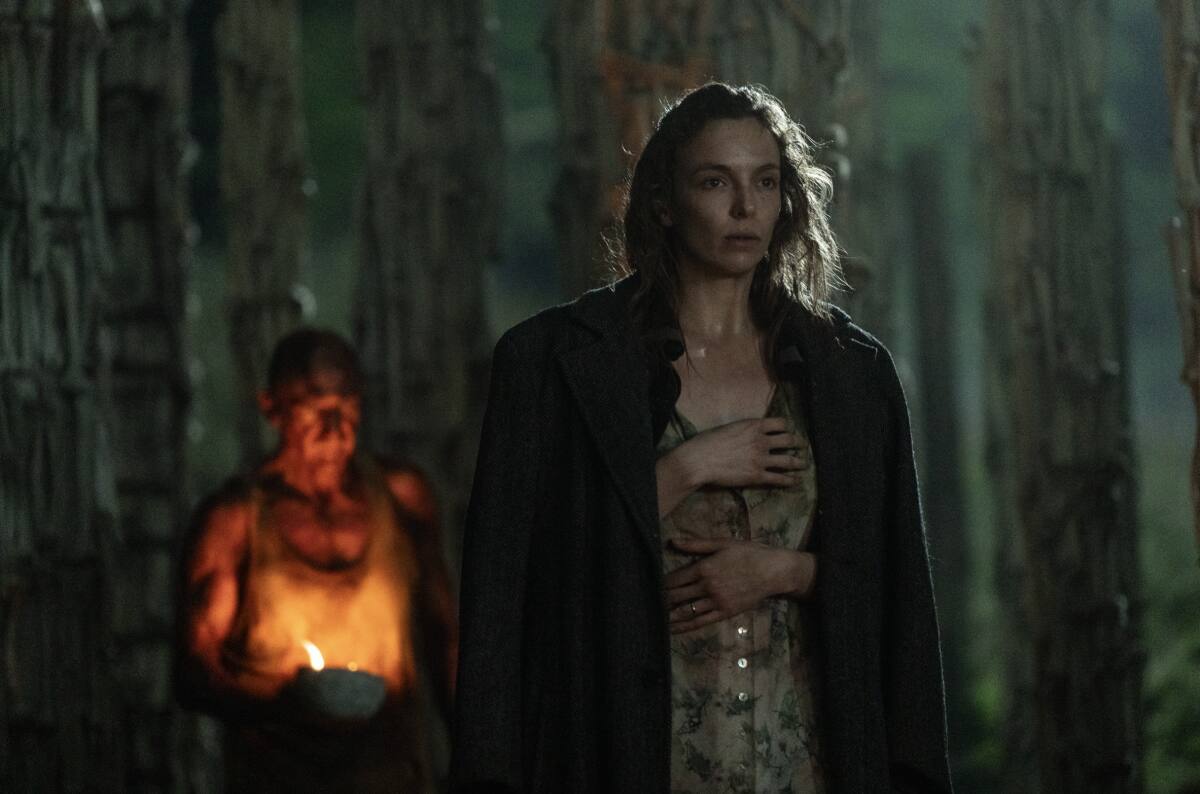
In another scene that demonstrates how the infected have adapted, Isla helps a pregnant infected woman give birth in a long-since-abandoned train carriage. The sound design for that involved a combination of pitch, modulation and vibrato manipulation of animal sounds:

“We wanted to obscure the sound and make it more mysterious than specifically human,” Burn explains. “We went to some lengths to blend in animal sounds like pig squeals, lambs and other deeper, bellowing, guttural sounds to obfuscate the idea of what it is that you're hearing. I think that the more mystery there is about it, the less you understand what you're hearing, and the more unsettling it is.”

Much the same as in fellow post-apocalyptic horror film, A Quiet Place, the newborn baby is conveniently silent, as the slightest noise in either film would see the protagonists hunted down immediately. That wouldn’t do.

“Yeah, we came to a decision quite early on that the baby would be silent,” he smiles. “I mean, it was a very chill baby. It did cry somewhat, but then it hadn't had much food for a few days, so I think it was probably rather tired…” he reasons good-naturedly. 

“A baby’s cry is about 1 kHz, and it’s one of the sounds that the human ear hears the best. Once you start putting that into a film, it's very hard to hear any dialogue through that!”

The Hill Chase

You can hear the screams coming from behind you; hopefully that makes you feel pretty unwell.

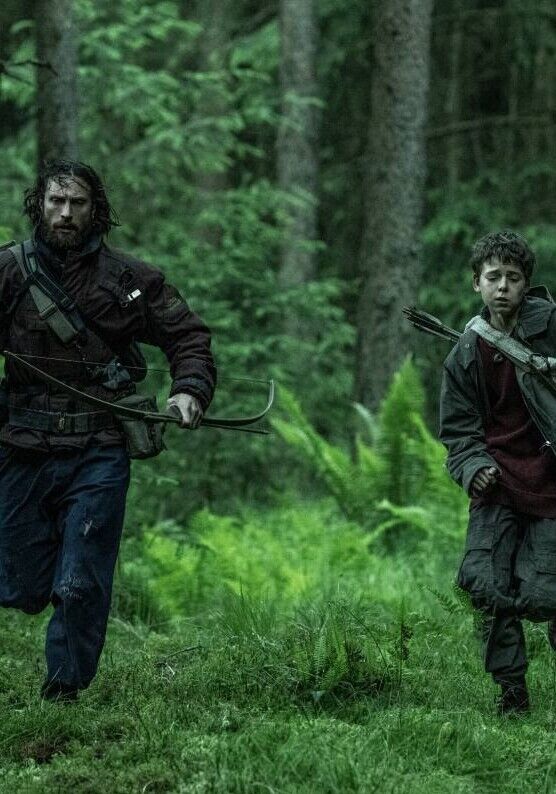
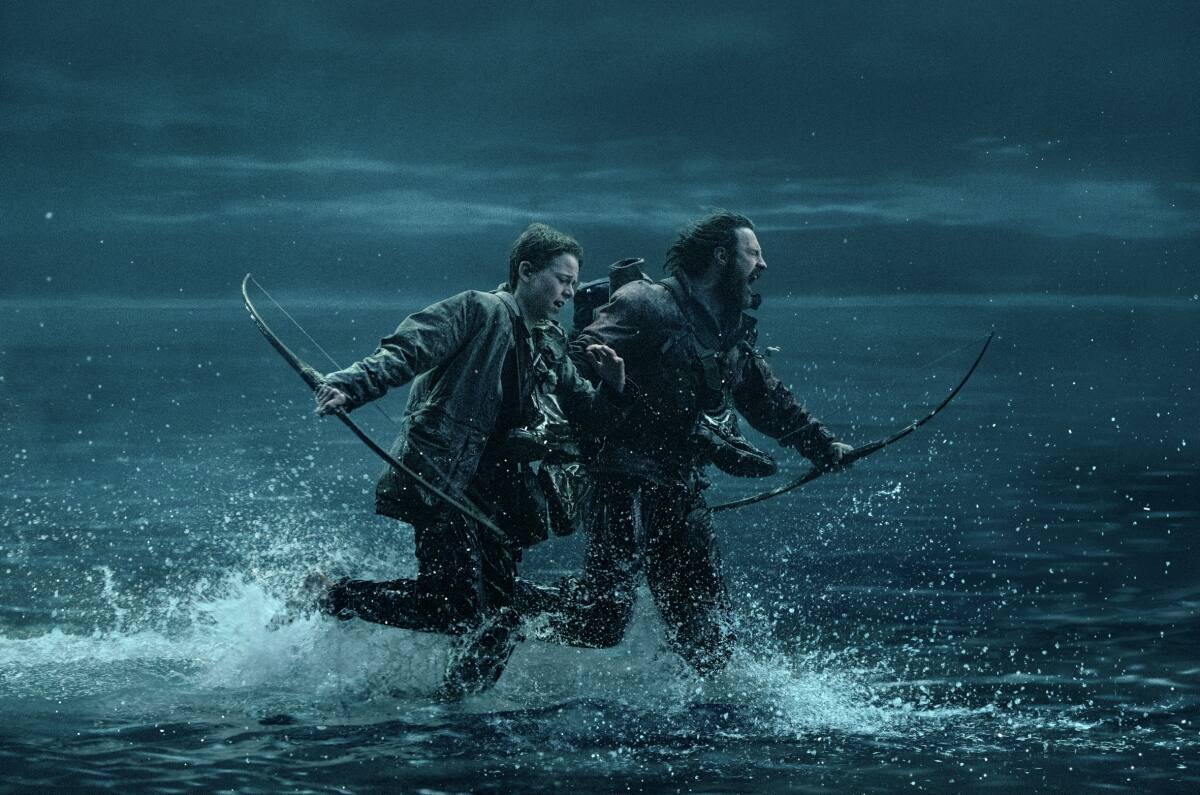
The first major zombie attack sees a pack of infected barreling downhill towards Jamie and Spike, who, lulled into a false sense of security by picking off a few slow-moving specimens as part of a coming-of-age hunting ritual, are set upon in a frenzied sequence. Burn explains how he constructed that moment sonically to convey not just their speed, but overwhelming force and unpredictability.

“First of all, you're lulled in because Spike and Jamie come out of the woods, and they walk across a meadow," Burn says, setting the scene. "Nature is really in full swing, and when we are in the forest, there's an awful lot of birds in a huge density forming the soundscape. 

"When they come out into the meadow, it all falls quite silent, which makes you lean in and listen. Suddenly, on the hill, a few 100 meters away, they hear the faint cry of an infected that isn't too threatening at first, because it's the deranged infected that are not particularly worrisome. All of a sudden, there's an incredibly loud roar that hits you in the face.” Cue the death metal vocalist.

Here, Boyle had an idea for the sound design: running water. “As if it's just a flood in full swing,” Burn recalls of Boyle’s note. “So that, plus the footsteps, the cries of the infected, and the score are all starting at the same time, which gives enormous impetus to that moment. 

"The complexities with this scene were because of the huge swinging camera movements, so we could choose to leave the surround sound imaging static, or try to go with it and make people feel a bit more like they're on a roller coaster. Of course, we did that one,” he smiles.

you're on the borderline of not wanting things to be too loud, but they need to be loud enough for the jump scare to work.

“It was all about making sure that everything lived in its own sonic frequency and that the three-dimensional position of the things we're scared of felt right with where the camera was going. You can hear the screams coming from behind you, and hopefully that makes you feel pretty unwell.”

In terms of his involvement with the sound design, Boyle would be updated on Burn’s progress each week, which, like the running water suggestion, often inspired the director to make suggestions:

Danny's a very big ideas guy,” says Burn. “He's not a ‘Let me get into the weeds with you, tell me what that sound is,’ kind of guy. He does a fantastic job as a director and overseer, and then gives you another big idea to go and think about and tackle. He would come in, very excited, every week with a load of new ideas based on what he had heard last time. 

"There could be lots of curveballs, like, ’How about 5,000 deer run past? Let's hear the sound of that!’ It was incredibly exciting working with him because he's not afraid of trying something really radical – even at the last minute – to deliver something more unusual for the audience.”

The more mystery there is and the less you understand what you're hearing, the more unsettling it is.

However, it wasn’t all full-on sound design creating the tension. It was important to consider when to hold back, or when to subtly manipulate natural sounds to make the audience uncomfortable.

Silence is a really powerful tool, because your imagination fills in the gaps,” Burn nods. “And there's an awful lot that you can do with natural sound to give it a tonality that can either carry on what the music was doing in terms of almost holding a note, or become unsettling by becoming discordant.”

He suddenly recalls that for all the outdoor scenes when Spike and Jamie are on their journey onto the mainland, Boyle would say, “More birds, more nature, more animals!”

“We loved this idea that Britain had become overgrown and that in the absence of vehicles and towns, the animals would now have a voice,” Burn says. “When it's quiet, birds sing. There's so much that you can infuse into those natural sounds that can become disconcerting or happy, if you want them to be. 

"One of the most powerful tools was pitching bird calls so that they had a menacing melody to them, or making the wind have a tonality to it, like a musical chord that is doom-laden.”

Boots: Causeway Crossing

Danny showed us the trailer at my place; we all watched this thing, and my mouth was agape.

When the 28 Years Later trailer dropped, the audience was immediately transported back to the early 2000s with a grainy shot of Teletubbies on a boxy TV screen, while sonically, the teaser unlocked a new fear in its audience: a poem. 

The film’s trailers expertly weave Taylor Holmes’ stirring 1915 spoken-word recording of Rudyard Kipling’s poem, Boots amongst snippets of the horrors that will unfold throughout the film. It’s sublimely done. Boyle was so impressed, he requested that the poem be incorporated into a key scene in the film, which sees father and son make the dangerous journey to the mainland across the causeway, towards certain danger.

“That poem is incredible,” nods Burn. “And what an incredible job they did with that trailer! Danny showed it to us at my place, and we all watched this thing, and my mouth was agape. We were like, ‘Holy cow! That's incredible. What a really strong bit of filmmaking'. Danny said, ‘We've got to get that in the film somehow, because it speaks so much about what's happening in that early part of the film and what this community goes through’. 

"John Harris [film editor] did a wonderful job of working Boots into that section of the film, to great effect. It's one of those bits where the sum is greater than or equal to the parts of which it's made.”

One of the most powerful tools was pitching bird calls so that they had a menacing melody to them.

It’s easily one of the film’s standout sequences, made even more unsettling by its military overtones – a chilling echo of 28 Days Later, when Jim [Cillian Murphy] and his fellow survivors hear a prerecorded message on a transistor radio from an army blockade promising sanctuary… and an “answer” to the infection.

Burn explains how the team worked such an aged, sonically fragile recording into the multilayered world of a modern horror film. “When they were mixing the trailer, they sent it over to Danny for approval, and I remember him saying, ‘What's happened to the crackle? You've taken all the hiss out of it, and that's what makes it more credible’. 

"So that went back in because they had used modern noise restoration technology to make it sound super nice, and that didn't fit what we were looking for. So when we integrated it into the film, that's the original recording, unadulterated and without restoration. It brings such nostalgia with it when you hear that crackly old gramophone sound.”

The challenge was making sure that the voice was still heard amongst the vast amount of sound design involved in that sequence. “All the sound design in that part of the film was treated to sound like it belonged to the voice,” Burn points out. 

“That is a moment where you go back in time – there's even footage from 28 Days Later in there – and all of that was high fidelity at the time, but degraded by the time we'd finished with it to make it fit. That is a very complicated part of the mix.”

Bullet-Time

These moments freeze time; we went to track, laying sound on a frame-by-frame basis with immense macro detail.

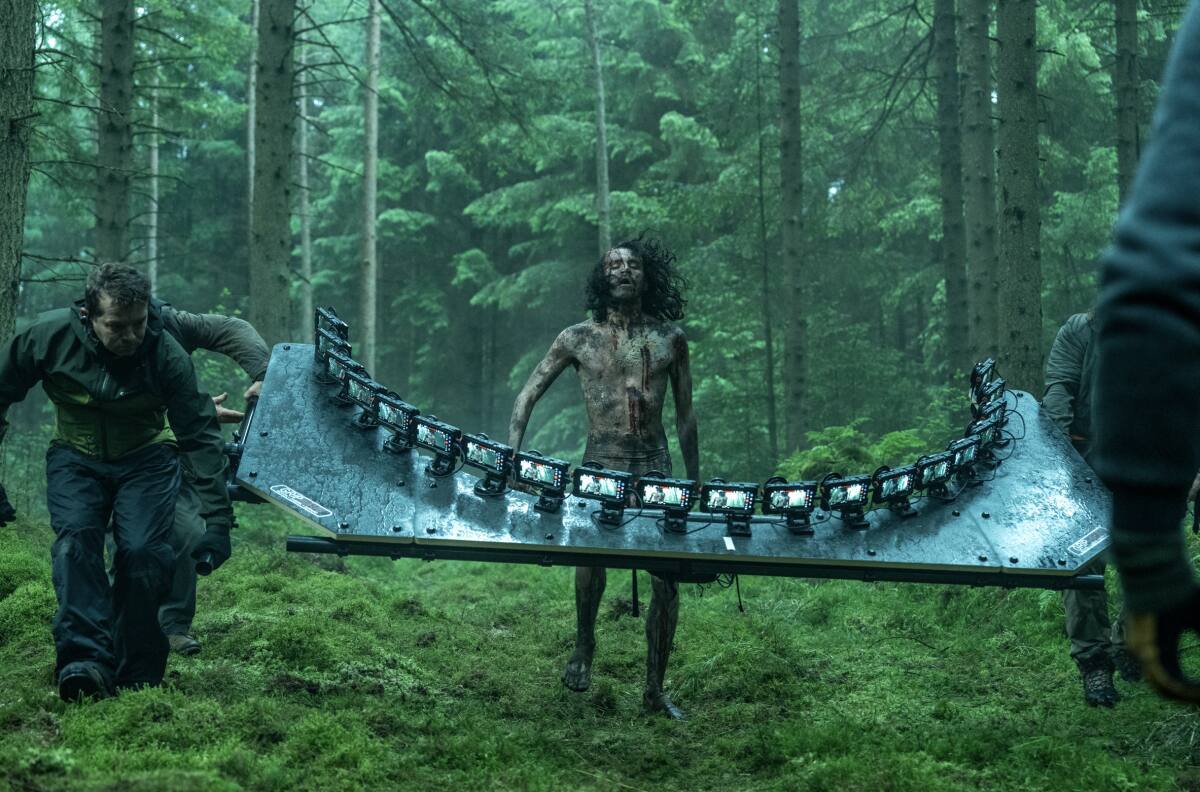
The film was primarily shot using an iPhone 15 Pro Max, in addition to action cameras, drones, and other digital and film cameras. Some shots employed what Boyle calls “a poor man’s bullet-time” effect, created using a custom-built circular rig equipped with anywhere from eight to 20 iPhone cameras. The film looks sick alright – but what about the audio? Burn explains how the sound design reflects the striking, stylised visuals.

“These moments freeze time in a way, so although we didn't slow anything down, we went to track, laying sound on a frame-by-frame basis with immense macro detail. We tended to lose all the background sound and focus very much on what the apex of the camera movement was focused on. We were kind of making it up as we went along, because I've never seen stuff like that before,” he admits. 

“Those moments were more about Foley recording in studios – crunching things and squashing carrots, cabbages, and steak – rather than recording things out in the wild.”

Other times, the viewer suddenly assumes a video game POV when Jamie and Spike are hunting the infected with bows and arrows. “We used a whole series of sounds as if you were playing the game on a PlayStation, and very much heightened it with electronic sweeteners, pings and dings and power-up sounds,” Burn shares. 

“That was how that scene existed for most of the period of production of the film, and it was only at the end when we decided that it didn't quite gel with the rest of the film, so we had to go out and get some more bows and arrows and do some more recordings, firing arrows into cabbages to make that sound right,” which Burn is pleased to say he got to try out himself. 

“One of the reasons why we work in sound is so that we can have a go at things like this! On The Favourite, we got to fire lots of brilliant 200-year-old Blunderbuss guns – it's one of the fun bits.”

28 Days Later was the seminal zombie film. Pretty much every horror film that's come after it has links to that.

That’s not the only time you’ll hear a sound directly created by Burn during the film. In trying to find a connection where likely there is none, (we still don’t know what became of 28 Days Later’s Jim!) Headliner is convinced that in a scene where Isla hallucinates that her father’s hand is on her shoulder, the voice we briefly hear belongs to Cillian Murphy. Burn sets the record straight:

“I would say that is her dad,” he considers. “I never actually discussed it with Danny, in terms of who that person is, but it felt like that's who it was. And when he says, ‘Huh?’ – that's actually my voice.”

The Studio

There were many times in the mix where Danny would say: Turn it up, Johnnie; it's got to be loud’. I’d say: It is very loud!

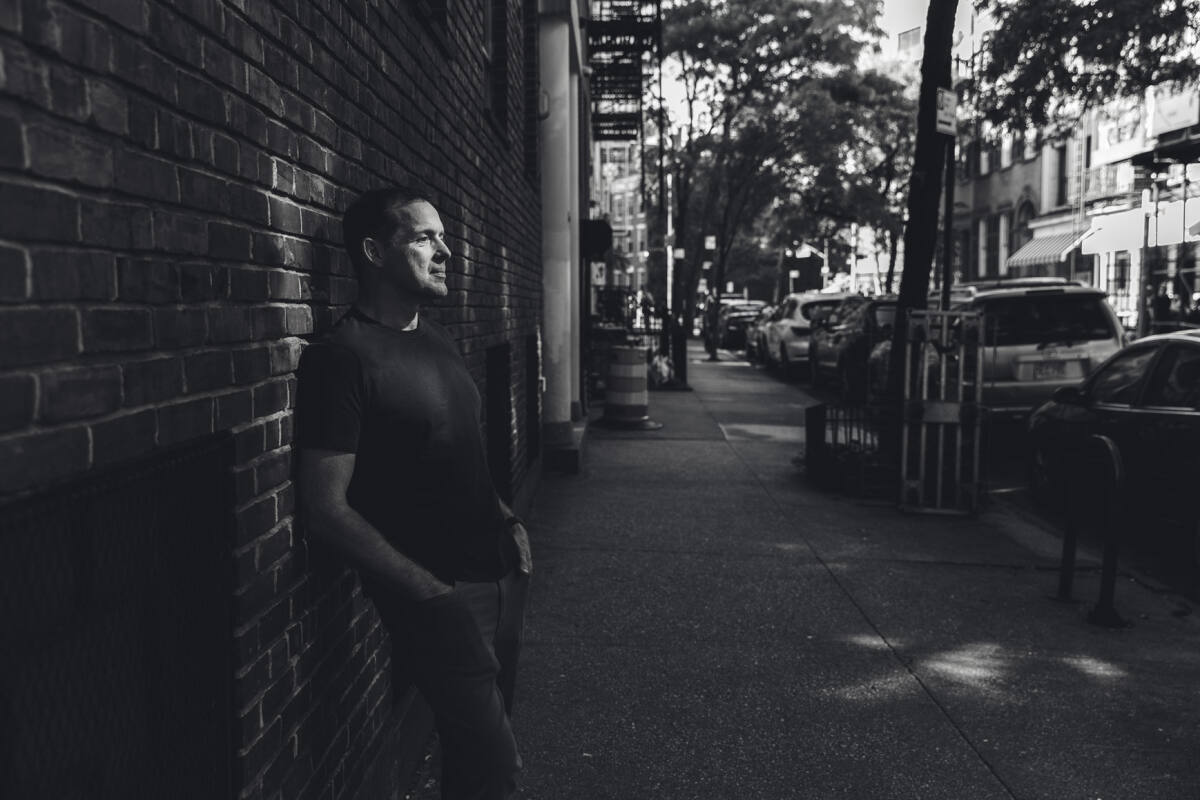
Burn is the founder and chief sound designer at Wave Studios. Founded in 1999, Wave Studios has grown from humble roots and two suites to become the leading light in global audio post-production, sound design, and mixing. 

With 35 instances of Nuendo running across the company’s worldwide network of studios, it is Burn’s choice of creative tool for everything from Dolby Atmos mixing to collaborative working, and when it comes to studio monitors, it’s all Genelec.

Other essential pieces of tech that contributed to the film’s sound design include izotope's RX 11 audio repair toolkit to get the noise floor down and to get clean-sounding bird calls, Sampleson’s Scaper plugin, which can generate hours of soundscapes based on the audio file dropped onto it, a Sanken CSS-5 short stereo microphone for capturing sounds on-location, and a ZOOM H2n Handy Recorder for recording multi channel surround sound ambiences.

Atmos Mix

“Much of my work I do in my home studio in Brighton, and that's a 7.1.4 set-up based on a Genelec monitoring system,” Burn says. 

“I love them because it's a reliable standard. Most of the rooms that I have in London are Genelec as well, so it means that I know how that's going to translate into a mix. They're a nice, bright, and powerful speaker, which is pretty useful when you're editing and mixing stuff. 

"When you get into a film mixing room and you're dealing with horn drivers instead of tweeters, it does give a different sound, but you’ve got rid of all the problems beforehand because of the brightness of what you're listening to, which is where, often, some of the more annoying stuff sits.”

Horror thrives on dynamics, from near silence to explosive chaos. Burn explains how his monitors helped him balance unsettling low-level ambiences with sudden bursts of infected violence for the Atmos mix.

you can pick at people's senses and make them feel very immersed, but shocked at the same time.

“A lot of what upsets you in 28 Years Later is the low tones, and things you're feeling more than particularly hearing in a cinema, and it's hard to find a speaker that faithfully reproduces the low end at a level that's going to translate well to a big room. That's probably the key win for me. 

"A lot of monitoring systems working on the edges of their range of frequency can often be a bit unreliable in the way that they reproduce those frequencies, because a lot of speakers have, down at the bottom of the frequency curve, a little bit of resonance. That will mean that, if you play particular frequencies, they might last a little bit longer, and I'm only talking milliseconds, on some speakers, than you want, and that's not a faithful reproduction of the sound. The Genelecs are very good at not colouring the sound.”

“The biggest win is having the ability to play sounds above you in the Atmos mix,” he furthers. “You can be a lot more robust with your entire immersion. Stanley Kubrick did stuff in mono for years, not because he particularly liked mono, but because he didn't trust the playback systems of different cinemas to faithfully represent what he mixed, but with Atmos, you can be pretty sure that you can place sounds very specifically behind you for jump scares, and know that it will come out at the right volume.”

Burn explains that they had the big Alpha roars start on the centre speaker, and then move throughout the room. “To scare the bejesus out of you,” he laughs. “There were many times in the mix where Danny would say, ‘Turn it up, Johnnie; it's got to be loud’. I’d say, ‘It is very loud!’ 

"Volume is such an enormously powerful tool, and in a movie like 28 Years Later, you're on the borderline of not wanting things to be too loud, but they need to be loud enough for the jump scare to work. That's really only a difference of a couple of decibels, so you have to judge things very carefully.”

*That* Ending

What Danny has made is something that’s so incredibly fresh. I think part of that is to just roll the dice on all sorts of things.

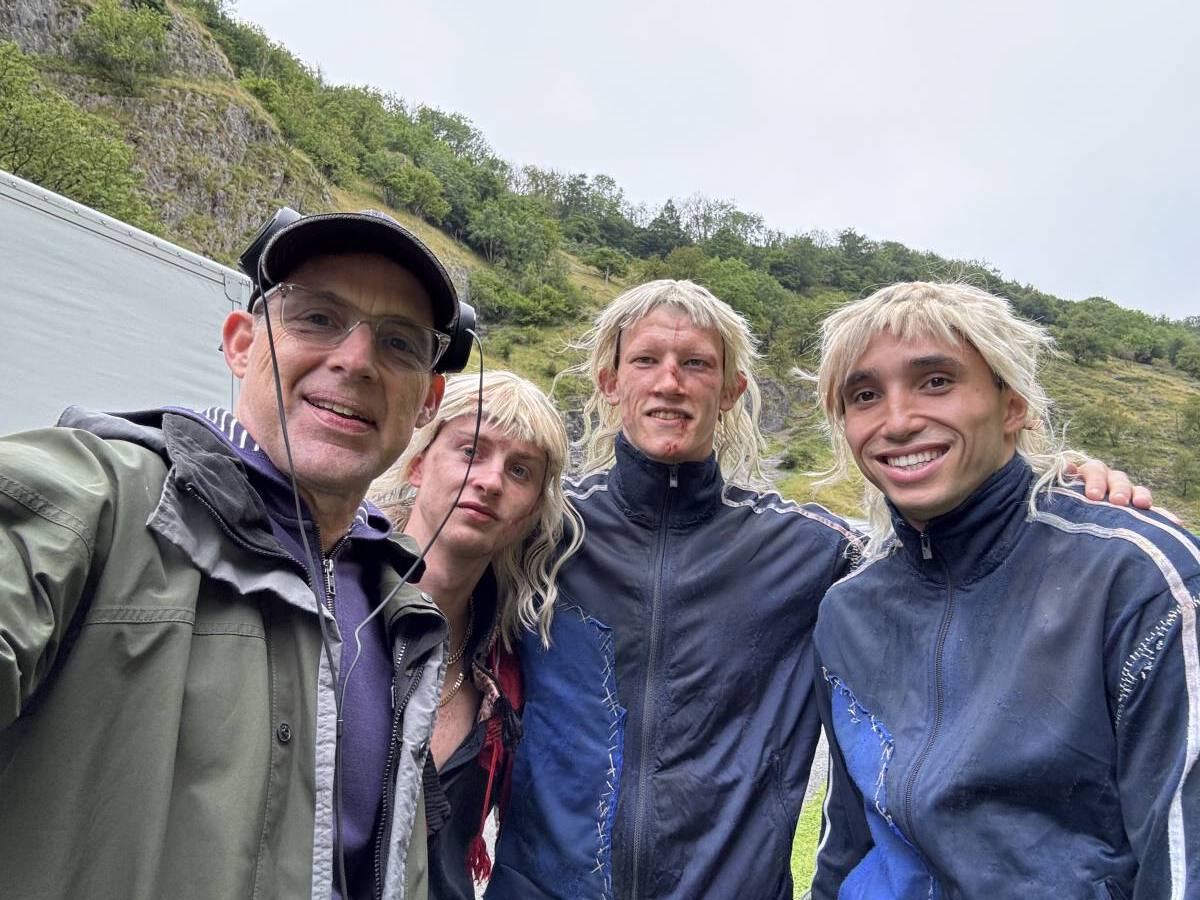
In Boyle’s 1996 film, Trainspotting, Ewan McGregor’s Mark Renton memorably disappears headfirst down the "worst toilet in Scotland”. Once again pushing boundaries with something unexpected and provocative, the ending of 28 Years Later culminates in a sharp swerve in tone when Spike is rescued by a zany, flammable-wigged, backflipping gang styled after…Jimmy Savile.

Bizarre and unsettling, yes, yet in this timeline, the disgraced TV presenter’s crimes were never discovered, and it sets up the premise for the next film nicely. The reference neatly ties the gang’s unhinged leader to a character we meet at the start of the film. Afterall, his early experiences were formed by trauma and iconic UK pop culture. It certainly got people talking – you will either love or hate the ending.

“Gosh, when I first saw that ending, I was like, ‘Wow, that's so bold and so exciting to put something so unusual at the end of the film,’” Burn reflects. 

“That bit is really good fun, having gone through all the stress of creating all these worlds and making things feel immersive and tense. The ending is more of an action sequence set to that amazing Teletubbies music. That was probably one of the more enjoyable bits for track lay, because it's throwing in silly, big sounds and not worrying too much about how it lands, immersive-wise, or anything like that. 

"More than anything, what Danny has made is something that’s so incredibly fresh. I think part of that is to just roll the dice on all sorts of things.”

The film was shot back-to-back with its sequel, 28 Years Later: The Bone Temple (directed by Nia DaCosta with Garland returning as writer), which will be released in January 2026. 

Burn reveals that he is not involved in the next instalment (his calendar is already full with his next projects), but he’s excited to see what’s to come – perhaps picking up 28 days later? – from where we left Spike with his newly-found tracksuit-wearing gang.

“I've read the script, I know what happens,” he says carefully. “I'm sworn to secrecy, but it's incredible. Nia is a fantastic filmmaker – Candyman just looks so good! It was Danny's world to create, and we've shared ideas with the excellent sound team in terms of how things sound, like the infected. I can't wait to see what they've done. I'm just going to be a very keen member of the audience to see that when it comes out,” he smiles.

28 Years Later image credits: Miya Mizuno