Subscribe
Headliners

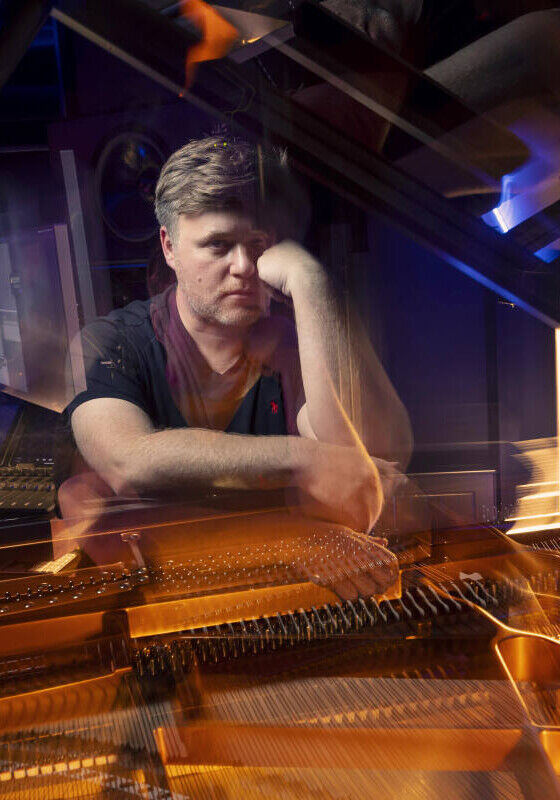
Benjamin Wallfisch: Scoring ‘Predator: Badlands and IT: Welcome to Derry’

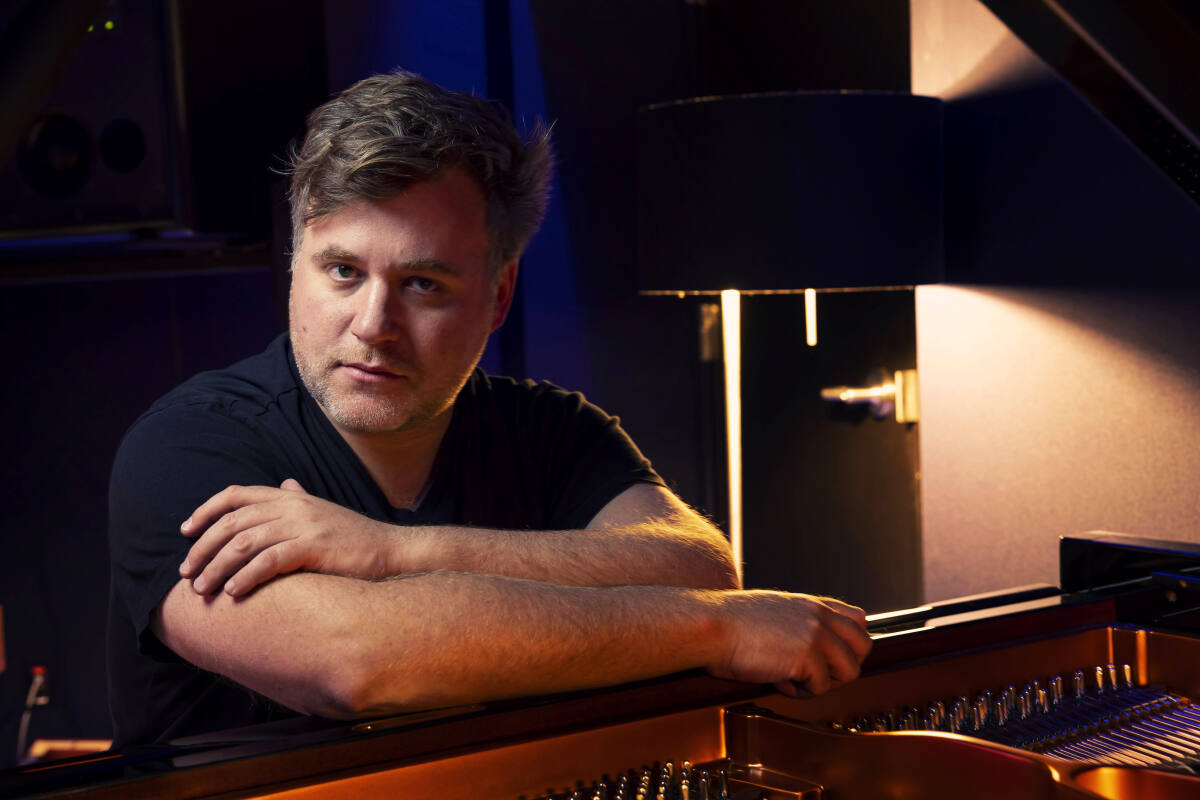
After a musical upbringing that was staunchly classical, Benjamin Wallfisch has married his Bach-influenced skillset with a love of music technology to become one of Hollywood’s go-to composers. After a huge breakthrough working on Blade Runner: 2049 alongside a certain Hans Zimmer, huge jobs kept rolling in, including Shazam!, It and It Chapter Two, Twisters, and Alien: Romulus. As he returns to the It universe with its new series Welcome to Derry, he chats to Headliner about pivoting from pursuing orchestral conducting to making music for movies, composing the score for Predator Badlands, and pivoting to TV for the It spinoff.

Musicians often talk about being raised musically in the classical tradition, and it would be harder to find someone for whom this rings true more than Wallfisch. Born in London, his parents are Elizabeth Wallfisch, a baroque violinist with many recordings and ensemble performances to her name, and Raphael Wallfisch, a cellist who is said to have recorded almost the entire cello repertoire with record labels such as EMI and Naxos.

In fact, Wallfisch comes from a long line of accomplished classical musicians, and would wake up to the sounds of the cello and violin being practised most mornings. His grandmother, Anita Lasker-Wallfisch, a surviving member of the Women's Orchestra of Auschwitz, was able to make it out of the Holocaust due to the fact that cellists were hard to replace.

It was once true that, if you wanted to work on Hollywood films, you had to up sticks and move to Hollywood. But in this post-pandemic era of Zoom meetings, it certainly is possible for composers to work on American films from the comfort of their homes in different countries entirely. Wallfisch, though, moved to Los Angeles 16 years ago, and loves the city and the benefits of being physically present in the heart of the US movie industry.

“It was a completely different landscape back then,” he says. “We were still sending CDs to people at that time. I came over here first in 2007 when I was working with my dear friend Dario Marianelli. We were doing a movie called The Soloist. It was meant to be a week-long trip, but an old friend of mine from my Royal Northern College of Music days was in the orchestra. It was the LA Phil, and I was conducting. It was crazy, because the last time we saw each other was in the pub in Manchester as students, 10 years prior. He introduced me to these incredible people. I decided to stay; all of my work was still in London, so I was flying back and forth on the cheapest flights I could find. I had a very small apartment, and my studio was in the living room.
My grandmother Anita just turned 100 and is a force of nature. She survived Auschwitz by playing the cello in the women's orchestra there.

“That was pre-COVID, when filmmakers were regularly coming over to the studio. That still happens, but 50% less of the time now. We use Evercast, which is like Zoom but much more secure, and you can see the picture in the actual movie and high-quality sound. I personally don't like virtual meetings, but it has become a thing where we figured out how to do it.”

Wallfisch doesn’t take his family’s fascinating classical music history for granted, and it’s something he continues to be grateful for. He recalls, “I was hugely influenced by my grandfather Peter Wallfisch, who was a pianist. He died when I was about 14. My grandmother Anita just turned 100 and is a force of nature. She survived Auschwitz by playing the cello in the women's orchestra there. There is a sense that music is more than just a profession; it saved her life, and we certainly would not be here without her musical ability. The opportunity she gave us by surviving through playing the cello is hard to define; it’s almost too big to put into words.

“But my interest in film started very young with E.T. I was between the ages of five and nine when I went to see it, and then we got it on VHS in the late ‘80s. I was obsessed with the music. I could not understand why, because I was always hearing classical music when I was doing my piano. I was annoying all my piano teachers by not practising, but instead finding much more interest in improvising and discovering chords and things that I did not understand, but they made me feel certain emotions.”

One of several key breakthrough moments in Wallfisch’s career was the 2017 sequel film, Blade Runner 2049. After a longstanding creative partnership with the late Icelandic composer Jóhann Jóhannsson, director Denis Villeneuve decided things weren’t working on 2049, and so Wallfisch was brought in at the last minute to collaborate with the Hollywood honcho composer himself: Hans Zimmer.

On being brought in some way into the process of the film, he says, “I was really grateful that there wasn't that much time. Because if I’d thought about it too much, I would have scared myself, working on this thing you can only dream about as a young composer, and to work with Hans Zimmer, Denis Villeneuve, and Joe Walker. These are the best artists in the world. We were trying to get to the core of what this new sound would be, while still capturing the spirit of Vangelis, but telling Denis’ story and the tone of the movie, and capturing all of the elements of the original film, but pushing it into something fresh and new.

Often you think, ‘What are you insane?’ Then you try it, and it is totally genius.

“The Sea Wall sequence [the film’s climactic ending] is a great example. It was an action set piece, and it was the one time that Denis just said, ‘No, that doesn't work.’ And Hans said, ‘Hey, Ben, that's sweet. Just put it here and move it about eight frames to the left.’ And that's literally what's in the movie. Sometimes you’ve just got to throw something up against picture. And if you're lucky, it just works.”

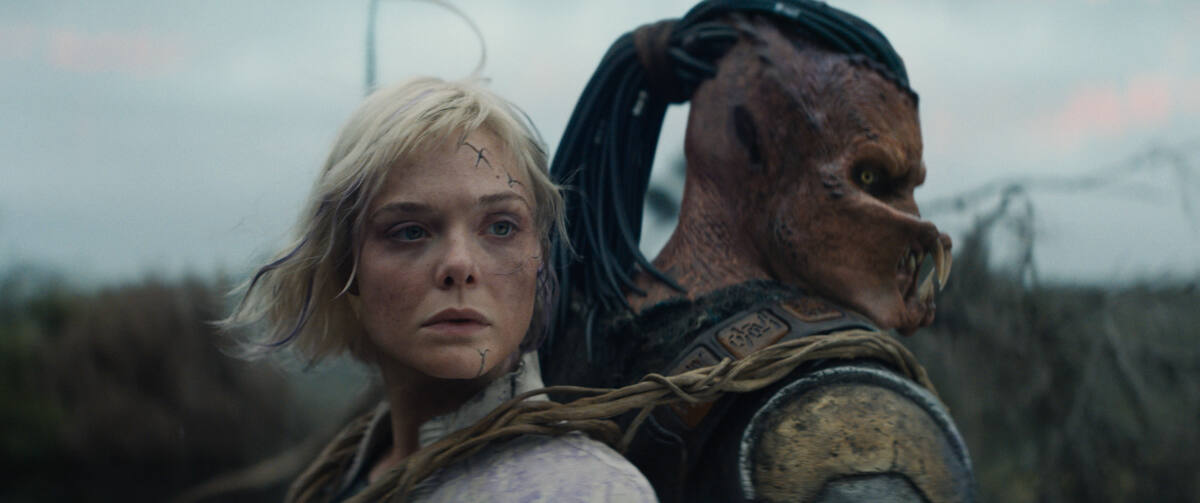
A huge, hulking 2025 project for Wallfisch was Predator: Badlands, the latest film in the beloved franchise. He had previously worked with director Dan Trachtenberg on the animated Predator: Killer of Killers, while co-composer Sarah Schachner had worked with him on the Predator film Prey. The two composers were brought together for the new film, which brings a fresh spin to the story in which Dek, the predator himself, serves as the film’s protagonist instead of baddie, and is joined by Elle Fanning (The Neon Demon, A Complete Unknown) who stars as an android who has been cut in half, with the unlikely pair teaming up. The two composers created a primal and brutal score for the film, with Schachner creating a ‘Yautja choir’ using vocoders and granular processing.

Killer of Killers is one of the most challenging things I’ve ever done,” Wallfisch reveals. “He (Trachtenberg) was kind of doing Badlands simultaneously, and in the conversation just very naturally segued into seeing if there was anything I could contribute. Sarah was already scheduled to do it, and she did an incredible job with her music. It is so distinctly her – a very special, unique sound. She has a command of combining things like vocoders and all kinds of granular processing of samples and synthesis.”

As the composer for It and It: Chapter Two, confirming Wallfisch as composer for its new television series, It: Welcome to Derry, must have been something of a foregone conclusion. In 1962, the prequel story follows a couple who move to Derry, Maine, with their son. Their arrival coincides with the disappearance of a young boy, and the situation continues to unravel from there.


“I love working with Andy [Muschietti, who also directed the first two films] because he is so musical and the way he gives notes is inspiring. Often, you think, ‘What are you insane?’ Then you try it, and it is totally genius. He has a five-dimensional view of Stephen King's world and has developed the stories into something much bigger. We decided not to use the themes from the movie because the story is so different. The entity only appears as Pennywise halfway through the season; we see other shape-shifting manifestations earlier on. Musically, we needed to think much bigger, with the sense of something being constructed gradually. There’s a progression musically through the season.”

On taking It from the big screen to the small screen, and even the phone screen for some viewers, Wallfisch adds that, “Television has changed monumentally in the last 10 years since the early Netflix originals; it’s now serialised and theatrical in production quality. While I am passionate about the communal experience of the cinema, as that is how the work is designed to be heard and seen, the creative process for TV is identical to a movie. The main difference is the sheer quantity of music, about six hours, and executing an expensive-sounding score within a different budget. I do not differentiate between the two in my mind. And, even though a lot of people are watching things are on their phones now, I do believe the cinema will be there for the long haul because experiencing a story with a group of people is a human need, going back to the amphitheatres of old, and it is important to keep that alive.”

Wallfisch then offers a peek behind the curtain of the tools and software that powered Welcome to Derry, Predator: Badlands, and other recent projects.

“I use Cubase, which I love. And I love the u-he synthesisers, Zebra and Diva. I’m a total sample library hoarder and buy everything that is out there. It was really fun developing my own string library with Orchestral Tools — I was looking to cover all the missing things: why can't we control the bow direction and the divisive aspects of a string group together? And why have loops when we have endless samples? So we just recorded with no loops; it is just a performance.

“I am pretty old-fashioned in the way I work. I have a template that is always evolving, but there are some core things I always use. For example, for Shazam, I wrote the whole thing on a piano track, the closest I get to doing it on paper, because I wanted the orchestration aspect to come after the music was done. I love to lean into those slightly older ways of working, but I also love the opportunity to create new sound worlds using all kinds of crazy electronic processes.”

Wallfisch has to remain tight-lipped about what he’s working on next, but with the scores for Badlands and Welcome to Derry, and the latter show being available to stream now, there is plenty to sink our Yautjian/clown teeth into in the meantime.