Subscribe
Headliners

Hania Rani: from piano concertos to scoring ‘Sentimental Value’

To attempt to encapsulate just how awe-inspiring and unpredictable Polish piano prodigy, producer, and composer Hania Rani is, 2025 saw her follow up Ghosts, her 2023 album that saw her lean heavily into her singing and songwriting, with a piano concerto in Non Fiction, and scoring the Stellan Skarsgård-starring Sentimental Value. Next up? An album of analogue synthesiser music. If there were such a thing as placing bets on what genre an artist’s next album is going to be, Rani would be a sure-fire way to lose some money. As the dust settles on another whirlwind year for her career, she talks to Headliner about being commissioned to compose her contemporary classical piano concerto, its premiere at the Barbican Hall in London, and working with director Joachim Trier on Sentimental Value, following the success of his previous indie hit The Worst Person in the World.

Rani grew up on the Baltic coast in the picturesque Polish city of Gdańsk, before undergoing piano studies in the classical tradition in Warsaw and then Berlin. Thereafter, she began losing interest in pursuing the classical piano performance career she had been working towards, and when a friend shared a YouTube video of a Nils Frahm performance, approaching the piano in an entirely new way and releasing her own compositions became her destiny. Her first release was with cellist and close friend Dobrawa Czocher, Biala flaga. Her debut solo work, Esja, arrived in 2019, producing some of her most enduring songs in Eden and Glass.

When Headliner last spoke to Rani, she had just released a rework of Woven Song by another neoclassical luminary, Ólafur Arnalds, as part of his some kind of peace reworks album. She also revealed her next album at the time, Ghosts. Featuring more vocal numbers than her previous LPs, the record took her career to the next echelon, confirming she certainly wasn’t just another modern classical composer playing twinkly piano melodies for relaxation playlists. She embarked on her biggest tour yet, including a headline show at London’s iconic Roundhouse.

If Non Fiction - Piano Concerto in Four Movements doesn’t confirm that Rani is a serious composer worthy of respect, including from purists on the more traditional side of the classical world who often sneer at such innovative approaches to the medium, it’s hard to imagine what will. That said, after all the aforementioned things said about her career, it might not surprise you to learn that the concert work and album don’t rigidly stick to the traditional rules of an instrumental concerto. 

I will always be contradicting the idea that classical music is constraining, because from my own experience composing it, it is the opposite.

A Mozart concerto for, say, the clarinet or piano, for example, would stick to the more conventional three movements, two of which are faster and the central movement slower and more lyrical. The former gives the hand-picked virtuosic performer ample opportunity to show off all their ability on the instrument. Non Fiction, by contrast, feels like one continuous, flowing piece of music, and it’s difficult to pinpoint where the movements begin and end. And this was never going to be about Rani showing off her piano ability, instead adding unusual instrumentation like saxophone, and even live tape recording techniques (not something you’ll hear in a Beethoven piece).

Rani joins the call from London, where she’s feeling settled for the first time in a while after recently relocating to the capital. And, while some might feel that going from the song-heavy Ghosts to the structures of a piano concerto might have felt constricting for Rani, she reveals, “It is exactly the opposite, because this is why I’ve left the idea of songs for now. There is nothing more constraining than the form of a song — three minutes to five minutes. You cannot release a 15-minute song. Nobody would ever take you seriously. With the concerto, I felt like time was finally free again. I could make it one movement, I could divide it into three movements. I will always be contradicting the idea that classical music or acoustic music is constraining, because from my own experience composing it, it is the opposite. I would love to share this feeling and have people enter this music in this very free, curious way.

“Of course, there is a gravitas of composing a piano concerto, and also understanding that it belongs to the past tense. But, for me, it also belongs to the present tense. My only concern was to make it as contemporary as possible, which means I wanted to make it exciting to me as a performer and as a listener. I rejected certain elements that I found unnecessary. And you probably noticed, this piece is not really a piano concerto; it’s more like a piece for the full orchestra, because I made sure all the instruments are important.”

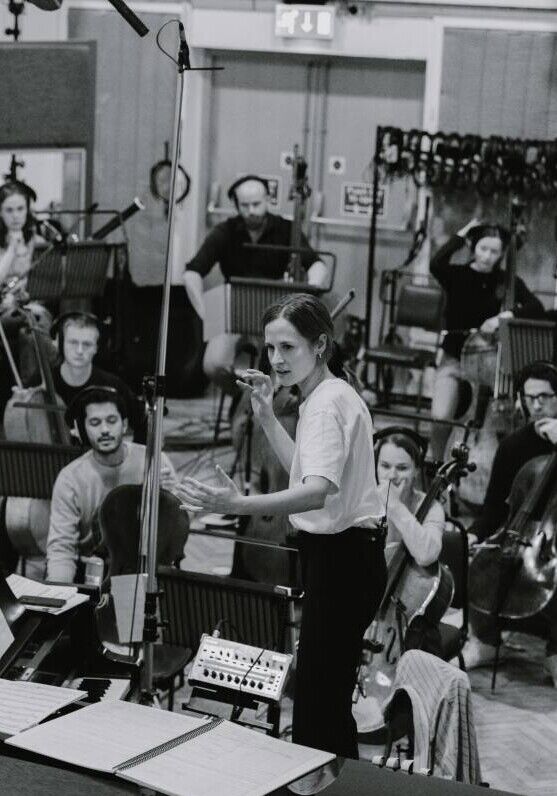
The album was engineered and mixed at Abbey Road in London, and it was during the first mix of the album that Rani had a realisation she had played to the rules of classical music in one regard that went against her ethos as an artist. This realisation led to one of the key ingredients of the concerto and album that make it so contemporary and fascinating.

I wish to all my fellow musicians that they can have this experience of working with a bigger acoustic ensemble, because it is just like working with 45 synthesisers.

“The first mix sounded great,” she recalls. “But I thought that I was not being very honest. My music is always inspired by all sorts of effects, delays and tuning. I thought that, if I am trying to become a purist, it doesn’t really sound sincere. And then we started to play around with different effects, all made on tape machines, as my engineer, Greg Freeman, is extremely fluent with tape machines. We put the entire sections of instruments into the tape delay. And because the piece was recorded in one room, all the instruments together, it is always a little bit infused with other tones, with other instruments, with other recorded stems, and this makes it sound extremely organic and fluid.

“Applying some effects on top of the piece felt like adding another layer, or becoming another instrument. The effects are most visible in the Fourth Movement, when the feedback of the tape delay becomes another instrument in this setup. Everything was just extremely fascinating for both of us, sitting there in the studio and playing around. It took two months to mix this album, but it was a joy. It was really mind-blowing. I wish to all my fellow musicians that they can have this experience of working with a bigger acoustic ensemble, because it is just like working with 45 synthesisers. Each instrument is extremely flexible and inspiring.”

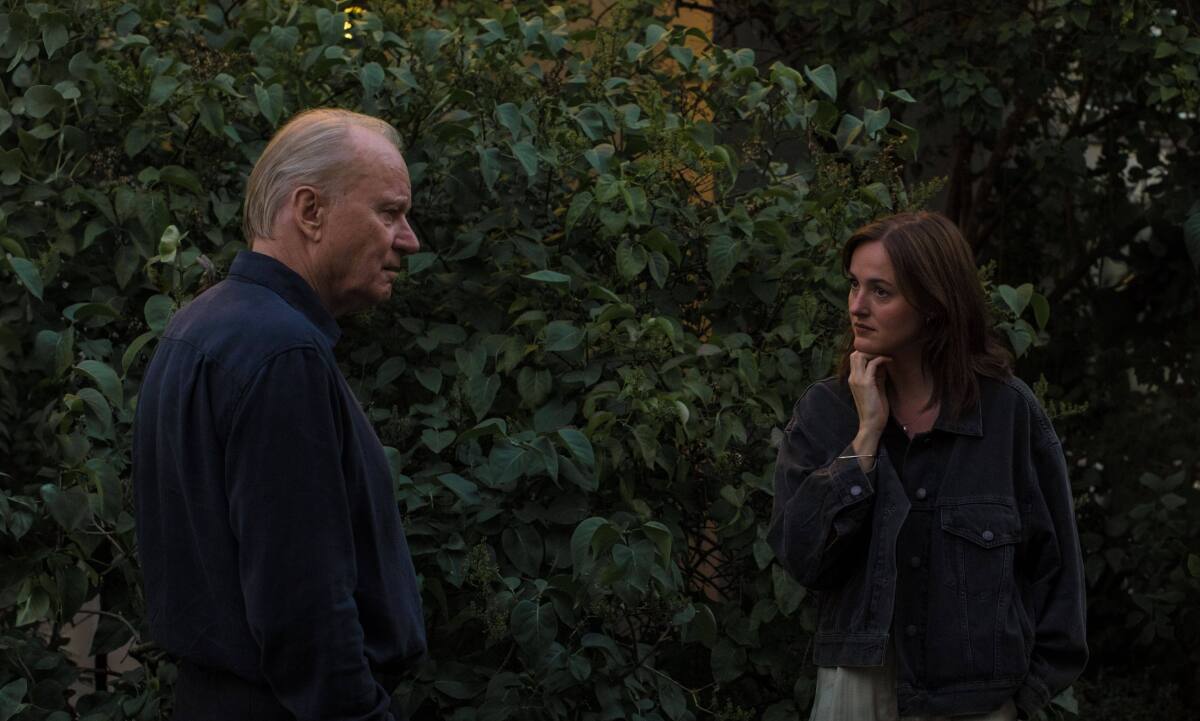
2025 was also the year Rani worked on her most significant media project yet, Joachim Trier’s Sentimental Value. The Norwegian film stars Renate Reinsve, who had already won acclaim in Trier’s previous film The Worst Person in the World, and she is joined by Dune’s Stellan Skarsgård and American star Elle Fanning. Hype for the film was already high after its Cannes Festival premiere saw it win the Grand Prix award, and since its release, it has secured nine Oscar nominations. It tells the story of actress Nora (Reinsve) in Oslo, as her absent father, an acclaimed film director, comes back into her life and offers her a part in his new comeback film. With their relationship as problematic as ever, she turns the role down, which then goes to a famous American actress (Fanning). Nora must then navigate this big change in her life, as her father begins making his biographical film in the family house she grew up in.

Regarding the fact that this film was never going to have wall-to-wall music and big over-the-top moments for her to compose, Rani explains that, “It is definitely just little moments. I think the struggle with this film is that it almost feels like a theatre play, and is all about these almost invisible feelings between people. That’s where the music came from — you will see in the film very often the most intimate moments happen when people do not speak with each other. And that was quite intriguing.”

I composed the music (for the film) on my Prophet synthesiser, and then I was trying to translate it into the acoustic realm.

With the full score album due for release on January 30th, we so far just its titular, opening track released as a single. It’s a deeply meditative piece of music, with a descending flute and clarinet motif that opens up into an expansive passage for the strings. The music speaks to all of the turmoil, melancholy, and also breakthroughs that each of the characters experience in the film. And something that Rani cottoned onto pretty early in the process was how integral the Oslo family home would be, revealing to her a very interesting way to begin her process for the film.

“When I read the script, and I registered that the house played such an important role in the film, I asked if I could go to Oslo to record the house,” she says. “We went there, and that was also a bit of a game changer, because the film crew went to France to shoot one of the scenes that happens there. So I was just alone with my sound engineer in the house for a couple of days. It is a massive house; it was late September, very quiet, and we could just commune with this space. We recorded lots of objects we found in the apartment, like old radios and cassettes, and furniture, and just the sound of it. I also brought the piano there, so I recorded a couple of piano pieces.”

When I read the script and I registered that the house played such an important role in the film, I asked if I could go to Oslo to record the house.

She also discusses a brand new composing avenue she explored for the movie: “I composed the music on my Prophet synthesiser, and then I was trying to translate it into the acoustic realm. I was trying to rearrange it for a string quintet, and something very intriguing happened, because the piece composed on the synthesiser was using all the abilities of the synthesiser, which means tuning, detuning, very weird fabrics of sound, and then to translate into the acoustic realm, quite directly, something magical happened. I was quite mind-blown, and now I’m trying it in many other pieces of mine. It's definitely started a new period of my composing.”

The full Non Fiction album is out now, and it’s not too late to catch one of the last Sentimental Value showtimes on the big screen as intended, before the full score LP releases on January 30th. And, shock horror, Rani is now onto something completely different. Anyone who got to catch her very limited run of Chilling Bambino concerts, dedicated to her love for her Prophet synthesiser, will be champing at the bit.

“I'll be recording Chilling Bambino, using a recording technique that I never used before. It’s exciting because this one feels very free. It allows me to use all my energy. And there is quite a lot of energy in my quite small body. Definitely confusing for all my listeners — but this is how it goes with me.”

Sentimental Value film still courtesy of Mer Film / Eye Eye Pictures / mk2 Films

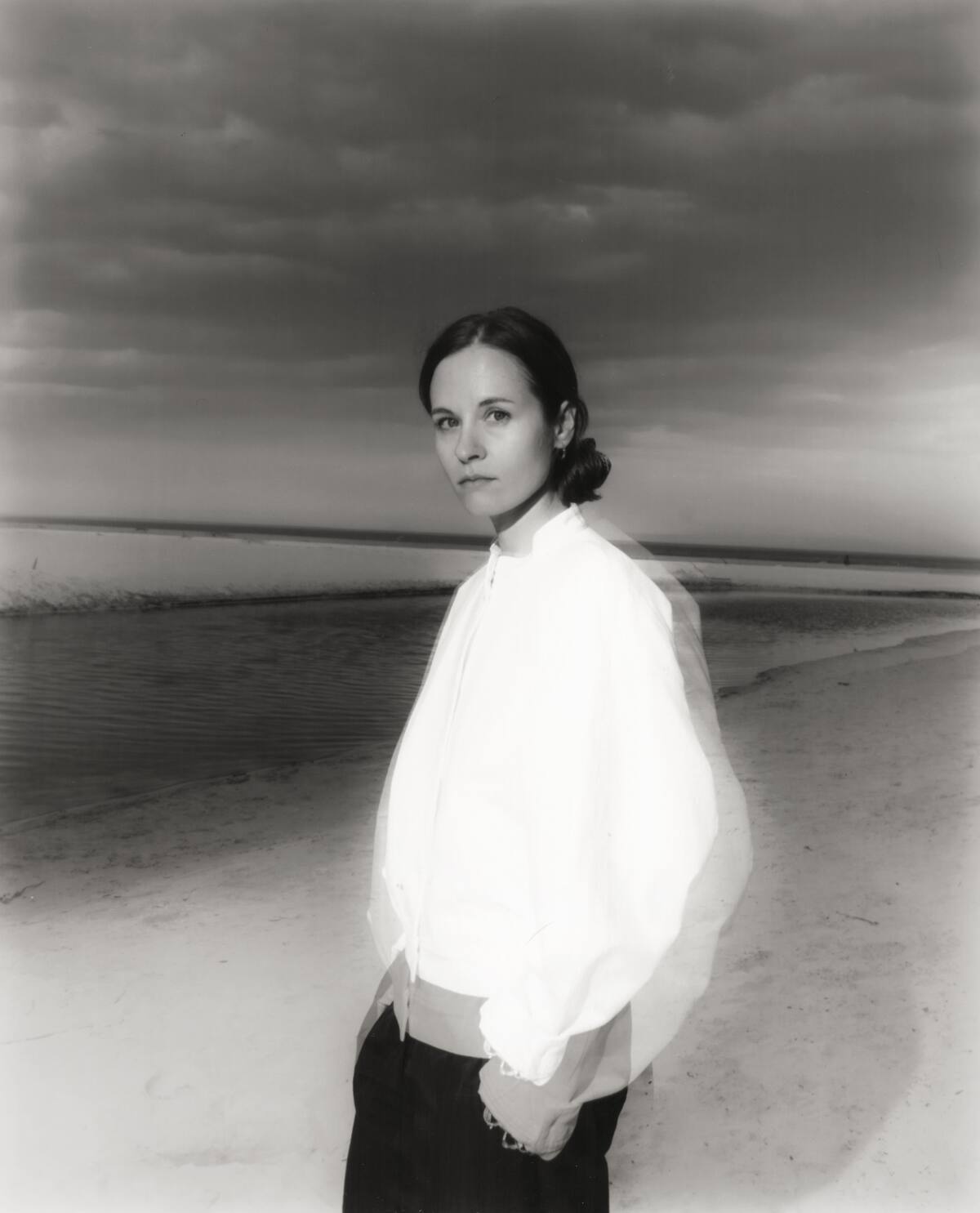
Arist photo: credit Olivia Wunsche

Abbey Road studio photos: credit Siân O'Connor