Subscribe
Headliners

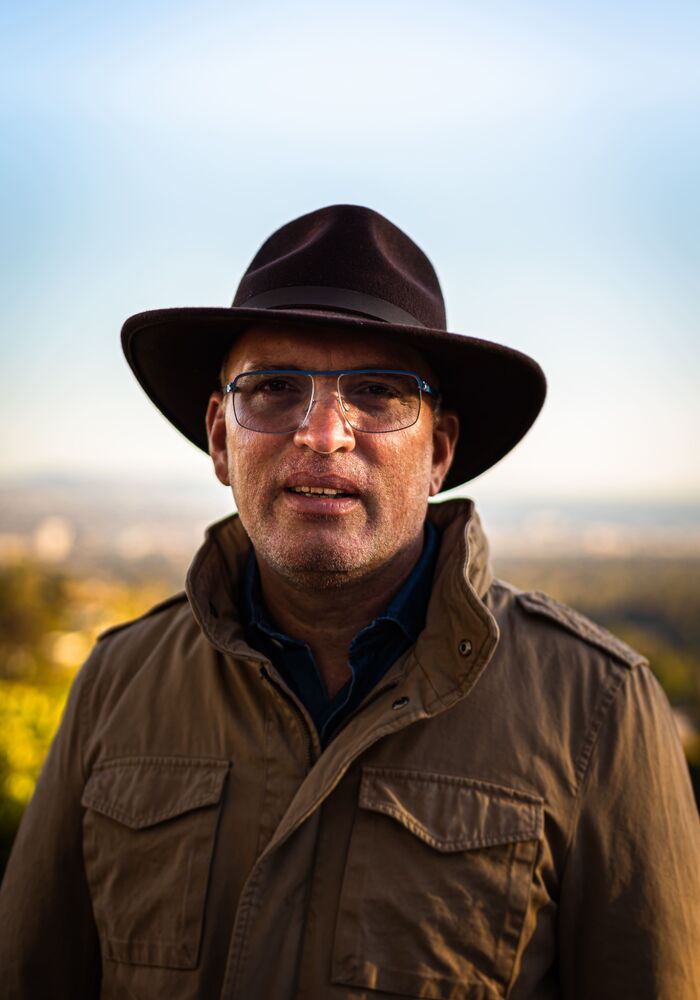
Henry Jackman: Collaborating with Limp Bizkit for ‘Battlefield 6’

Henry Jackman has entered the gaming arena. Having worked on massive Hollywood movies such as Captain America: The Winter Soldier and its sequel Civil War, and Captain Phillips, he turns his hand to a huge gaming franchise with Battlefield 6. He talks about some of the similarities and differences between the two mediums, still having plenty of budget to work with, including orchestral sessions, and how nu-metal legend Fred Durst became involved in proceedings.

Now based in California long-term, Jackman was born in Hillingdon, London. Jackman’s musical upbringing was very classical, learning choral singing at the iconic London landmark, St Paul’s Cathedral, before going on to have music lessons at Eton College and studying at Oxford University. Despite all this, though, his ears were increasingly captured by jungle and drum and bass music from the likes of Fabio & Grooverider while attending raves. His ability to both produce and arrange saw him working in music production, and he would find himself in studio sessions alongside Elton John and Seal.

This all changed when some of his own music was heard by two film composers: fellow Brit John Powell (known for the Shrek and Jason Bourne films) and a certain Hans Zimmer. He would soon be whisked away to Zimmer’s Remote Control Studios in Los Angeles, with the German composer himself convincing Jackman that his unique blend of classical music knowledge and modern production ability made him ideally suited to a career in film music.

Lo and behold, Jackman is now one of Hollywood’s most in-demand and go-to figures in composition, and some of his huge credits include Kick-Ass, the second and third Captain America films, and animations such as Puss In Boots.

Off the back of some big movie jobs in Extraction 2 and Red One, Jackman has just worked on another game, Tom Clancy’s Rainbow Six Siege. He says, “That couldn't have been any more different from Red One. I got to indulge all my electronica fetishes! That was a lot of fun because the producers and the people I was collaborating with were quite au fait with electronic music, and wanted to really explore fabric and texture and whatnot, and I got a bit of time to do it.”

Jackman’s latest endeavour is Battlefield 6, the enormously successful first-person shooter from Electronic Arts. It is the 18th installment in the Battlefield franchise, and is available for users of PlayStation, PC, and Xbox. And, for a story befitting a composer of Jackman’s gravitas, it sees a splintered NATO fighting it out with Pax Armata, a fictional private military company, set three years in the future. Created with a budget in excess of $400 million, it’s one of the most expensive video games ever made. Having already worked on two games and being used to such huge budget circumstances, Jackman explains how it wasn’t a fish-out-of-water situation for him.
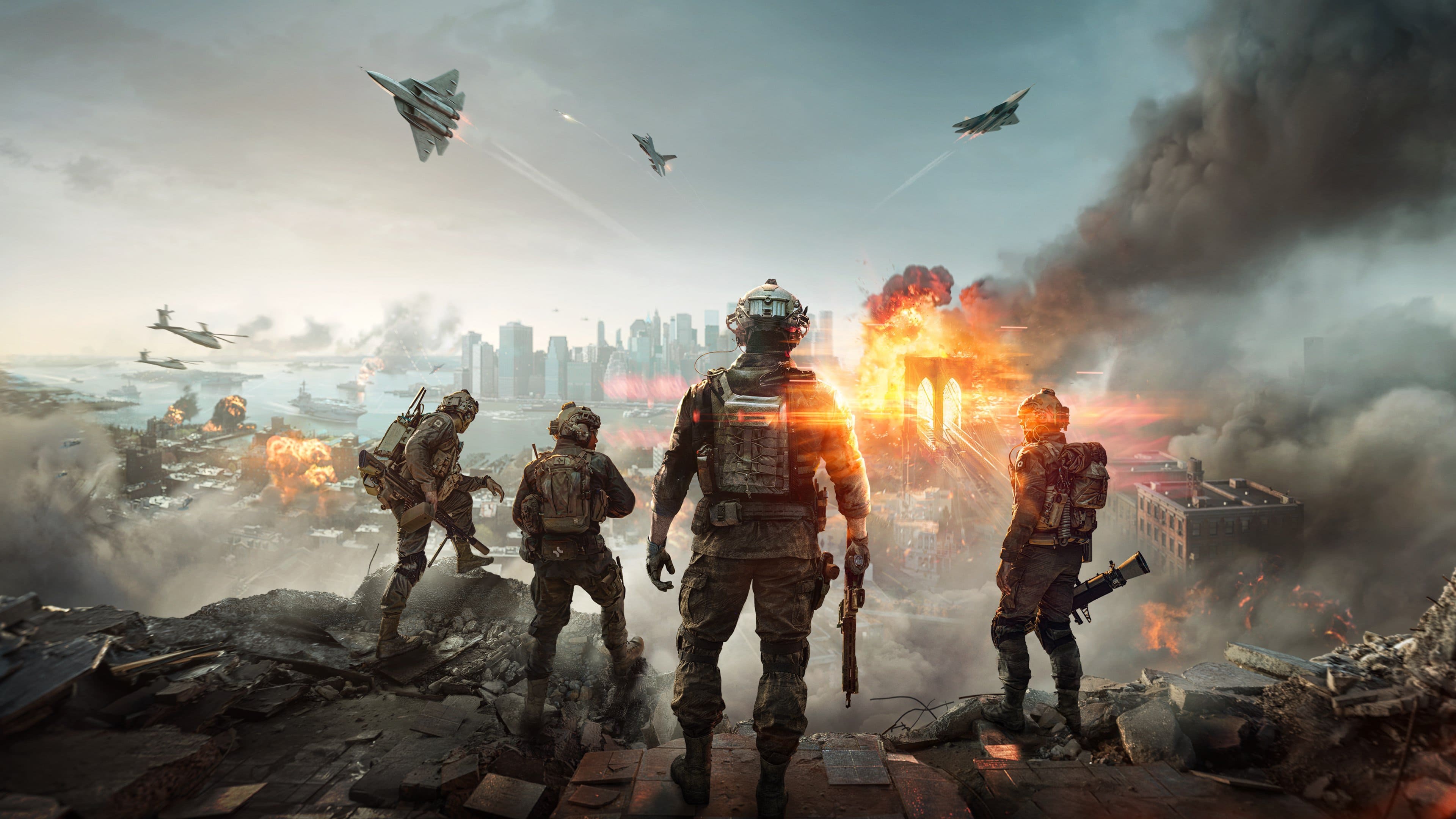

Damage and destruction ended up really helping as a creative guideline.

“I'd already done Uncharted, so it wasn't a culture shock,” he says. “When you do a movie, every scene and every cue that you write for the scene is fixed in time once they've stabilised the cut of the movie. You can go into endless detail for a particular scene when you're writing a piece of music, and the BPM can change, and, especially in animated movies, you're going to need key changes. There's endless flexibility, weirdly, that comes from the fixity of the scene, because it's never going to permutate or be different every time you watch it.

“In Battlefield 6, there are cut scenes which are more cinematic, so those really are scored just like a movie. But with the in-game music, you have to think vertically: you need to write a piece of music that will have two, three, or four layers of intensity. You need the game to be able to drift elements in and out of the mix for it to work. For that to be the case, you can't suddenly have all your elements at different keys and different tempos.”

Fans of Jackman’s work on The Gray Man, starring Ryan Reynolds and Chris Evans, and his other work with a stronger electronica slant, are in for a treat with Battlefield 6. The opening track on its OST, Battlefield 6 Main Theme, showcases some very heavy and glitchy electronic music that almost sounds like UK jungle, with the beat sounding like it's having a difficult time digesting itself. Plus, his penchant for adding in cellos that have deliberately been battered and bruised, and then being put through a load of outboard gear to sound like synthesizers. Jackman somehow, as he is known to do, melds this into a huge Hollywood score with the big brass and soaring strings.

Fascinatingly, Jackman explains how he had been earmarked as the composer to approach for the game for this precise reason. “The team behind it really knew their franchise, and they knew what I'd done and different pieces I'd written. It's funny, if you only listen to certain music of mine, you'd form one opinion of what I do. For example, in Captain America: The Winter Soldier, you'd think I’m contemporary, always making crazy noises. And if you'd only listened to Winnie the Pooh and Puss in Boots, you’d think I just use a traditional orchestra a lot.

“They actually sent me playlists of quite obscure tracks that I’d written – and I got into some really interesting creative conversations with them. Battlefield 6 is a really big deal. When you see the number six, you can be tempted to think, ‘Here comes another one.’ But as far as EA was concerned, it was a real top-to-bottom reboot of the whole franchise in every respect. It’s a really ambitious project.”

He said, ‘I swear if we get you and Limp Bizkit in a room together, something will happen.

Jackman also reveals how he loves to have a word or sentence from a director or member of the production on a film or game to simmer in his creative consciousness and guide his decisions. Battlefield 6 was no different.

He recalls that, “I was in one of the very first meetings with pretty much everyone who was a bigwig in the room. I said, ‘Just throw out a sentence or an idea,' which I often say to a director, because it will affect your subconscious. One of the guys said, ‘It doesn't sound like a big idea, but destruction and damage is a really big deal we're working on.’ At first, I thought that was more for the programming guys, because there's sophisticated destruction technology and graphics in the game. I remember being vaguely disappointed that I didn't have a bigger keyword or a phrase. But when I went back to the studio and started working, I got into some real hand-baking of sounds, synths, and processing, using a lot of outboard gear. I started to get into more distortion and overdrive. It actually ended up really helping as a creative guideline. I had this permission on my shoulder, ‘You can push the saturation. Don't worry about if you're getting pretty serrated and gnarly. That's what they're up for!’”

Speaking of destruction and damage, the game and its accompanying album also bring two new songs into the world from the band behind Rollin’ and Break Stuff, Limp Bizkit. First is the curiously titled Making Love To Morgan Wallen, which contains some classic Fred Durst lines like ‘I’ll be the greatest motherfucker you ever hated.’ And the album’s final track is Battlefield: The After Party, which sees the nu-metal band collaborate with Jackman. This may raise eyebrows, but Jackman’s damage-themed main theme syncs perfectly with Bizkit’s distorted guitars and turntable scratching that brings back fond memories of the early days of Limp Bizkit and Linkin Park on this instrumental track.

“I have Steve Schnur (President of EA Music Group) to thank for this,” Jackman enthuses. “He's a bit of a visionary. Steve was listening to my Battlefield 6 main theme remix and said, ‘Even though it's kind of a bit industrial and electronica, there is definitely a semi-rock thing going on there. I was hanging out with Limp Bizkit last week, and I just know that if you and them got in a studio together, I swear something will happen.’ And so on the day, we took some drums out to leave space, and then we just went player by player. Ironically, Fred [Durst] was so useful on the day; he was collaborating with me and talking to the band. The only thing the track doesn't have is his vocals, but he was there all day, and we got loads of cool drums, bass, DJ scratching, and guitars. I only met the bass player once, Sam [Rivers], who sadly isn’t with us anymore. I think that was the last thing he recorded.”

With all this talk of outboard gear, distortion, and saturation, it would be a crime not to ask Jackman about his production work on creating the Battlefield 6 sound. He reveals that, “One piece of outboard gear I've enjoyed using a lot is called Heat, which has sophisticated options for overdrive. I like pushing signal outboard to some pretty old synths, like the Roland SH-5 and SH-7. The only slightly tedious thing about that is, because it's mono, you've got to do it twice and then lock it back together again — it gets a little bit like an Italian watchmaker spending forever making a watch. But the filters on my SH-5 and SH-7 sound so good. When you push them too hard, you get these unexpected anomalies.

“I also love using an acoustic or organic sound. Because what you start with matters, even if you process it loads. An original acoustic sound is often more complex. By the time you've done all these various things to it, it transforms these curious complexities that were in the original recording. Some of the really aggressive sustains were originally just cello sounds. By the time you're done with it, you wouldn't even know it's a cello.”

As is often the case with anyone in the film industry, Jackman can’t give much news on what he’s working on next due to non-disclosure agreements, except that he does have several films on the way. And no news on a Gray Man sequel just yet. But, in the meantime, if damage and destruction are what your life needs right now, Battlefield 6 and its soundtrack album are both out and await you stepping onto the battlefield.