Subscribe
Headliners

The hitmaker powering pop’s coolest comebacks: Jon Shave on crafting Charli XCX’s Brat and reviving the Sugababes sound

A year on from Brat summer, the blur of radioactive green memes, TikTok dances, and chart and award domination is still sinking in for one of Charli XCX's Brat album writers and producers. Grammy-winning songwriter and music producer Jon Shave has been working with the British artist for over 10 years – first meeting Charli when writing the hook for Iggy Azalea's 2014 banger, Fancy – but it wasn’t until 2025 that he would see her get her flowers. And by flowers, Headliner means awards.

Shave has been busy since then, most recently lending his talents to Sugababes, JADE, Jesse Ware, Kim Petrus, and Louise Redknapp. His credits read like Hunsnet's roll of honour or a dream Mighty Hoopla festival lineup – “How does it feel to single-handedly be keeping the gays alive?” enquired an Instagram follower about his recent co-written and produced Sugababes track, Jungle. He replies with a salute. He’s been keeping the pop girlies fed for decades, after all.

Shave began his career in the early 2000s as a member of Xenomania, a songwriting and production team that was known for churning out mega hits for Cher, Kylie and Dannii Minogue, Girls Aloud, Sugababes, The Saturdays and Sophie Ellis-Bextor. 

In 2008, he co-founded The Invisible Men, where he co-wrote and produced multiplatinum songs including Fancy, Zayn Malik’s Mind of Mine album, Jessie J’s Do It Like a Dude, Rita Ora’s Hot Right Now, and Britney Spears’ and Azalea’s Pretty Girls. He also produced two tracks for Miley Cyrus for the Black Mirror episode Rachel, Jack and Ashley Too.

Headliner catches up with Shave not long after the BRITs, which saw Charli collect five gongs. A month before, she won three Grammys. 

“It's all been pretty insane, but in the best possible way,” he admits from his studio in Kingston upon Thames – “we call it London, but some people don't,” he points out. 

“I went to the Grammys, and it was amazing. I never take it for granted. I feel like I may never get there again, so I try to enjoy it,” he laughs self-deprecatingly. 

“At its heart, it's a very serious event, and they take it very seriously – as they should. As a British person in that environment, you just feel very small. The BRITs are always a really fun evening. They have a very British way of doing things. There's something very anarchic and chaotic about it, which I love,” he grins.

Sugababes are such a key part of British pop music history.

SUGABABES RETURN

Music trends are cyclical. Shave is currently experiencing a full-circle moment with the UK girl group Sugababes, whom he first met back when the generation before today’s “That’s Brat” Gen Zs were still saying “That’s hot.” 

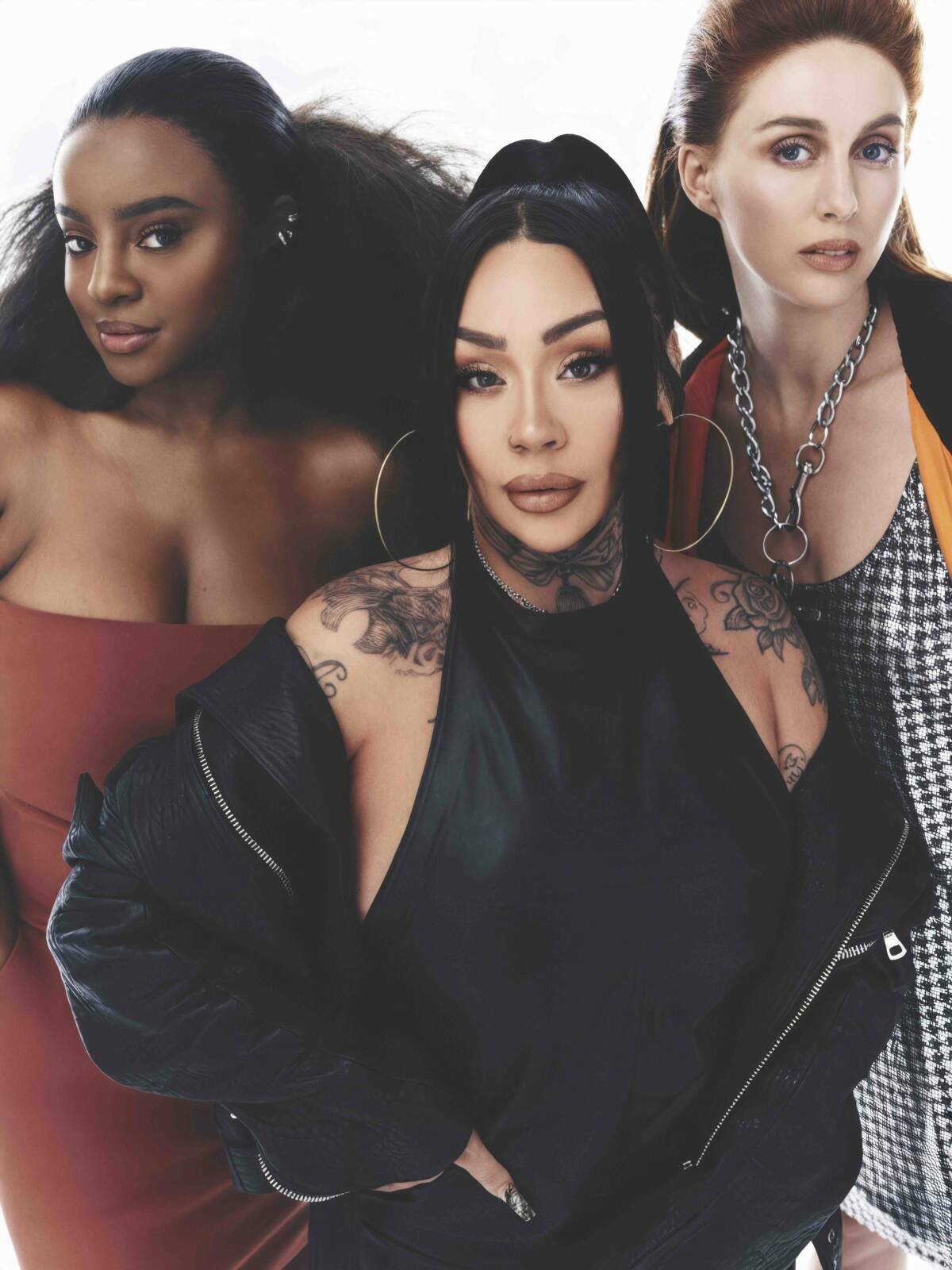
Slang (and group members) have been interchangeable since then, yet the Y2K vocal trio who radiated a certain rebellious energy and edgy fashion from the get-go – (so Brat, right?) are currently stronger than ever after reassembling their original lineup of Mutya Buena, Keisha Buchanan, and Siobhán Donaghy in 2012.

Shave has been working with the OG trio on material for their upcoming album, and all signs so far (the hypnotic Jungle and exquisite Weeds) point to the iconic British girl group reigniting the spark that first captivated fans, delivering fresh, new music that proves their creative flame – and tight, instinctive harmonies – burns as brightly as ever. 

Shave remembers first meeting the girls when they were teenagers. Going against the grain of female pop stars at the time, the Sugababes didn’t smile on cue, which gave them a mysterious, edgy image, but also meant they were misunderstood.

“It's a funny thing, the Sugababes and me, because I've sort of grown up with them in that I've been in proximity to them pretty much my whole career,” says Shave. 

“25 years ago, when I first moved to London, I had a dream of being a writer and producer. I had a really lucky break early on in that my first ever job was working in the office at their management company, and they were just about to launch Overload

"I started that summer and was immediately thrust into this world where they were gearing up to launch this new girl band. I remember the girls coming in, and I thought they were the most amazing/terrifying 15-year-olds I’d ever seen!” he laughs. “I was bowled over by them. They would be ad-libbing at the top of their voices in the corridors – they were amazing.”

when they sing together in harmony, there's nothing else like it.

By the time Shave was working as a part of Xenomania in 2002, the girls (with Heidi Range replacing Donaghy) had secured their second number-one UK single with Round Round. He remembers it like it was yesterday:

“I was in at the deep end recording a lot of the vocals with the girls and was around the creation of records like Hole in the Head and Red Dress. After I left Xenomania, I made a few more records with the group later on, so I've been around for a long time. 

"For that reason, I have an understanding of the DNA of that group and the sound, and I feel like I share a bit of it as well, certainly with the Xenomania connection in particular. Going into it this time, I'm a fan as much as anyone else, so I was thrilled to see the original lineup get back together. There's something special and magical about that. So many people are invested in their narrative and are aware of what they've been through on a personal level.”

Shave provides an insight into his recent sessions with the group and shares that he fell back into familiar synchronicity with them: “It's not your average writing session,” he remarks. “The girls have been amazing at being game to try out stuff. They're super aware of the legacy of the group, for instance, they would always push the envelope slightly with their first singles – they were always bold choices. 

"So once we had the start of Jungle, we knew that this could be the one. It's got that combination of iconic nonchalance, but it's also up-tempo. There are some great lyrical moments in there, and they all get their moment to shine.”

Sugababes released Jungle in March 2025, marking their first release since departing their label and becoming independent artists. 

The song, written by the trio, Shave, Anya Jones, and Wayne Hector (and produced by Shave), incorporates elements of 2-step, garage, and alternative pop, and is about escaping the 9-5 grind. It wouldn’t be a signature Sugababes song without their unique harmonic blend:

“A massive part of the songwriting and record-making is to make sure that's represented,” he nods. “Once we've got the song worked out, we'll go back through and work out exactly where we can put in those Sugababes harmony moments that all the fans want. 

"One of the things that's been so amazing about getting back in the studio with them is their combined vocal blend. They're three individual, amazing singers, but when they sing together in harmony, there's nothing else like it – you're a witness to this iconic part of British pop culture right in front of you. It's quite amazing.”

It makes sense, then, that when it came to vocal production, Shave kept things simple: “On the first verse, there's quite a strong chorusy effect on Siobhán and Keisha’s bits, and the chorus has that signature sound when they're singing together, so it's a case of having a nice EQ for each of them, a little bit of compression, layering up a few stacks of each part to make it sound thick, and panning it so it sounds wide. 

"It's nothing outlandish because they're not the kind of group that leans on effects or trickery. For the build-up before the chorus with Mutya’s part, it's all dubby delays. There's something about anything slightly dubby with these girls in particular that always feels great because it fits with their Britishness and the cultural melting pot vibe of the whole thing.”

That whole nonchalant thing is so key to it. None of it wants to be too over-performed or over-thought out.

When recording their previous album, behind-the-scenes footage revealed that the trio capture a certain spontaneity in their songs by singing, almost nonchalantly, into a vocal mic mid-studio, rather than going into the booth. Shave confirms that this was his experience with their new material:

“Yeah, they're really chill,” he confirms. “They sit there with a handheld Shure SM7 mic, and you're lucky if you get them in a pair of headphones and turn the speakers down so that you can have a nice, clean recording! But honestly, in most of the recordings, you're ending up having to use loads of background noise, or two of the other girls chatting in the background, or the music from the speakers, but it just kind of works. That whole nonchalant thing is so key to it. None of it wants to be too over-performed or over-thought out.”

Jungle’s cooly-delivered spoken word segment is a nice callback to 2005’s Push The Button – one of the group's most commercially successful releases – and embraces Donaghy’s British accent, rather than affecting the American accent UK singers often adopt.

“Sugababes are such a key part of British pop music history, so I'm really glad they lean into their Britishness; I feel like we've been missing that a bit,” says Shave, explaining that Donaghy was channelling Debbie Harry in this part of the song.

“That's why the vocal production sound is quite chorusey – it’s a new wave kind of vibe. Also, we had the question, do you repeat the same melody for the second verse, or should we try something different? We wanted to try something different. 

"Wayne was behind the ‘Let's do a spoken thing,’ and Siobhán was up for it. She's got such an amazing ice-cold spoken word delivery, so we just ran with it.”

They're not the kind of group that leans on effects or trickery.

Sonically, the beginning of Jungle is reminiscent of the trio’s debut single, Overload, although Shave clarifies that it’s not an interpolation, just a similar-sounding breakbeat and bassline.

“Sonically, it's in that same world,” he acknowledges, “but it's not the same. I think the formula is to not have a formula. That goes back to what I was saying about their first singles. 

"There always had to be something surprising about them, so that's what we were trying to go for. That light bulb moment was having the breakbeat, which felt like Overload musical language, and then switching between that and the electro bassline, which felt almost Electroclashy or even like Mr. Fingers, and then switching between that organic breakbeat sound and something super electronic. For whatever reason – and I can't put my finger on it – it just felt ‘Sugababes’ to me.”

The group has confirmed that their upcoming ninth studio album is in its finishing stages, and if new pulsing single, Shook, and Weeds’ unpredictable melody and vocal arrangements, combined with a lush orchestral section, are anything to go by, Sugababes fans will not be disappointed. 

“I don't want to say too much, because I feel like the element of surprise is a really fun thing about this whole rollout,” he says carefully, “but there's lots of music, and I'm really happy with how it's turned out. If Jungle has been received this way, then the other stuff that is coming will be well received too. 

"And that's not to say that it's similar to Jungle,” he points out, “because it's not, but it feels very Sugababes. We're gonna dip a toe into all the different areas that they inhabit as a group.”

More on Sugababes: MNEK on working on Sugababes' The Lost Tapes as a teenager, the album leak, and why Today should have been a single.

Brat Summer

For the chronically online, Brat was inescapable last year. Released in early June 2024, the album marked Charli XCX's highest debut on the Billboard 200, and it was ranked the highest-rated album of 2024 on Metacritic. Then came the awards: three Grammys and five BRITs. 

Brat was named the word of the year by the Collins English Dictionary, and before long, Brat summer had become one of the biggest pop culture moments of 2024. The official Harris presidential campaign even got in on the action by renaming itself Kamala HQ, changing its banner picture to Brat green.

As part of the songwriting and production team on the album (alongside A. G. Cook, Finn Keane, Cirkut, George Daniel, and others), Shave was confident that Brat was a strong body of work, but never could have predicted the way the concept took hold.

“Unexpected sounds like the wrong word, because you go in with the best intentions and you have all the hopes in the world,” he says, reflecting on the album’s staggering success and impact on pop culture. 

“But equally, you can never plan or predict these things, especially the cultural impact. No one is in control of that. That's something that takes on a life of its own. I make sure I enjoy it and appreciate it because these things don't happen every day. 

"It was amazing to see how it was received. It was also one of the most gratifying, fun, and fascinating writing and producing processes that I've been lucky to be part of.”

All the writing was exploring, what is Brat? What does it mean? What does it not mean?

Confusingly for those over the age of 30, as of 2024, to call someone ‘brat’ was no longer considered a way of throwing shade, but now meant praising someone who is confidently rebellious, unapologetically bold, and playfully defiant. Shave weighs in on the concept:

“That discussion consumed so many people's conversations last year,” he smiles, shaking his head. “That was part of the fun of it. I had it the other way around in that neither of my children is interested in what I do at all. 

"But one day, I was walking with my eight-year-old son and he said, ‘Daddy, look: someone's got brat trainers on,’ and it was literally just someone with lime green trainers on. Every time there's anything vaguely green, he'd be like, ‘Look at that brat front door!’ or, ‘There's a brat car. " It became his byword for garish green.”

Shave has been working with Charli for a decade, first working with her on her and Azalea’s 2024 seven-week US no.1 single, Fancy, which he co-wrote and co-produced. 

The song was a smash, reaching number one on the Billboard Hot 100 and becoming both Azalea's and Charli's first number-one on that chart. It was also the most-streamed song on Spotify and the most-watched music video on Vevo in 2014.

FANCY took on a life of its own. No one could have predicted it.

“The day I met Charli was the day we wrote the hook on Fancy together,” he recalls. “What happened with that record was so immense. It was one of those things that took on a life of its own. No one could have predicted it. It was early on in her career, and off the back of that, we did quite a lot more writing together. 

"It was quite a bonding experience when this record, out of nowhere, became absolutely huge, especially in America. Then every couple of years or so, I would get the opportunity to write with Charli.”

Charli had already been on the scene for a while at that point, having started by sharing her music on Myspace in 2008, then gaining widespread recognition after featuring on Icona Pop’s chaotic single, I Love It

Her debut studio album, True Romance, followed in 2013. Since then, Charli has never compromised her vision to be recognised, has largely worked with the same team for years, and waited for the mainstream to catch up. Shave shares his thoughts about what it was about Brat that finally broke through:

she's been known as your favourite artist’s favourite artist, as culturally and creatively, she's always so far ahead.

“There have been a lot of times when she's been known as your favourite artist’s favourite artist, as culturally and creatively, she's always so far ahead. But sometimes that hasn't been recognised commercially or in the mainstream, and when you work that hard, that probably feels frustrating at times. 

"So what was so amazing about last year was that this album was so uncompromising and was probably the most Charli album it could have been, and it did the best of all her work, so I was so happy for her.”

Shave shares that Charli put a lot of thought into the concept of Brat before she'd written a note or stepped inside a studio. 

“She had developed the idea of the concept before writing any music, and the concept was so strong that it provided a dense and complex framework for the making of the music,” he says.

“All the writing was exploring, what is Brat? What does it mean? What does it not mean? All those conversations informed the writing sessions in the studio. She'd put such a lot of thought into how she was going to uncompromisingly deliver that. You couldn't escape that messaging in terms of everything she was doing. It felt bold. 

"I think it also had to do with the timing of that in terms of people's appetites, and obviously, she'd built up her sense of momentum within her fan base, and they championed her and wanted her to cross over. It was everything coming together at the right time that people tapped into. That's what took it over the top and reached way beyond what would have been her core fan base.”

Charli uses AutoTune as a creative tool; it's an inspiring thing that pushes her.

Brat draws inspiration from the 2000s English electronic rave scene, delivering a harder, more intense club sound than her previous release, Crash, from only two years before. Shave is credited as a co-writer on Sympathy is a knife – one of the first Brat tracks he worked on. 

He shares that the lyrics (which ultimately ended up exploring self-doubt and insecurities) took a while to get right, unsure of the direction they would take:

“It wasn't an instant thing,” he confirms. “We had the title early on, and we were having conversations around the meaning of the title, and real-life situations for Charli that would inform the feeling of the song. 

"We also had this amazing melodic sketch that felt so instant and powerful, but when you have an amazing thing like that, it almost creates more pressure, because the lyrics have to be great, and you don’t want to lose any of that feeling. So we had a false start with the first draft of the lyrics, where it wasn't quite landing. We stepped back from it for a bit, and that allowed Charli to think about it.”

When Charli returned to the studio with the lyrics more fleshed out, the track finally fell into place, with Shave likening the words to being a hotline into her brain. 

“We had long, involved, interesting conversations where we were throwing ideas back and forth. It needed to feel like it was coming from her, like a conversational stream of consciousness.”

you can never plan or predict these things, especially the cultural impact. No one is in control of that.

On the unusual decision to have the chorus suddenly lurch into a different key, Shave says it was all about momentum: “Once we had the sketch down, we worked out ways to get the most energy out of the track. We found that taking away rather than adding gave the opening of the chorus, where the track drops out, an exciting feel. 

"It's an unexpected chord change, and also, Charli hit on that jarring note on the first word of the chorus, and we felt we should lean into that. That's such a special moment. When you get moments like that, that's what propels the song forward. When she hit on that note, on that chord change, I thought, ‘This has some crazy potential.’ That gives you the energy to get stuck in.”

The synth-pop track is driven by synths and AutoTuned vocals, the latter of which the singer is known for in her live shows. 

“Charli uses AutoTune as a creative tool because when she's freestyling and she hears herself back on headphones, it's an inspiring thing that pushes her to certain areas and makes her try out different notes,” says Shave. 

“I think the AutoTune was there from the very first rough takes we recorded. It was one of those songs that demanded it, and creatively, it felt like the right thing.”

In a creative industry, parenthood is not seen as a cool, valuable, or sexy thing to do.

Brat is not all high-tempo hedonism and TikTok dance trends. Vulnerable track, I think about it all the time, sees the 32-year old singer ponder if motherhood lies in her future or not, and if she’s running out of time to make the decision. 

Also co-written by Shave, the lyrics do not hide behind metaphors or symbolism. He highlights the contrast with Sympathy is a knife.

“It was the opposite: no AutoTune, and very deliberately so, and kept much rawer in a way that matched the feeling of that song. For the last few years, I've been co-writing a stage musical which is about motherhood and a lot of the unexplored and uninterrogated feelings around that. 

"I've spent a long time exploring this whole world of parenthood and what it does to your brain when you're in a creative industry where it's not seen as a cool, valuable, or sexy thing to do. For women in particular, that's even more heightened. When Charli mentioned she might want to explore writing about it, I was all for it. 

"It sparked a really interesting conversation and is something very close to my heart. There's something fragile and rare about that song, and she managed to sum up this beautifully nuanced, complicated set of feelings that are so universal. I can't think of any other songs that have tackled that.”

when I was playing the chords, I felt like SOPHIE was with me.

Another vulnerable track on the album is So I (co-written and co-produced by Shave), which serves as a tribute to Charli’s friend and collaborator SOPHIE, who passed away in 2021. Shave recalls the moving recording session:

“It was emotional. It's one of those you all feel. I got to know SOPHIE through Charli and had quite a few sessions with her. SOPHIE was such a strong, vital character that taught me loads about myself, and was also such an uncompromising champion of other people. 

"She did a lot for me in helping me with my confidence and my own self-belief. She was a unique talent and was inspiring to be around. When she passed away, I didn't have the outlet to express my sadness about it, because I didn't want to be seen to be jumping on anything. 

"It was a very unexpressed thing for me, so it felt like a real privilege to be part of that song. I was very touched by how the song came out. It feels like a bit of a dream sequence.”

Songwriter Finn Keane was in the session too, and they all felt the pressure to get it right. “It was too important,” says Shave. 

“So that creates pressure. Obviously, they are emotional lyrics, but it also sparked a lot of conversation about the good memories. A.G. Cook helped us finish it off with the production and did the remix with the flip side lyrics of 'Now I wanna think about all the good times,’ which is such a beautiful counterpart to the first version.”

The production was kept simple on this track. Shave created synth sounds on Serum combined with an arpeggiator sound, and used AutoTune on Charli’s vocals once again. 

“That felt in keeping with a lot of Charli's work with SOPHIE,” he explains. “We spent quite a lot of time layering up the vocals so they get bigger as the track goes on. It's pretty much all Serum.”

He suddenly remembers what stands out to him most vividly about creating this song: “This sounds really weird,” he discloses, stressing that he’s not superstitious in any way, “but when I was playing the chords, I felt like SOPHIE was with me, bizarrely. 

"I didn't say anything to anyone, but I had that feeling, and the chords just came out. When I played the idea to Charli, she said, ‘I want this to be the song about SOPHIE.’ There was something strangely joined up about the feeling I'd had. I felt like it was meant to be.”

When collecting her BRIT for Album of the Year, Charli acknowledged that it’s not in her nature to do the same thing twice and that she’ll likely never make a record like Brat again, instead choosing to subvert expectations and continue to challenge herself as she evolves as an artist. 

She recently doubled down on this, saying that she’s made her peace with the idea of her next album being a flop. Regardless of the direction her next album takes, and whichever season it might dominate, Shave is game:

“You can't try and compete with Brat and what it did, and Charli of all people will know that,” he acknowledges. “I wouldn't be surprised if her next move is to make a left turn and try some different stuff. I don't know what the next album will be, but obviously, I will always make time for Charli.”

Image credits:

Sugababes: Petros

Charli XCX:

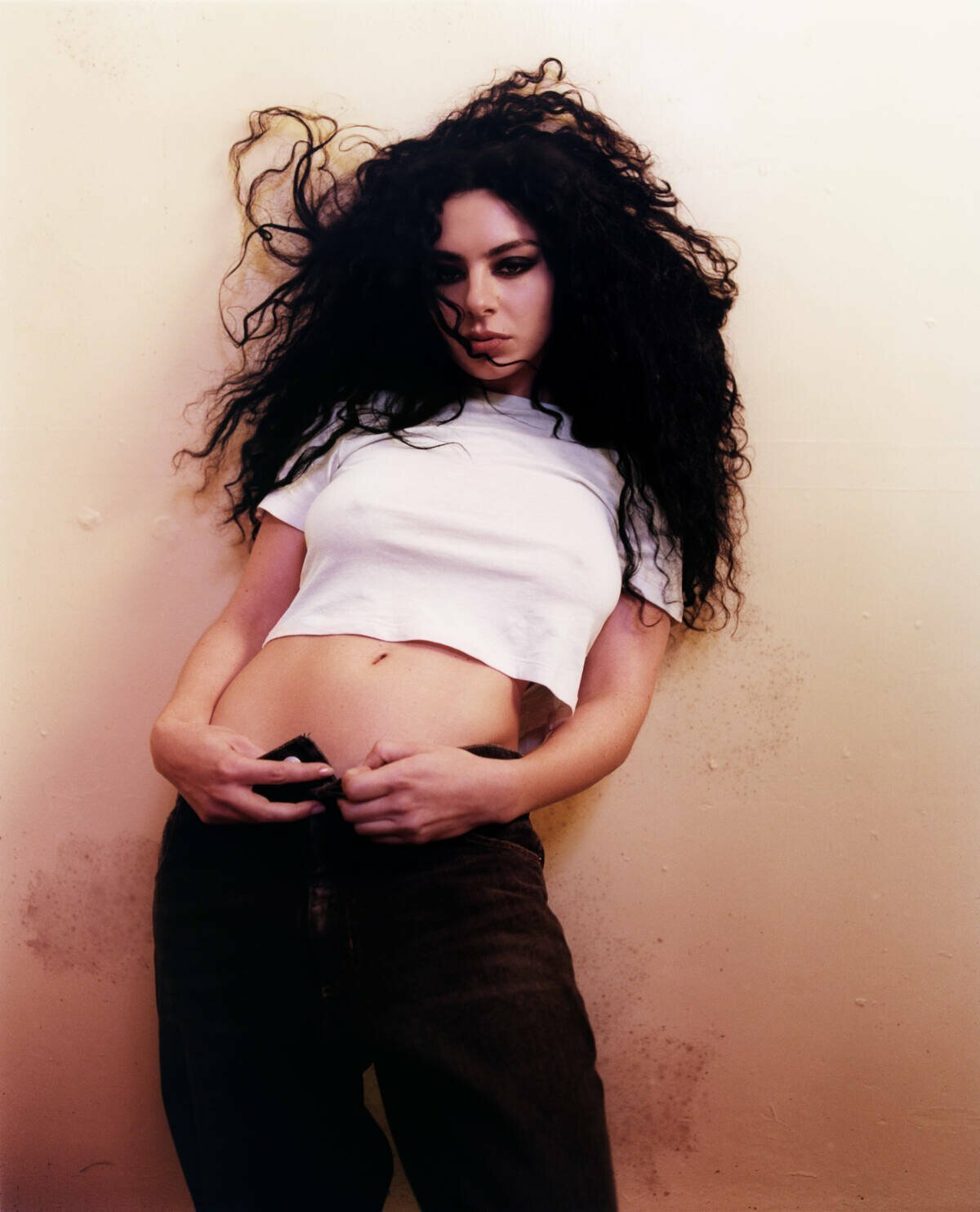
Image 1: Terrence O'Connor

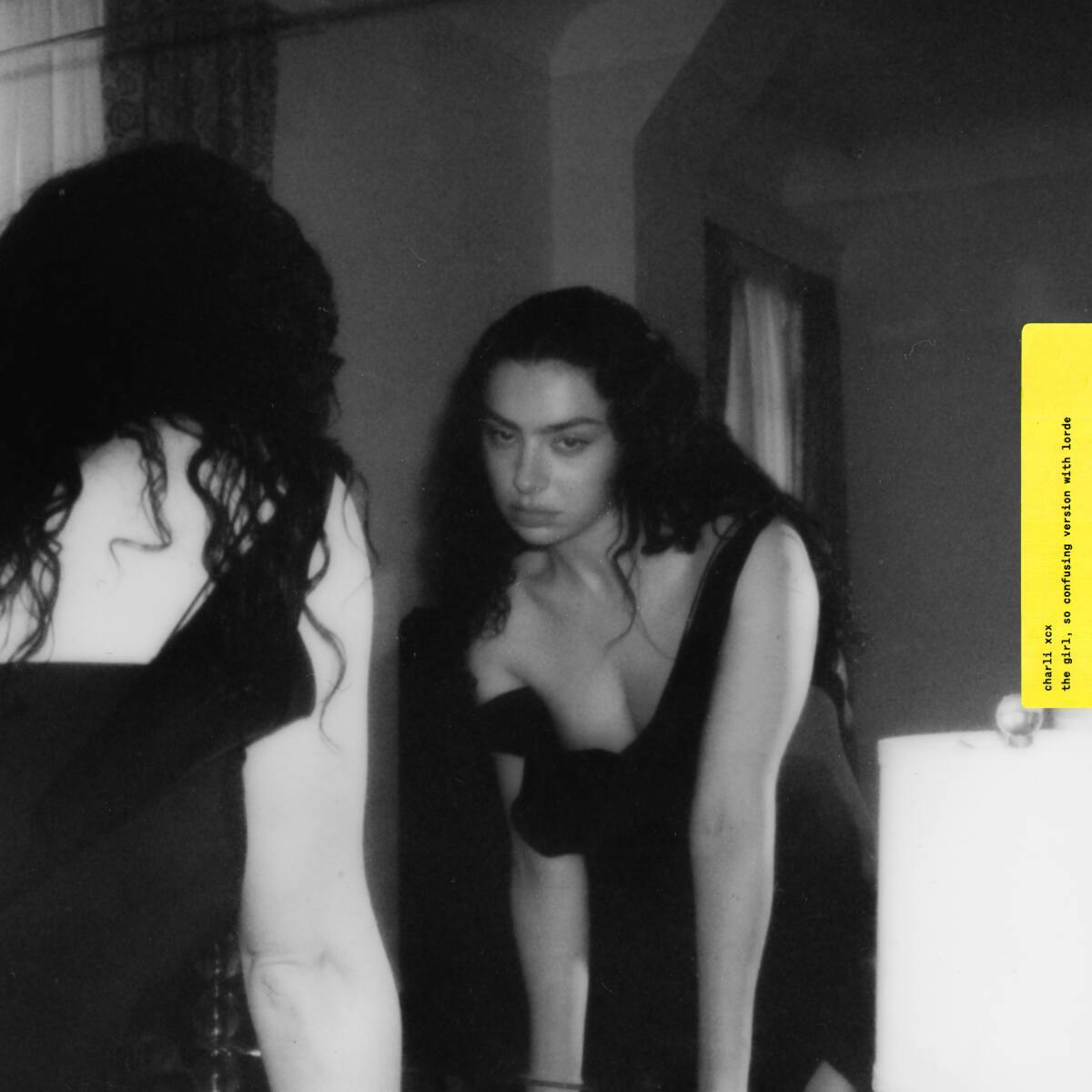
Image 2: Harley Weir

Others via Atlantic Records