Subscribe
Headliners

Mike Sabath breaks down producing & co-writing RAYE’s WHERE IS MY HUSBAND! & his new solo album

Mike Sabath is on a roll. For three years in a row, he’s been the co-writer and producer behind the biggest contenders for the BRIT Award Song of the Year – winning for RAYE’s Escapism in 2024, nominated for JADE’s Angel of My Dreams in 2025, and he’s potentially about to win again in 2026 for his contribution to RAYE’s horn-led banger, WHERE IS MY HUSBAND!. He’s the man behind the best song of 2025, and the mystery Mike JADE references at the beginning of her debut single – ("Hey Mike, let's do something crazy,") – but when he’s not writing BRIT and GRAMMY Award-winning songs for the UK’s most compelling female artists, he’s a producer, songwriter, musician and artist in his own right.

We address the golden gramophone-shaped elephant in the room. Sabath has just picked up the Harry Belafonte Best Song For Social Change Award GRAMMY for his efforts on RAYE’s powerful 2023 single, Ice Cream Man, which details the UK singer’s teenage experience of sexual assault at the hands of a music producer, and its aftermath. 

The recognition means a lot to 28-year-old Sabath, who's been working with RAYE since she left her label and went independent, co-producing or producing every song but one on her critically acclaimed debut album My 21st Century Blues, which went on to win seven BRIT Awards in 2024, including British Album Of The Year. Joining Headliner on Zoom from his home in L.A., a slightly jetlagged Sabath shares that winning awards is not something he’s become accustomed to just yet.

It’s my first time winning a trophy,” he admits. “It is a niche award, but it’s such an honour and such a special one.” He is keenly aware that art for social change has never been more needed, commenting that, “artists are the gatekeepers of truth. They are civilisations' radical voices [that] powerfully mute the enemy's thunder”. He means it too, and is proud to stand on the right side of history, sporting badges for Pride, to stop ICE, to encourage people to use their voices and vote, to protect public lands, and to make art, not war.

On my journey, impact is essentially my whole purpose,” he nods, sincerely. “It's my driving force, and it’s what inspires me to do anything: working with artists, going out there myself, doing whatever I can to help and bring some light wherever possible. 

"I get to work with artists who have such a beautiful light, and we get to go out there and shine with what we do. It’s really special, so for my first GRAMMY trophy to be the Harry Belafonte Social Change Award is really special. I’m so excited to have one in the house, I’m not gonna lie,” he smiles.

“You see people do that whole [keep the GRAMMY in the] toilet thing, but it’s this weird reverse-humility thing, in my opinion. Then you have guests over, they go to the bathroom, and your GRAMMY’s there? It’s like, okay, brother, that's kind of weird. It’s an honour, and you should let yourself own that honour! You don’t have to brag about it, but you should at least respect it, I think,” he shrugs.
When I started it, I was ahead in my musical abilities, but I hadn't gone to the depths of my journey as a human yet.

Born and raised in Westchester County, New York, Sabath was musical from a young age, learning to play piano, guitar, clarinet and drums. At just 12 years old, he wrote a song for charity and recorded it with a chorus of 140 children – a project that went on to raise more than $5,000. After high school, he deferred his Harvard admission to pursue music and landed his first publishing deal just hours later with Sony Music. Before long, he was writing hits for Liam Payne and J Balvin, Selena Gomez, Lizzo, Jonas Brothers, Meghan Trainor, and RAYE. Alongside the release of My 21st Century Blues in 2023, Sabath also released his debut studio album, Being Human.

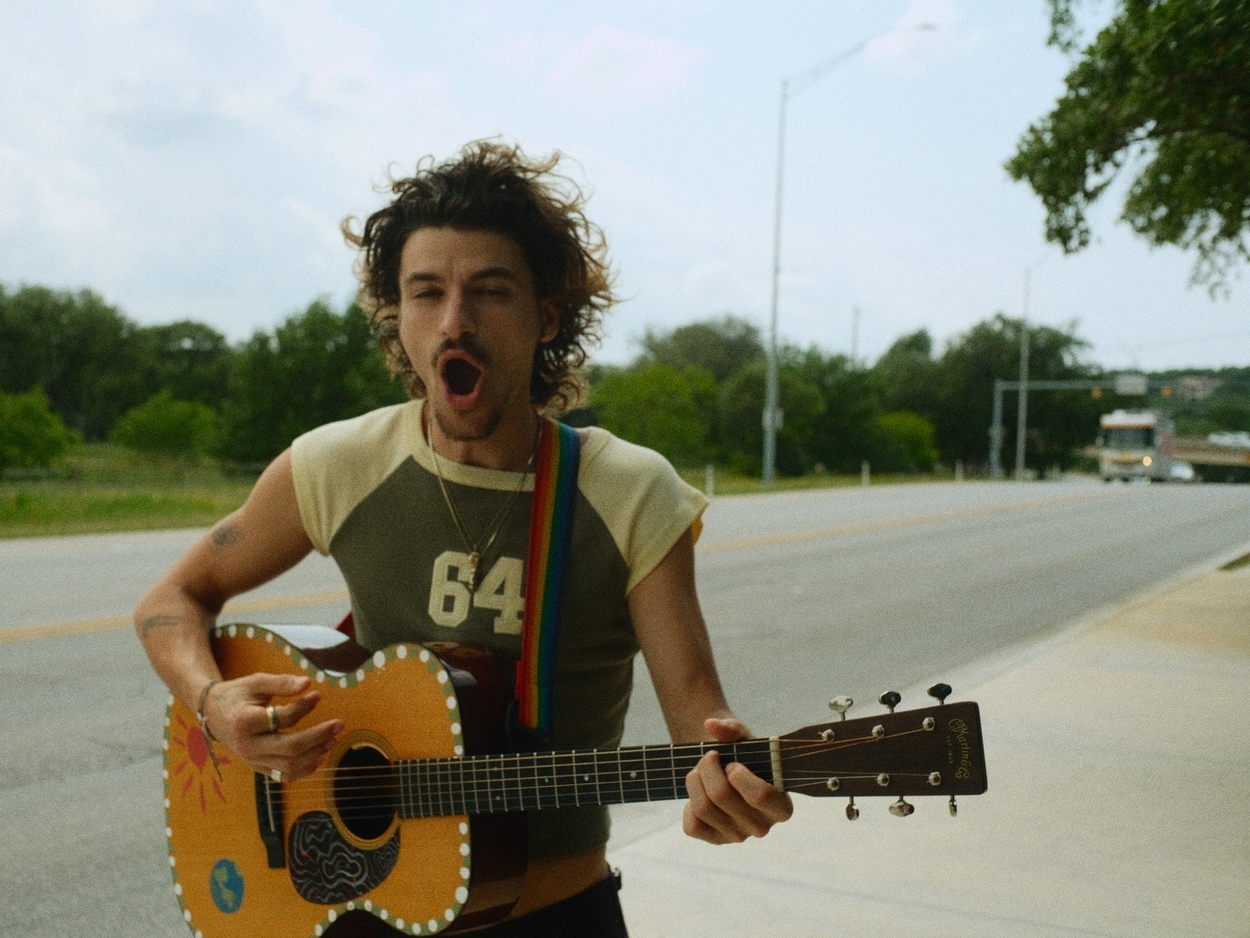
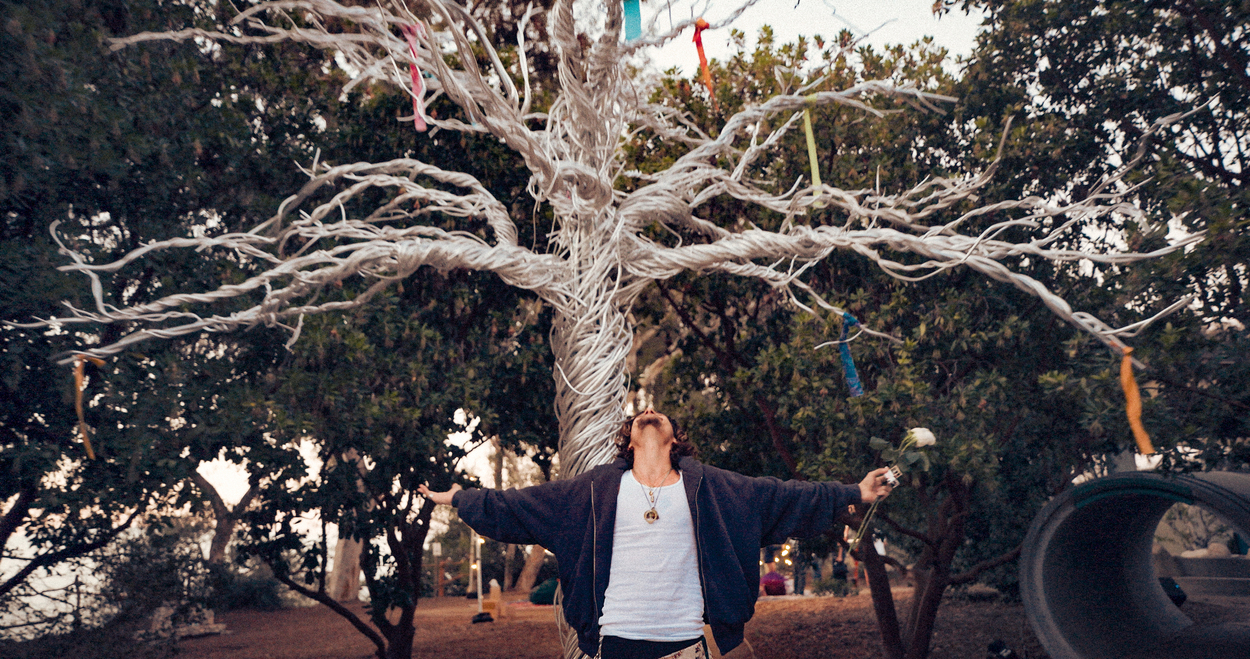
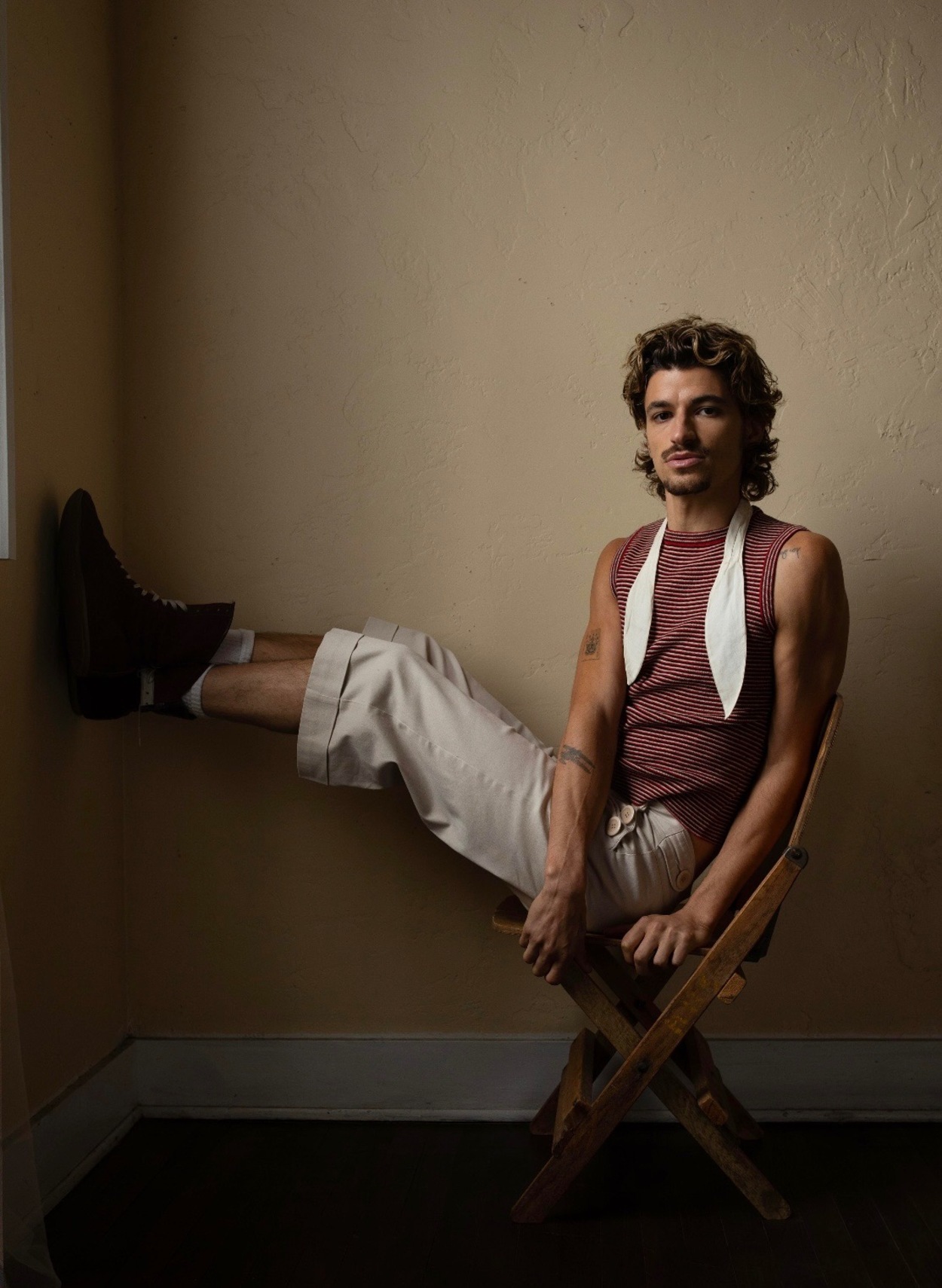
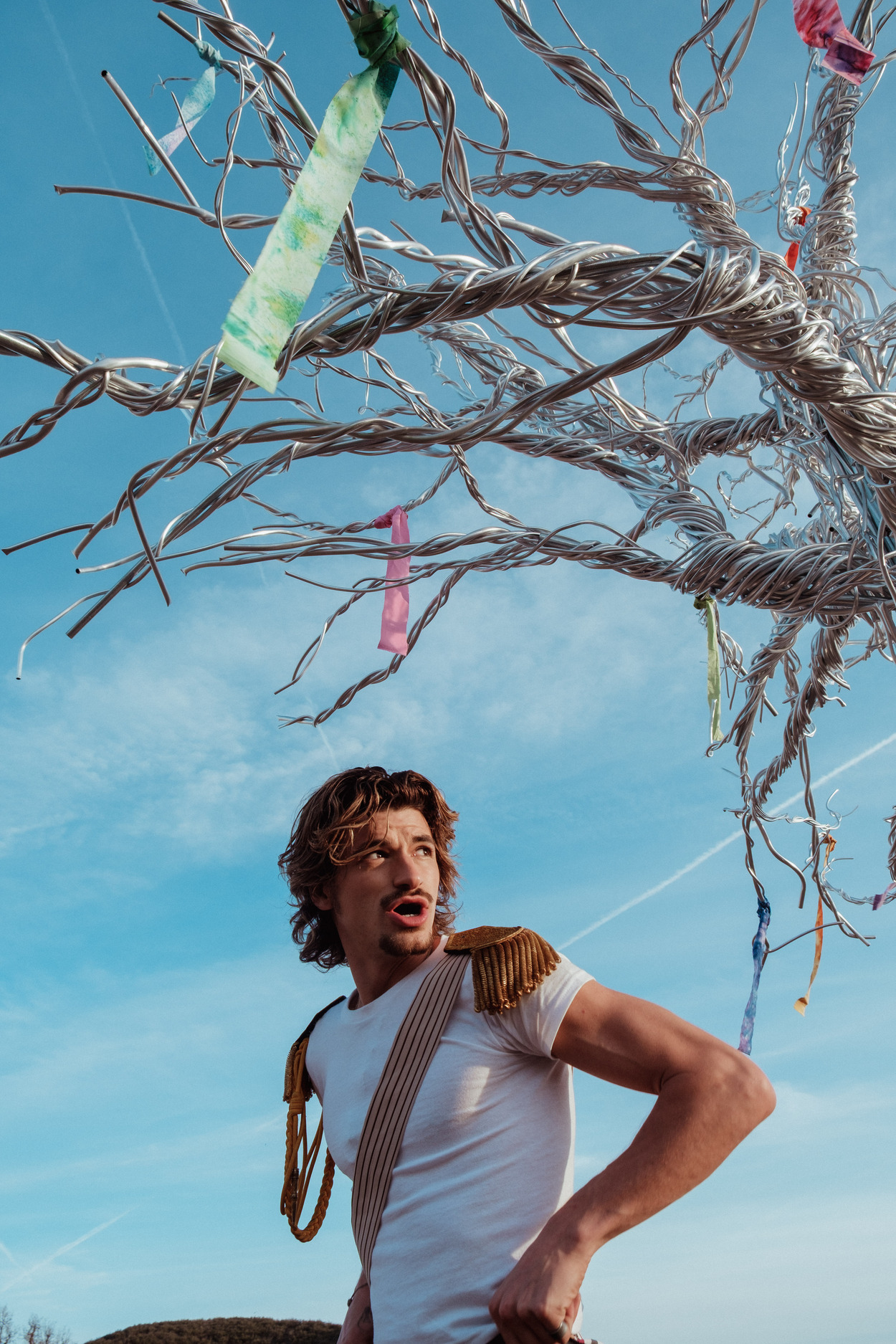
His follow-up is the emotionally-charged and nature-infused full-length record, Album II: The Land Of The Twisted Tree. A project six years in the making, the record blends vulnerability with tender lyricism and masterful production into a genre-blurring cinematic experience that provides a welcome touch of escapism amidst a backdrop of discord and ugliness in the US, inviting listeners into a more inclusive world.

“It's about creating a world that I'd prefer to live in and welcome people into,” he nods. “That's the whole point, especially at a time when the world we live in can so often feel devastatingly challenging. This is my way of offering an alternative. A space of love, a space of care, compassion, free expression and colour and magic.”

The Land Of The Twisted Tree is one of the best albums of 2025 that you haven’t heard – yet. The intriguing, experimental record carries a distinctly cinematic feel, inviting listeners to journey alongside Sabath as he searches for meaning in the world around him. 

Retro-pop grooves driven by synths and danceable beats intertwine with deep-thinking Sabath’s tender vocals, dreamy live-sounding instrumentation and polished production. It’s an accomplished body of work that deserves far more attention; one can’t help but think that had these songs been Harry Styles’ they’d be dominating the charts.

I didn’t really have any context for my feelings, which were immense. Over time, they started expressing themselves through music.

“Once I figured out what the visual world of the album was – which is the whole point of the patience in the process – everything shifted,” he recalls, casting his mind back to when he started the album in 2019 (he has been booked and busy working with other artists since then, in his defence). 

“When I started it, I was ahead in my musical abilities, but I hadn't gone to the depths of my journey as a human yet. I’m obviously still on that journey, but being an artist is about discovering the world that lives inside you and bringing it out into the world, inviting people into it so you can impact things, reflect what’s out there, and explore how those two interact.”

The album began with Sabath feeling as though everything he wanted to say was bursting out of his chest. He gathered some friends together, rented an RV and drove around the west coast of the US for inspiration amongst nature, recording music around the bed in the back of the RV whenever inspiration struck. It turns out it was one hell of a trip, in every sense of the word.

“We're all sensitive beings,” Sabath considers. “Depending on how you’re raised, your environment, and your journey, that sensitivity is either nurtured or damaged, or shaped in ways that affect your ability to feel. I was raised in a very supportive home, but also one that was very cerebral. I would hang out upstairs with everyone, and then I’d go hide away in the basement, making music constantly. 

"That was my space to express myself, but I didn’t really have any context for my feelings, which were immense. Over time, they started expressing themselves through music, but my mind was still kind of trapped, holding it in.”

In 2019, Sabath did mushrooms for the first time, which opened everything up for him. “It got me out of my head and allowed space for my heart to really express itself,” he shares. “That was a huge catalyst. Once that shift happened, my hair even got longer, which is kind of hilarious, very classic,” he laughs, “but it genuinely affected me. 

"All the emotion my mind had been suppressing started exploding out, and I didn’t know what to do with it. Sound became my main way to release it. I didn’t yet have the tools for honest communication or self-reflection, so it was all sound, and it just exploded out of me.”

The last song on the album, Happy Tonight, was the first song Sabath made for the album. “That was the first time I made a song and listened to it and thought, ‘Wow, I am an artist.’ It came from the most honest place I had at the time. 

"Anyone on any journey has that process of allowing themselves to embody who they are. When it comes from a pure place, it's sometimes the hardest thing to recognise and accept. For me, it took six years to fully step into it.”

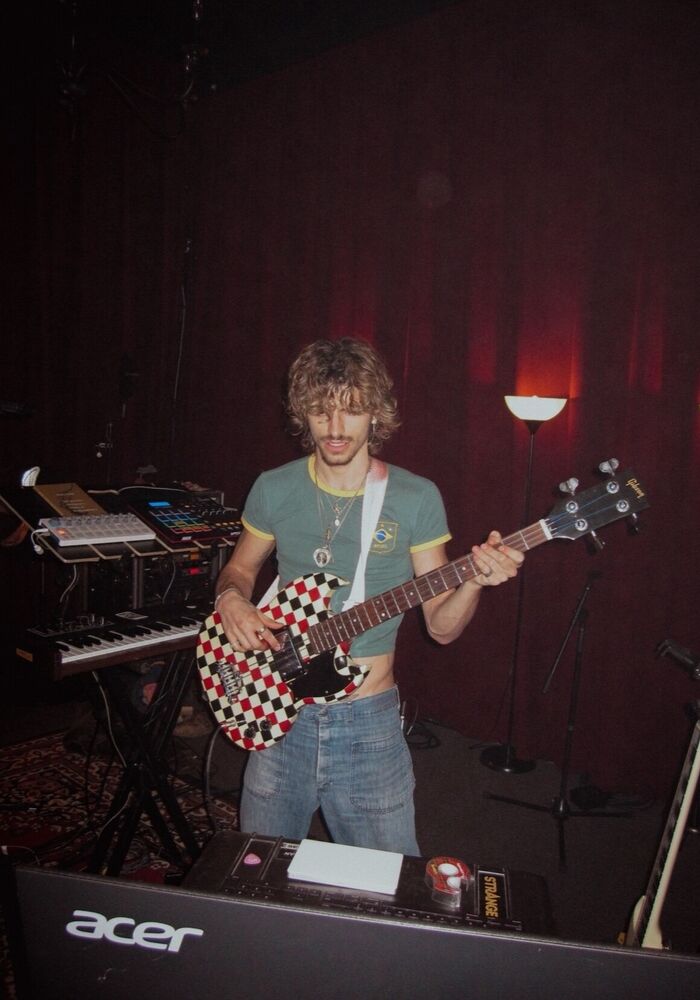
Recording an album in an RV across national parks is certainly a unique approach to making an album. Sabath shares how he made his studio on wheels work: “I was inspired to create in motion, in a kind of physical flow. I called it Mobile Stu,” he grins. 

“I thought it would be crazy if I rented an RV and loaded it with gear and went to national parks. I didn’t know exactly what we were making, but the intention was to make some music and see what happened. We were literally all around the bed in the back, and we would make the music like a band. 

"We had a computer back there, two speakers, and an interface, and all our instruments plugged in: mic, guitar, keys, bass, whatever. We’d take turns playing, just jamming while the van was moving, driving through Yosemite at night under the stars, or Zion National Park in the early hours.”

Different tracks on the album can be traced to Sabath’s experiences in specific locations, kicking off with the cinematic, Disney-esque Beautiful Pillows, travelling through the euphoric, synthy Watching Over Me, radio-friendly Paranoid, spontaneous and loopy, Canyon Nights, Nick Jonas-sounding, Fear, and you can almost see the RV making its way through dramatic vistas – lens flare and all – on harmony-heavy, Hi.

Watching Over Me came to Sabath in Zion National Park. “I’d got up really early, everyone else was still asleep, and I walked out of the bus to the little rest stop, wearing my robe and slippers,” Sabath recalls. “On my way back to the bus, I heard this little melody. I walked back on the bus, went around the bed, and started playing with the idea. When you’re out there, away from everything, there’s more space to just listen. 

"That melody literally just arrived, and I ran with it. I was wearing these necklaces from my grandparents – my mum’s parents, both of whom had passed. That song felt like it was about them; it carried that feeling of being protected and watched over.”

I have to allow myself to let go of everything – because the truth comes out when you do.

While becoming an artist was always his dream, helping others find their voice led to global success for Sabath, making him one of the most in-demand songwriters and producers of today. 

Sabath’s career as a collaborator skyrocketed to another level when he executive-produced RAYE’s groundbreaking debut, playing a pivotal role in shaping the trajectory of her career and elevating her to the celebrated artist she is today, while his work with JADE has firmly established the South Shields star’s identity as a formidable solo act following a decade in Little Mix.

“When I was younger, I didn’t really know what a producer, songwriter, or artist was – I just knew I made music,” he shares. “When I’m producing for someone else, I’m holding an enormous amount of space, which I feel is the primary job of a producer. They’re the leader, and I’m there to support them. When I’m the artist, expressing myself, it’s a very different space. I have to allow myself to let go of everything – because the truth comes out when you do.”

WHERE IS MY HUSBAND!

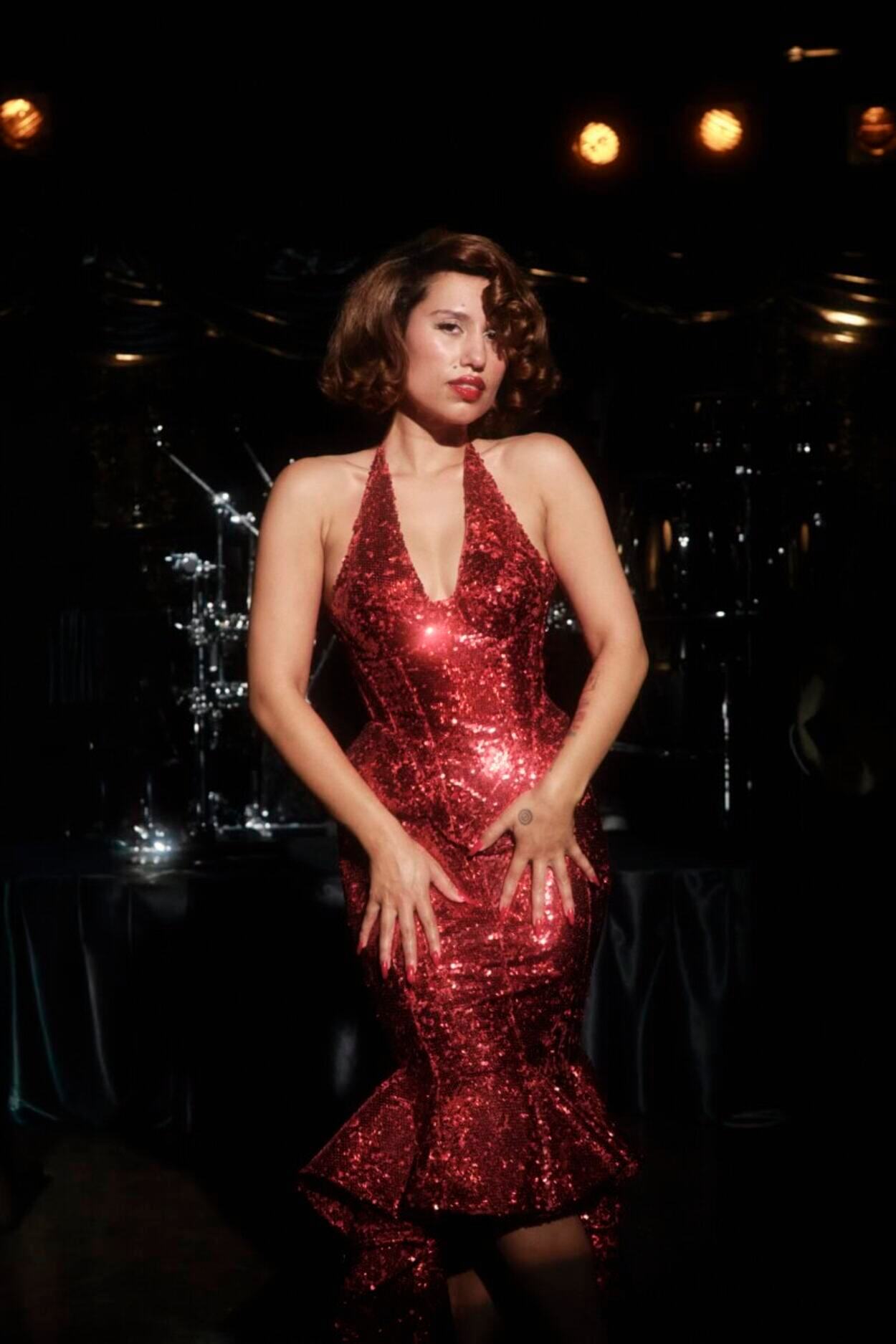
Released in September 2025 as the lead single from her upcoming second studio album, THIS MUSIC MAY CONTAIN HOPE, RAYE’s WHERE IS MY HUSBAND! debuted at no.4 on the UK charts before sleeper-hitting its way up to the no.1 spot in January 2026. 

Driven by a bold, brassy horn section reminiscent of Christina Aguilera’s Back to Basics era that makes you want to kick a door off its hinges in search of said elusive husband, the single smashed through the banality of the radios’ A lists to remind listeners that this is what music can sound like.

Written and co-produced by Sabath and RAYE, the big band pop track hurtles through at a relentless pace thanks to its live band feel, unpredictable vocal arrangements and melody, quick-fire lyrics and a vocal-stacked bridge so complicated it inspired a riff challenge that is not for the weak.

“It’s honestly insane,” says Sabath of the song’s detoured route to the no. 1 spot. “The journey with RAYE is just so special. It’s not often you get that producer–artist relationship that functions at that level and quality, with an artist who is truly generational. I’m really grateful for what we have together – it’s beautiful. The fact that it continues to grow, that people continue to resonate with it, that she continues to grow in the process, and that I continue to grow too, it’s so fulfilling.”

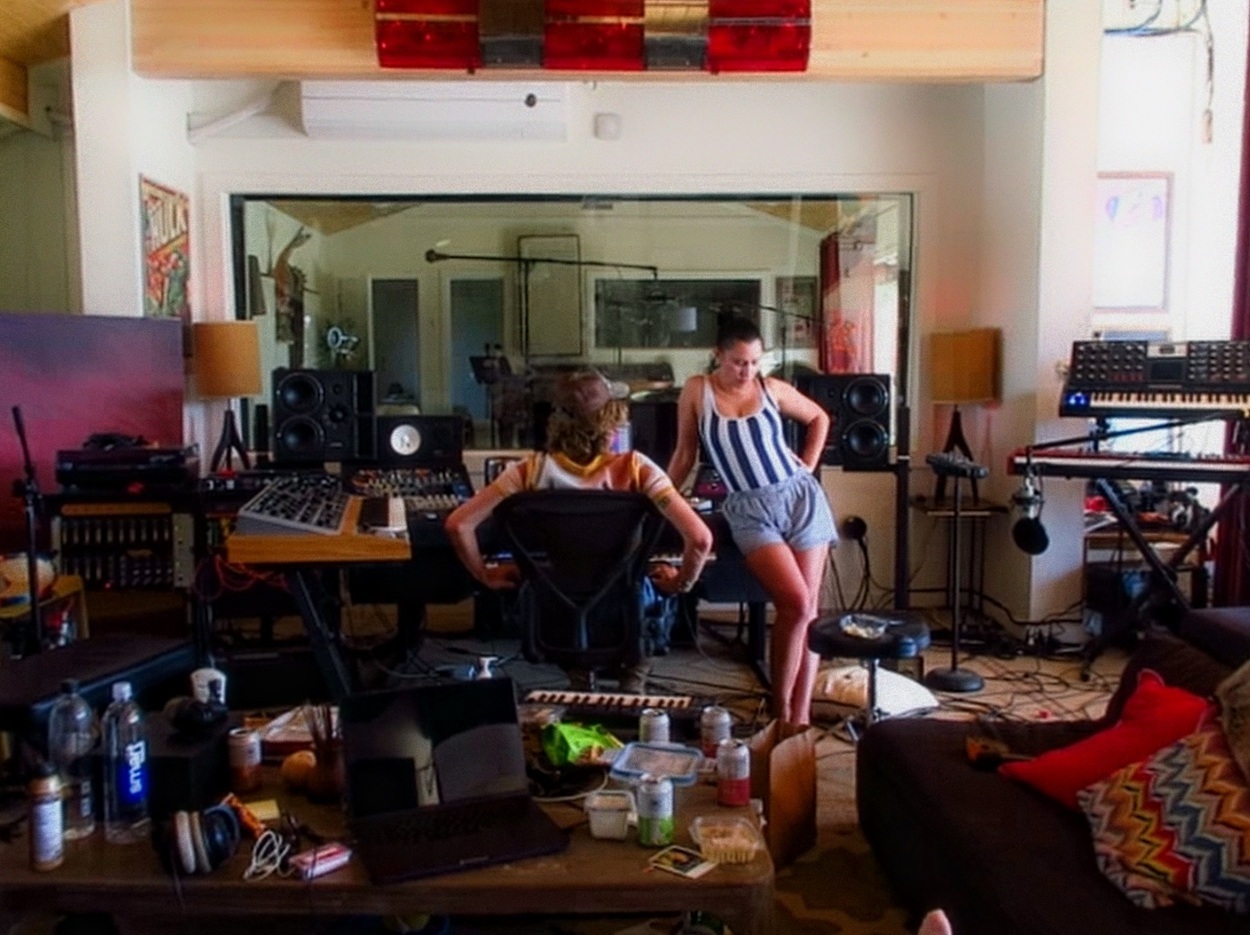
The track opens with a theatrical big band–style drum roll, and despite the fullness of the sound, the song was created with only three musicians in the studio (Sabath on drums, with a bass and a brass player). Sabath and RAYE initially struggled to get in the zone when sitting down to write together in an AirBnB in Big Bear Lake, California.

“We were in Big Bear together for 10 days, and it was the first time we worked on the new album,” he says. “We ended up getting four of the songs for the album out of that trip, which was really exciting. Neither of us had been in the rhythm of making songs for a while. She had been touring nonstop since the last album, and I was also touring at that time. 

"Our creative engines weren’t exactly running, so being out there together was a bit of a reboot. We were asking ourselves, ‘How do you even make a song again?’ And I think that helped, honestly. Having that space let us approach it from a fresh perspective, with a lot of life experience accumulated over that period, and without ego – because we hadn’t written in a while. 

"We were just experimenting, being patient with each other. Her lyrics weren’t flowing as usual, my beats weren’t flowing as usual, and we had to slowly integrate everything.”

Our creative engines weren’t exactly running; Her lyrics weren’t flowing as usual, my beats weren’t flowing as usual.

The first few days saw the pair try out a few vague ideas. “I’m pretty sure this song started with me playing drums on a MIDI keyboard – just ding, ding, ding, ding,” he sings, “then adding horns and MIDI strings. That became the foundation: drums and horns outlining the progression, with strings layered on top, and then a drum roll at the very beginning. I was excited to introduce her with that drum roll, to reintroduce her sound in a way that felt fresh.”

Once the song began to take shape, RAYE knew she wanted her new music to feel as though it was performed live on stage rather than created in a studio, and when it came to the wall of sound vibe, she was clear about her vision: the opposite of minimalism: maximalist. Taking the phrase ‘go hard or go home’ to its limits, the pair got to work.

“She loves drama,” nods Sabath. “Drama is her middle, potentially, first name,” he laughs. “We started with that, and then she started singing this verse. We actually kept fucking with her about that melody as a joke, which is funny, and she almost didn’t use it, but she did. And then she just sang the chorus – she’s amazing, and it just kind of happened.”

AI could never. “The reason we all love learning about the process of making songs is that it’s not something you can put into words,” he smiles. “It’s this bizarre, intangible, magical moment that’s beyond the mind. So it was just a really beautiful, awesome moment. We were just having fun, and then it just happened. We didn’t finish the song there, but we had the core of it, and it was awesome. And then we just let it unfold, and she kept digging at the lyrics.”

Due to TikTok attention spans, songs are getting shorter, and a casualty of that is the phasing out of the bridge. WHERE IS MY HUSBAND! instead makes the middle eight the most vocally exhilarating section of the song. Sabath admits that when he first heard it, he couldn’t decide if it was doing way too much, or if it was genius.

“She wrote the bridge while I left the studio, so I can’t take credit for that,” he immediately volunteers. “That was RAYE and her engineer, Alex Robinson – he’s an amazing vocal engineer. I was out for a couple of hours, and she wrote this crazy bridge, and I came back, and I was like…” he trails off. 

“My first time hearing it, I was like, ‘I don’t know’. With a genius like her, it takes a second to process what’s happening because it’s something new and is really pushing things. I have instincts, but there are times when you just need to be patient. At first, I was like, ‘This is either way too much or so fun and awesome, and I love it'. I had to give it a couple of tries, and then I was like, ‘Oh yeah…oh my God!’”

RAYE wrote that crazy bridge, and I was like, ‘I don’t know’ - With a genius like her, it takes a second to process what’s happening.

Sabath explains how he conveyed the ambitious horn section arrangement to the player, which matches RAYE’s vocal run exactly: “That was funny. That was challenging because whenever I’m doing horn or string arrangements, I never chart them. I usually just sing the parts and ask them to play them, one by one, basically. Which works both ways; sometimes they nail it, and sometimes they’re like, ‘This fucking guy!’. But they did it; it took a couple of tries, and then they dialled it in.”

Interestingly, the song doesn’t feature a traditional lead vocal – only doubles, which is rare in pop. Sabath explains how he approached the panning. “It just wasn’t working, and RAYE was saying that while she’s recording, that the lead just isn't sitting, and it’s not nice. So she only did doubles. When I was mixing it with Tony Maserati, who I love so much – sweetest man ever and a great mixer,” he adds as an aside, “I was having him pan it in different ways. 

"On the verses, it's four vocals, on the chorus, eight, and it fluctuates throughout the track. It's about finding that right balance of panning to make it feel like this engulfing thing, but also like a lead. I just panned it to my ear until I liked it.”

WHERE IS MY STUDIO KIT!

There’s a lot of saturation happening in the track without the mix ever collapsing. Sabath reveals that RAYE used a Telefunken ELA M 251 vocal mic run through a Neve 1073 preamp and a TUBE-TECH CL 1B compressor, and occasionally, a Universal Audio 1176 compressor.

“I produce in Ableton, and for this track, the vocals were in Pro Tools, although the chorus vocals were in the original Ableton session,” Sabath clarifies. “I recorded the chorus vocal in Big Bear, and we had the 251, 1073, CL1B setup there. 

"For drums, we Frankensteined something in Joshua Tree – I don’t even remember exactly how, there was some strange stuff there! Somehow, because Alex is a great engineer, it just sounded exactly how I wanted. It was a mixture of Alex and a blessing; it sounded exactly like I needed it to.”

Three different mics were used to capture strings, which were recorded in a different session. “That’s because I like to get an orchestral type of sound, even though there were only three players,” he says. “I rotated the microphones to avoid weird phasing. I’m probably the least technical producer on Earth, potentially, so I just take what I’ve learned from working in studios,” he confesses. 

“When I used to work at EastWest Studios, an engineer I loved – Chad Gordon – taught me this: when making string orchestras with one violin or cello, just have them do it a million times and use different mics. We used an AKG C414 on the viola, a Neumann KM 84 on the violin, and a Neumann U 47 mic on the cello.”

If you’re recording a vocal and you put a poor-quality reverb on it, it cheapens the record so much.

At home, Sabath relies on his ATC SCM25A Pro Mk2 studio monitors – “I love them. ATCs are definitely my favourite speakers,” – and WHERE IS MY HUSBAND! saw him reach for his go-to plugins.

“My favourite reverbs are Audio Ease’s Altiverb, which is potentially my favourite plugin that exists. Altiverb has so many unbelievable options – it’s extremely detailed. It’s probably the most expensive plugin, around $800 or so, but if you’re going to get any plugin, especially if you don’t already have a lot, Altiverb is worth it. They’re recording real spaces and giving you those reverbs, so what you get is insane, and they sound incredible.

“If I were to give any practical advice about plugins, it would be: use Altiverb and the UAD room emulations plugins, specifically Sound City Studios and Ocean Way Studios Deluxe. I think they’re incredibly high quality. For example, if you’re recording drums or anything in a small room and then experiment with the Sound City plugin, it transforms everything. I also mainly use FabFilter, UAD’s Capitol Chambers, the ValhallaÜberMod delay and modulation plugin, and occasionally a UAD SSL E Channel plugin for EQ.”

Sabath admits he’s “not a big plugin head,” but the one he considers essential for every vocalist he works with is reverb. “It is the most important plugin in any genre because quality space is everything,” he stresses. “If you’re recording an instrument – especially a vocal on most records, for example – and you put a poor-quality reverb on it, it cheapens the record so much. 

"Reverb is a natural thing: it comes from a cave, a church, or a room in a certain way, and that’s how our ears perceive it. If it’s digital and not done well, it just doesn’t translate. UAD’s Lexicon 480L plugin is amazing, of course, but I loved Valhalla when I was younger and used it on literally everything. Over time, I got more dialled in on the quality of reverb – it makes a huge difference on a record.”

This album is no game. It breaks a lot of boundaries, and there are no rules on it.

If you couldn’t tell by its all caps spelling, THIS MUSIC MAY CONTAIN HOPE, promises to be a record that commands attention, with RAYE herself describing it as "extremely dramatic, a lot of lyrics, lots of different sounds,” and one that will be set across four distinct seasons, beginning in darkness with autumn and ending with light.

“Yeah, there are some really big sounds on there,” smiles Sabath, who, although careful not to give much away, confirms he has co-written and produced multiple tracks on the new record, including I Will Overcome (which wouldn’t sound out of place as a Bond theme – just sayin’), which RAYE has been performing on her current tour.

“I made a lot of it, but there are also other incredible contributors, like Chris Hill and Tom Richards, who are unbelievable musicians and arrangers. They’re a huge part of the album, too.

The album is amazing. It breaks a lot of boundaries, and there are no rules on it,” he furthers – eager to discuss it more, but reining himself in.

“Honestly, it’s so inspiring. In an age where AI is seen as a potential threat – which, to me, I don’t necessarily view that way – I see it as just a progression – this album is the literal response: it was made by hundreds of humans with so much love, care, time, and energy, and it’s absolutely awesome. 

"This album is one of my favourite albums ever. I’m genuinely blown away by it. RAYE did such an incredible job. I’m so excited for people to hear it; it’s truly unbelievable. I love every part of it; I'm serious,” he doubles down. “This album is no game. For real, this album is serious. It’s over! It's done. She’s out of here!”

The common consensus is that the BRITs 2026 song of the year winner will be between WHERE IS MY HUSBAND! and Olivia Dean’s Man I Need. Sabath agrees:

“I mean, it’s either Husband! or Man I Need – which is a great record. I love Olivia, and we’re friends, and I would love for her to win it too – that’s my truth. That song’s been out a little longer than Husband! but they’re both great,” he smiles. “I’m just really excited about the music, the art, and everything that’s happening at the moment. I’m feeling extremely thankful for it all. It’s been a lot. I’ve been working my ass off for a long time, and it’s so exciting to continue doing that with people who are really talented and awesome.”

THIS MUSIC MAY CONTAIN HOPE will be released on March 27th 2026.

Image credits:

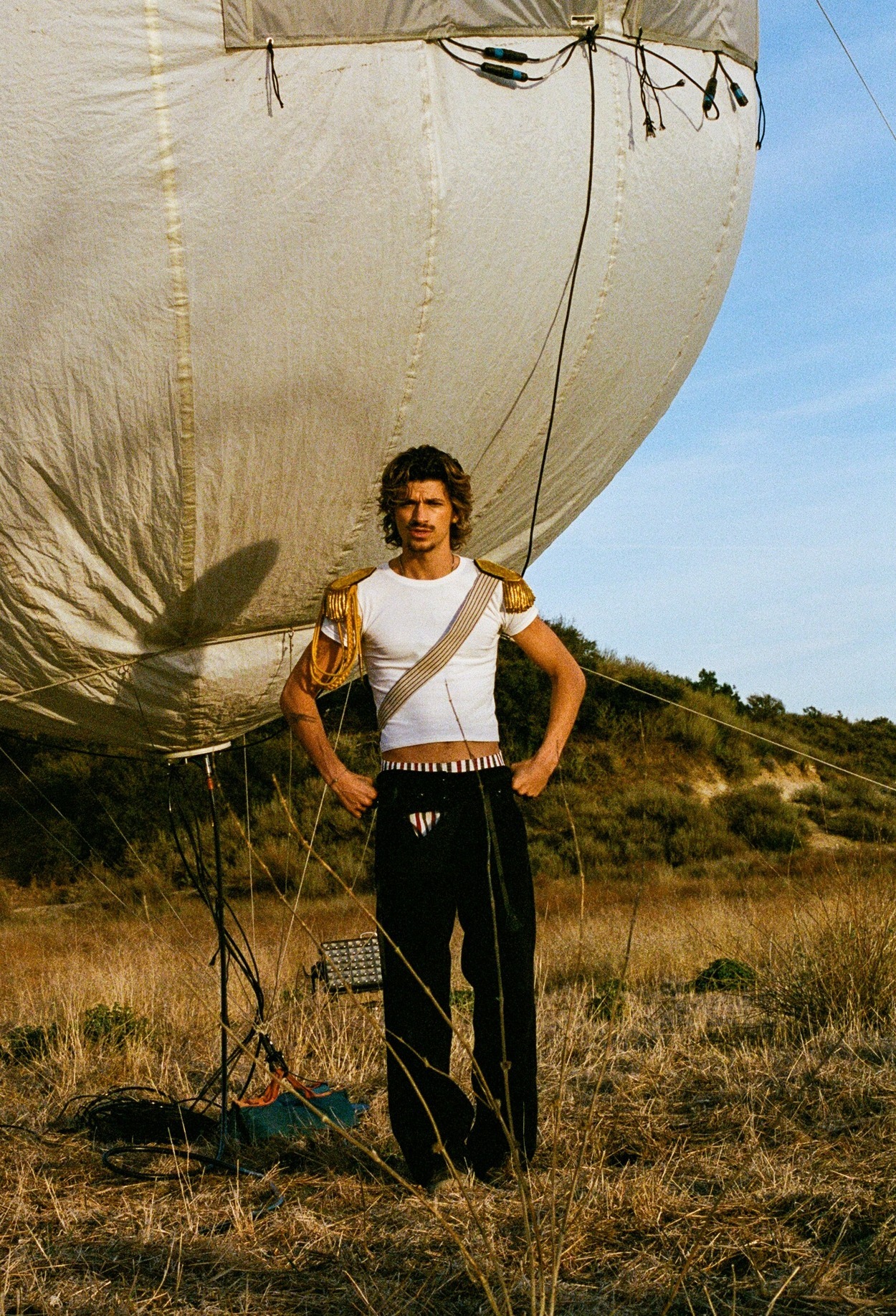
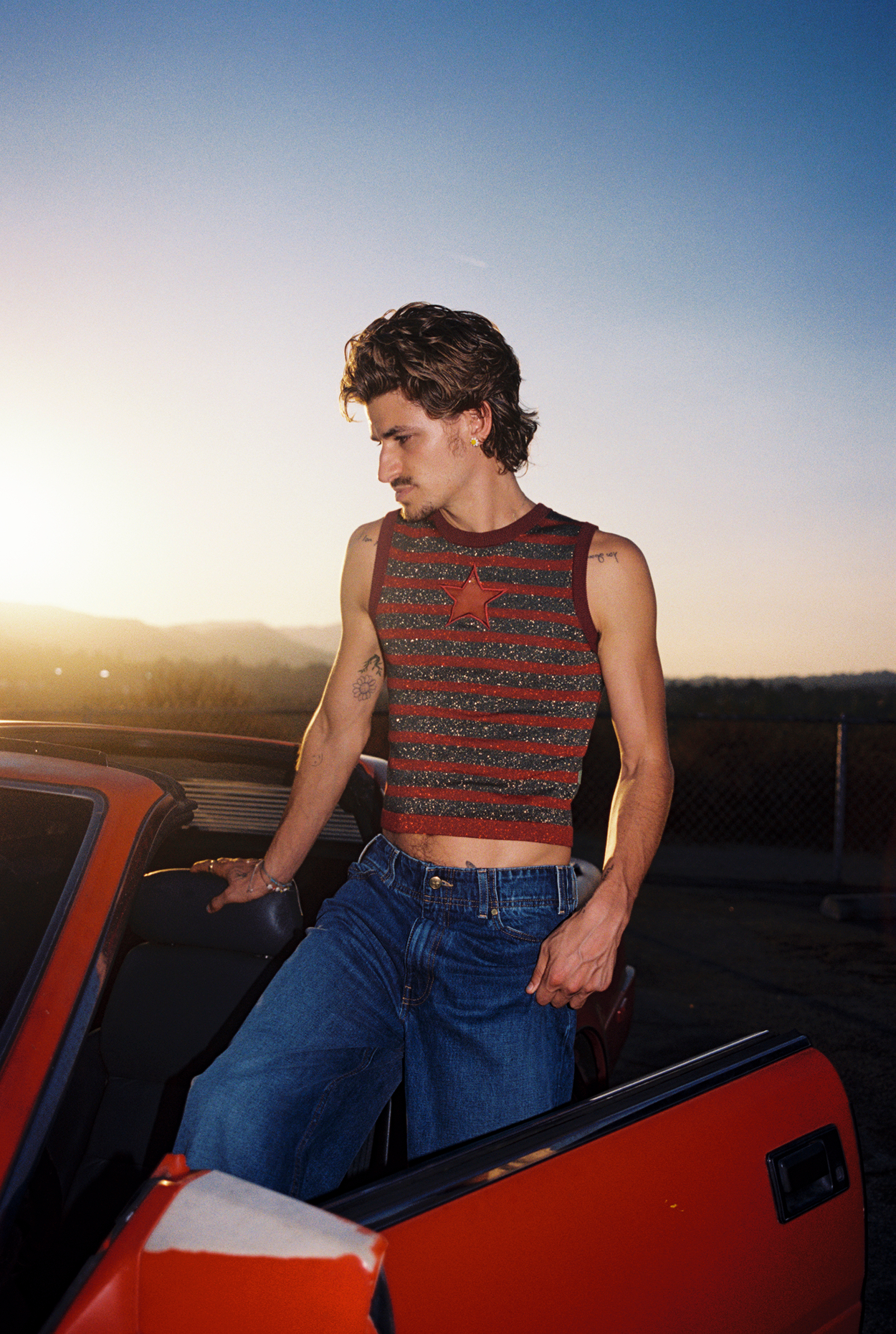
Main image 1, 3, 8: Tsarina Merrin

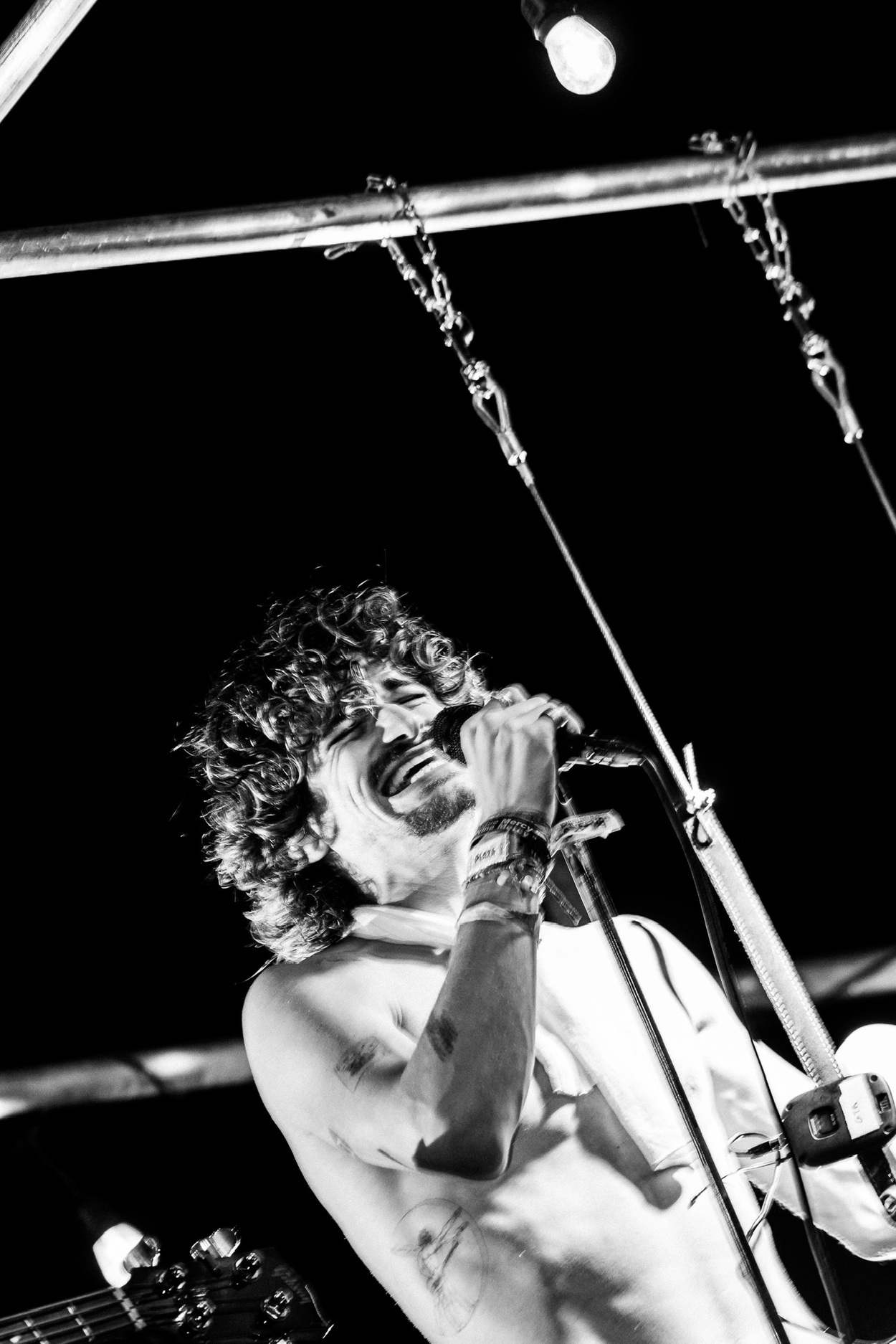
Image 2: Kobe Flagstaff

Image 4: Tate Warner

Image 5: Isabel Mazzolini

RAYE image 7: Aliyah-Otchere

Image 9: Christian Sarkine

Image 10: Halay Appell