
Subscribe
Aspiring

QSC Aspiring Interview: Tanis on ‘Kid’ & ignoring TikTok pressure

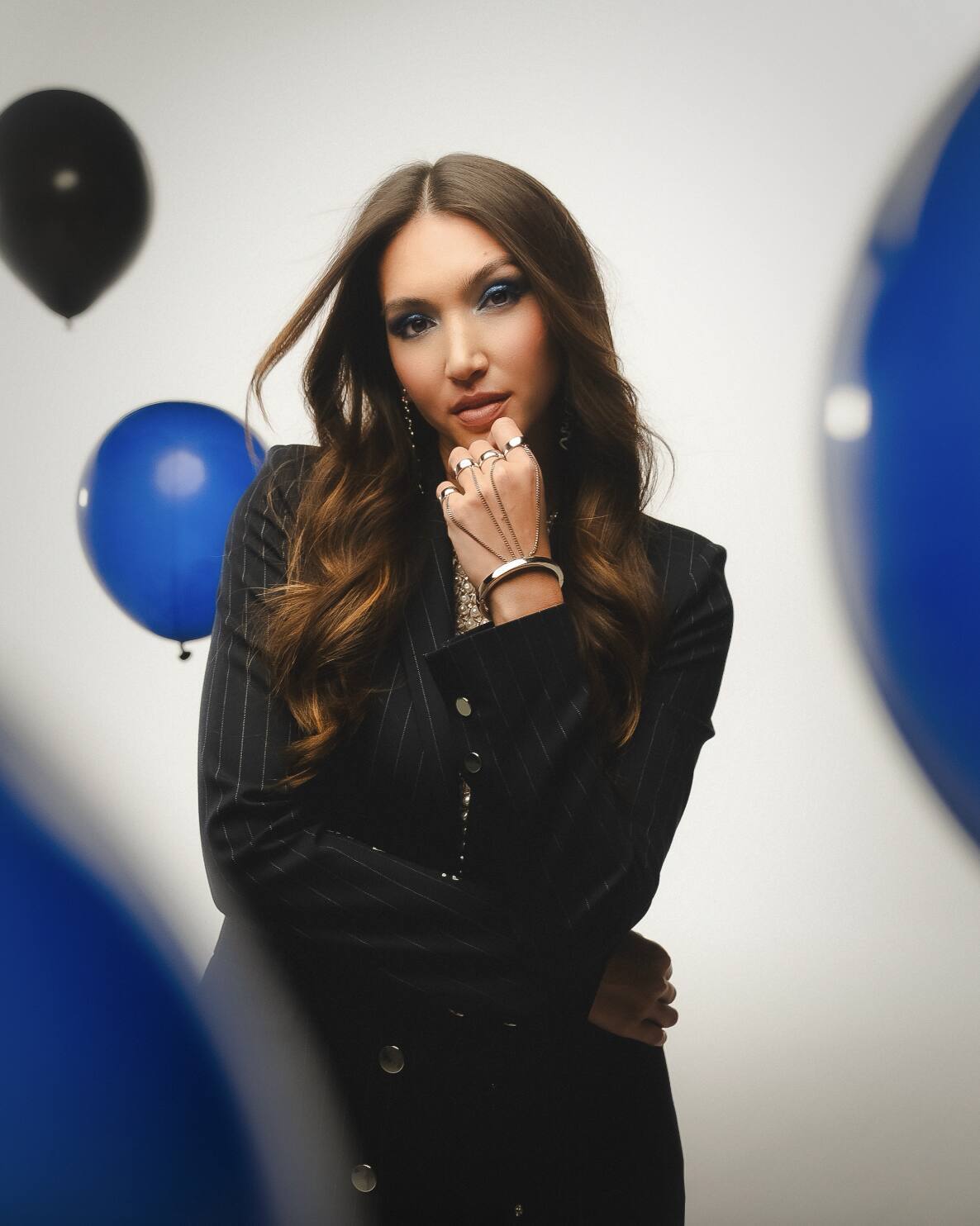
Born on three continents and fluent in four languages, Tanis is a truly global artist. Raised across the Caribbean, Asia, and Europe, and born to a French writer-producer and a Singaporean top model, her multicultural upbringing informs her distinctive, borderless sound. A classically trained composer and multi-instrumentalist, she honed her craft at NYU’s Steinhardt College, earning the Elmer Bernstein Award for film composition. By 14, she had already won a Disney competition to score a Chinese feature film, and she has since built an award-winning career in film composition across the US, UK, France, Japan, and Singapore.

Now London-based, Tanis continues to evolve her solo music career. Following the success of her previous singles, Toujours Là and Priority, she returns with her new single, Kid, a reflective pop track that marks the next step in her artistic journey. With more releases planned throughout the year, Tanis is steadily establishing herself as a versatile and boundary-defying musician on the international stage.

In this interview, Tanis discusses her early musical influences from Nat King Cole to Metallica, overcoming shyness to perform and share her music, the process of finding her own voice through songwriting and self-producing, her multicultural upbringing and how it shapes her sound, and the inspiration behind her new single Kid.

Who is the first artist you can remember having an impact on you as a child?

It’s a bit of a strange answer, because it doesn’t really match my music style. The first artists I heard were from my dad’s CDs back then. It was a mix of Nat King Cole, Ella Fitzgerald, and the complete works of the Beatles. I still love that music today. Those were the first songs I ever heard in my life.

What do you think will be on your Spotify wraps at the end of this year?

If I’m driving or in my downtime, I listen to a lot of alternative pop. I love The 1975, they’re one of my favourite bands. I also run a lot – about two marathons a year – so on my Wrapped I’ll have loads of really upbeat stuff, a lot of EDM and drum and bass, just to keep my running cadence up. Which is funny, because I’d never listen to that in my downtime, it honestly gives me a heart attack [laughs].
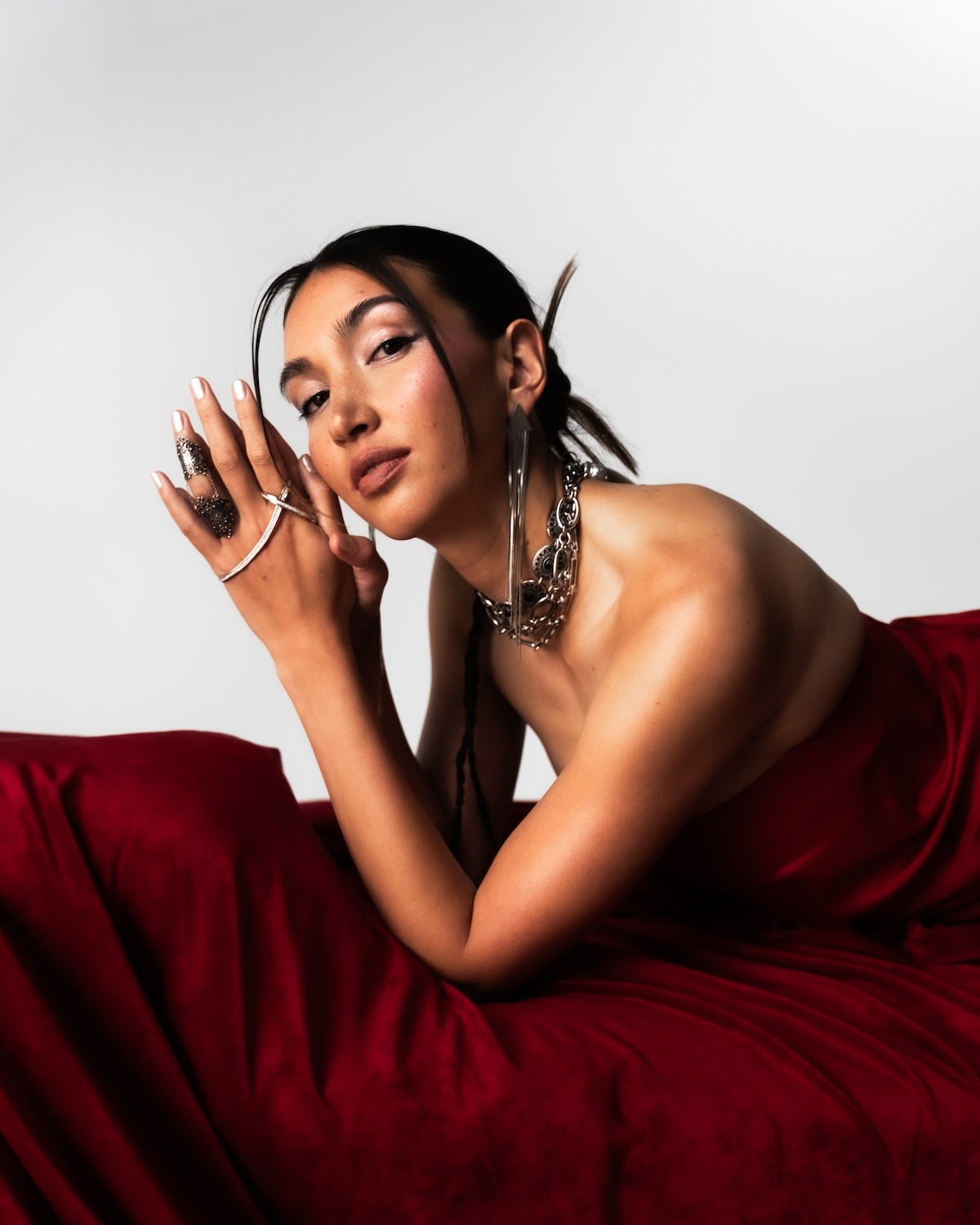

I’m quite an introvert. My mum sent me to acting school to help me learn how to speak in public. I was so shy.

Are there any types of music you enjoy that might surprise people?

Honestly, I listen to just about everything. The only genre I probably don’t listen to is country. One thing that might be a bit surprising is that I was a huge metalhead at one point. My favourite band in my teenage years was Metallica, and I listened to loads of Iron Maiden. I wore a lot of black – it was a great phase of my life. And to be fair, they’re great songs, so I still listen to them now and then.

Can you remember the first song you wrote?

I’ve probably discarded it, because it was probably awful. In my natural state, I’m quite an introvert. My mum sent me to acting school, not for me to become an actress, but to help me learn how to speak in public. I was so shy that I wouldn’t even ask to go to the restroom when I was a little kid in school. As cliché as it sounds, that really made music feel like my friend, my way of communicating.

I started doodling pieces on the piano when I was very young. I began piano at five, and started composing or improvising around eight. Songwriting came a bit unintentionally. I’m a terrible sight reader, and I really didn’t enjoy piano lessons, so instead of playing other people’s pieces, I preferred creating my own music on the piano. And that’s how it all began for me.

How did you start overcoming that shyness to perform in front of others and put yourself out there?

It's something that's definitely not natural for me to post on social media. I do need someone to remind me [to post], or else I'll forget to do it. I do prefer to keep things private, but I've learned to view it in terms of there's nothing wrong with sharing parts of your life or what you enjoy with others, and I think that's part of what writing music is. I've tried to reframe it for myself so it doesn't bother me as much.

Do you feel pressure to create content for TikTok, or do you just post when it feels natural?

I’m still learning about TikTok. I’m more familiar with Instagram. I just post what feels natural to me, mainly music and that sort of stuff. I don’t try to create something for a viral moment because I don’t think anyone can say what will or won’t go viral. I just try to stay honest with myself in what I post.

I don’t try to create something for a viral moment.

You were born in Paris and are now London-based, you're fluent in four languages, and were raised across the Caribbean, Asia, and Europe, with a Singaporean mother and a French father. How important is it for you to reflect your heritage and the different places you’ve called home in your music?

It really depends on the song. I wouldn’t intentionally add a traditional Chinese instrument to a track just because I have Chinese ancestry if the song doesn’t call for it. For me, it’s about producing a track that tells the story both lyrically and musically.

That said, when the moment feels right, I do enjoy adding certain elements. For example, I like using hand drums subtly in the background because I was exposed to them from a young age in the Bahamas. I also bring in scraped percussion instruments that were common there. 

I’ve got a song coming out later this year that’s more cinematic and reflects my journey. In that one, I’ve woven in little touches from the different countries I’ve lived in and that are part of my life. I've written songs in French. 

I haven’t written any in Mandarin or Italian, mainly because I’d say I’m bilingual in English and French. My Italian and Chinese are a bit rusty since I don’t use them often, so I don’t think I have the fluency to write a really intricate song in those languages.

You began composing classical music at a young age, drawn to film scoring after watching The Good, the Bad and the Ugly conducted live. You won a Disney competition to score a feature film at age 14, and you have an award-winning screen composition career. What was it about composing that captivated you?

Seeing that concert, and seeing Ennio Morricone conduct The Ecstasy of Gold live, was breathtaking. I remember thinking, "What is this type of music?" I’d heard film scores before, of course, but I didn’t realise at that age that it was actually a job. Straight away, I thought, this is what I want to do. 

I already loved music, but no one in my family played. My mum was a model and my dad was a writer and film producer, so they knew the industry and how tough it is. They didn’t really want me to go into a creative field as a career.

Discovering film scoring felt like a breakthrough. I loved it, and I could see a way to make a living from it. Because, unfortunately, very few people today can build a career from concert music alone. Classical music, especially, is a difficult industry. With film scoring, I could finally tell my parents this is what I want to study.

How did you convince your parents that this was the path for you?

At first, they discouraged me, but I don’t think that was a bad thing. It pushed me to take my music more seriously, to improve my sight-reading, and to enter competitions. 

That eventually led to me submitting a theme for Disney, which I won. That was an amazing experience. I didn’t score the whole film myself – I didn’t have the expertise then – but I submitted a theme that was chosen. Then, a Chinese composer and a French composer arranged it for the opening sequence of the film. It was incredible to see how the process worked behind the scenes. 

That really confirmed for me that this is what I want to do, and it set me on the path to knowing that when I went to university, I was going to study it.

First, you’re too young, and then suddenly you’re too old. Why can’t we keep pursuing things regardless of age?

How was it to move from that to writing songs for yourself as an artist?

Even though they’re very different, it’s still all music in the end. With film scoring, you’re helping to tell a story through the film – supporting the scene, the dialogue, whatever’s happening on screen. With songwriting, you’re telling your own story through the lyrics and the music. So I see them as related, just inverted a bit.

I’ve always loved both, and it was never a hard transition from one to the other. I still do film scoring now, and then in between scoring projects, I feel the need to write songs. In that space, I don’t have stories handed to me by directors or producers, so I imagine my own stories or draw from something I’ve recently lived or heard. That’s really what songwriting is for me – it’s just many stories that I’m telling.

Your new song Kid explores the complexities of adult life and the longing to return to the simplicity of childhood, which is something I think many of us can relate to. Where did the idea for this song come from?

It came to me surprisingly quickly. I think it’s because I’ve been living it year after year. Especially in this industry – though I think it happens in all industries – there’s a phase in your late teens or early twenties where everyone says, “Oh, you’ve got plenty of time. You’re still young. Don’t rush, we’ll figure it out later.” And then suddenly, a few years down the line, people are like, “Oh, you’ve passed your prime. Why haven’t you done this yet?”

That stigma kept coming up for me. First, you’re too young, and then suddenly you’re too old. Why can’t we keep pursuing things regardless of age? I see it all around me – even my parents’ generation. My dad sometimes says, “I’m too old to start something,” and I always think, "Why not? He always wanted to play an instrument, but never had the chance when he was younger. Why can’t he learn piano at 75?

That’s why the song came to me. It’s about resisting that mindset and continuing to dream. If you stop chasing what inspires you, especially in an artistic career, then what’s the point of doing it in the first place? I see it not just in myself but in friends and people around me, and I wanted to capture that feeling in the song.

I had a very blessed childhood, so I definitely can’t complain, and I have a lot of beautiful memories. But there were times when you were very much under your parents’ umbrella. Any little problem would go through them, and you didn’t really have to deal with much yourself. It was very nice in that way.

Of course, eventually you have to face things on your own, and it’s good to experience that, to grow up and learn. But I don’t think learning has to come at the cost of losing the joy and excitement you had as a kid.

The set designer put the bears in black plastic bags. It looked like we were transporting a bunch of bodies!

Were the giant teddy bears in the video all real, or were some backdrops or CGI?

They were all real! We found these amazing bears from a prop house, and they were so much fun. It was actually really funny while shooting the video, because when we were taking them back and forth, the set designer had to put them in black plastic bags. It honestly looked like we were transporting a bunch of bodies, so we had to tell everyone, “No, these are bears!” The crew started naming the bears, which was really fun. Most of the crew were well past their 40s, but they were all playing with the bears and giving them names, and I thought it was so emblematic of the song.

When did you first get into music production, and do you handle your own production?

It's something I fell into. When I was about 16 or 17, I signed a development deal with Warner in France. At the time, I was just writing songs and singing, but the songs were given to me, and I had very little control. At 16, I honestly had no idea who I was, didn’t know what music I wanted to make, had no stories to tell, and not much life experience. So it didn’t really work out, and I wasn’t proud of what was being released or worked on.

I took everything back and decided that if I wanted to do this myself, I needed to learn the technology and how to produce music on my own, to find my voice before collaborating with others. Collaboration is great, of course, but I wasn’t quite ready at that stage because I didn’t have my own voice yet. 

That’s how I learned to produce. I’m still learning a lot – I’m no mixing engineer, and new software comes out all the time – so it’s something I try to keep on top of. Around the same time, I also started doing jingles. I had topics and videos to go with, but I had to produce the songs myself and write the lyrics. I think all of those experiences feed into where I am today, producing my own tracks.

What’s next for you in terms of music? Is there an EP or a full album in the works?

There’s an EP I’m releasing at the end of the year, and I’m really excited about it. I’ve reproduced and reimagined it so many times, and I finally feel like I’ve got it to a place where I’m happy with it and ready to share it.

In terms of performing live and expressing yourself through music and self-producing to find your own voice and sound, what does the phrase Play out Loud mean to you?

It’s funny that the question comes up because Kid encapsulates that. Playing out loud is about going out there, being yourself, and making mistakes. My vocal coach once gave me some advice that really stuck. At the time, I was always trying to deliver the perfect performance, and I’d get nervous and tense, which actually ruined my singing.

She said, "When you go to a concert, what do you remember most? Is it the perfect, immaculate performance, or the moments when something happens in the moment – a mistake, a musician talking to the audience, a guitar stopping working?" I realised it’s the latter, the original, real moments that stick with you. 

Playing out loud is very much about that. It’s about living in the moment, being yourself, and doing what feels authentic.

Is there anything people would be surprised to learn about you?

At university, I started a summer job as a scuba diving instructor in the Bahamas, so I got my certification as an instructor, and that was also a centre where they shot a lot of movies, because they're known for sharks. So I also learned how to become a shark feeder. So I actually have fed sharks, and I did that for three summers in a row. I loved it so much that I was going to drop out of university and become a scuba diving instructor, which my mum promptly said no to! 

I have one good friend who's become an amazing underwater photographer, so I go diving with him as a safety diver. I love scuba diving, and I love sharks. Every winter, we try to go diving with Tiger sharks and bull sharks.