Subscribe
Live

Why Shure’s microphone technology is the perfect match for pop’s biggest stars

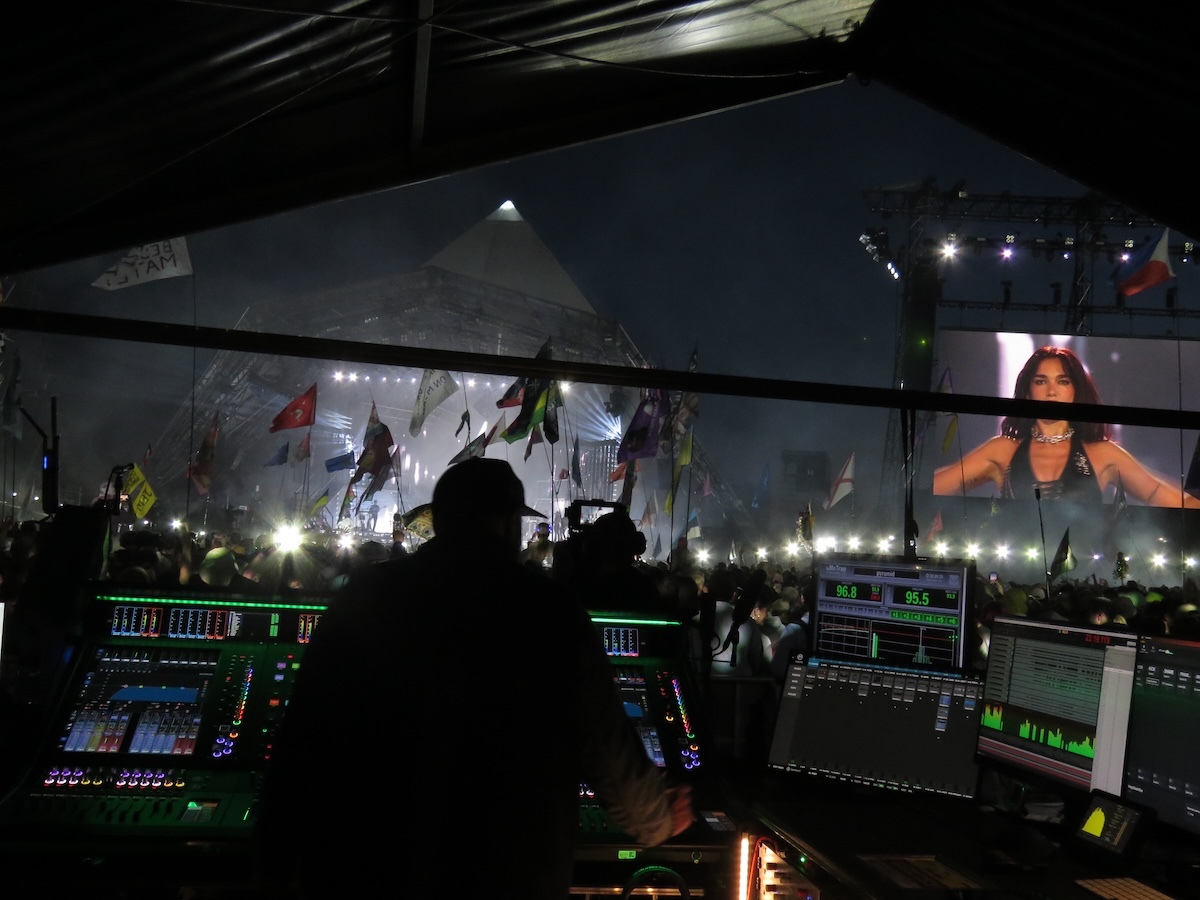
Front of house engineer Will Nicholson has spent his career touring with some of pop’s biggest icons, including Dua Lipa, Central Cee, Gerry Cinnamon and Sam Smith. Reliant on microphone technology that can adapt to unconventional audio setups, Headliner spoke to him about Shure's extensive selection of products and why the brand continues to impress him show after show.

Shure’s KSM11 has been widely praised for its clarity and natural vocal reproduction. What were your main considerations when choosing this mic for your recent tours?

In a pop show, the vocal is the most critical component in a mix, where we hope to avoid having to settle for compromise. The KSM11 has allowed us to avoid this. It’s incredibly honest, doesn’t pick up too much of the room, behaves in front of the PA, and displays genuine linearity across a variety of input levels. Having such an outstanding microphone means that compromise disappears, allowing artists to be as creative as possible, whilst the audience can enjoy the vocal performance as intended.

How does it compare to other mics you've used in the past?

The KSM11 immediately required far less control with EQ and shaping, presented enhanced clarity and level during performances and has much better rejection when in front of the PA or in highly reverberant spaces.

In your experience, how has the technology in Shure microphones evolved to meet the demands of modern live performances? Are there any specific features or advancements that have significantly impacted your workflow?

My experience working with Shure is one of continual progress. For example, despite having the most ubiquitous dynamic mics in the world, they are still seeking to push the boundaries of sound. The new Nexadyne range considers the entirety of the signal pathway and how mechanical and component developments can contribute to an improved overall result. The KSM11 is also a great example of engaging with new technologies to offer improvements – the full frequency linearity we get from digital audio, performance critical polar patterns and zero handling noise all combine to make a very attractive capsule.
In a pop show, the vocal is the most critical component in a mix, where we hope to avoid having to settle for compromise.

You have two very different drum kits on your current tour. Could you walk me through your approach to miking each kit and how the mic selection supports the distinct sonic goals for each?

I am currently on Dua Lipa’s Radical Optimism Tour, on which we have a large stage, including a section of the show on the B stage at the end of the thrust; the entire band joins the performance for a handful of songs, including a unique, one-off cover song. This entire performance takes place in front of the PA, whilst the band’s usual positions take place safely behind the PA on the main stage. The main kit is acrylic, and has a modern, forward sound to it - it is also static, so we can mic it up and not worry about movement. It has a combination of dynamics and condensers to allow for some tonal variety in my mix, including the new Nexadyne 2 Kick Drum mic, which is absolutely phenomenal.

The B stage kit, by contrast, occupies a completely different place, sonically and physically. It is a wooden kit, as we wanted a different response from it, so it became important to highlight that choice. The B stage is used for a variety of elements during the whole show, and the drum kit is only placed there for 3 songs, so we needed to deliver a drum sound that maintained the excitement and presence of the main kit, delivered tonal contrast in front of the PA, and could be loaded on stage and linechecked in under 90 seconds. 

How do Shure microphones and wireless systems help you streamline setup, minimise potential issues, and maintain a polished sound night after night?

We pick products that are rugged and reliable, and which have powerful features that allow us to solve the wide variety of problems that we encounter on tour. That’s why Shure is amongst the brands we specify.

I am currently on Dua Lipa’s Radical Optimism Tour. A combination of dynamics and compressors allows for tonal variety in my mix.

Given that every venue presents unique acoustic challenges, how do you approach fine-tuning your mic selection and placement?

One of the more nuanced aspects of mixing on tour is trying to have the greatest number of constants available as possible. As the acoustic space that a show inhabits changes with every city, it’s important to know what hasn’t changed - ideally, this is everything before the speakers.

With this in mind, I try to have a good idea about what I want my end product to sound like as early as possible in the rehearsal period, and look at what tools can help me achieve this. Picking the right mics is sometimes a question of familiarity, and sometimes being open to experimentation. The same applies to positioning. For example, every drummer is unique, so being prepared to adapt is important. Once we’ve achieved the response we’re after, it’s a question of recording the positioning and becoming so familiar with the sound and feel of the instrument that you can start to translate that into confidence in your own critical listening. Using reference tracks, combined with virtual soundchecks, then becomes a process of appraising the new space you find yourself in and making the necessary adjustments in your approach.

How does your collaboration with other engineers shape the final mic and mix decisions?

Collaboration with colleagues is a critical component of success. I’m not going to achieve anything by fighting with the band or crew! Microphone choices are generally the result of a dialogue between myself and the monitor engineer, on this tour that is Alex Cerutti. Sometimes, there might be a request for a specific microphone from an MD or band member. We work with the backline department continually – they are an integral part of a successful mix, and often offer ideas or solutions that we haven't considered.

Collaboration with colleagues is a critical component of success. I’m not going to achieve anything by fighting with the band or crew!

You've had extensive experience in live sound. How do you think microphone technology has evolved over the years, and what developments would you like to see in the future?

There is so much choice in the microphone market now! There are some really cool options to give unique sounds at affordable prices, but I think that the most satisfying development in my career has been the huge increase in quality mics for stage. With digital RF and modern capsule technology, we can be confident in reproducing a vocal with control and accuracy in a way that allows for productions and performers to become more adventurous, night after night. Speaker and DSP technology has meant this accuracy is now available in all corners of a venue – we are in a fantastic position before a note has even been played.

As someone working on one of the biggest pop tours, what advice would you give to engineers looking to refine their microphone selection and workflow in high-profile live productions?

Having a good idea about what you want to achieve will help refine your selections and push you towards making the right decisions in a timely fashion. If I find myself questioning what my options are, I ask my peers or friends what they like, and why - then I try them out! It’s an old maxim, but time spent finding out why something doesn’t work is just one stage in achieving a positive outcome. It’s a great learning tool.