Subscribe
Headliners

Ryan Tedder on melodic math, TikTok attention spans, shorter songs – & why he writes pop like a teenage girl

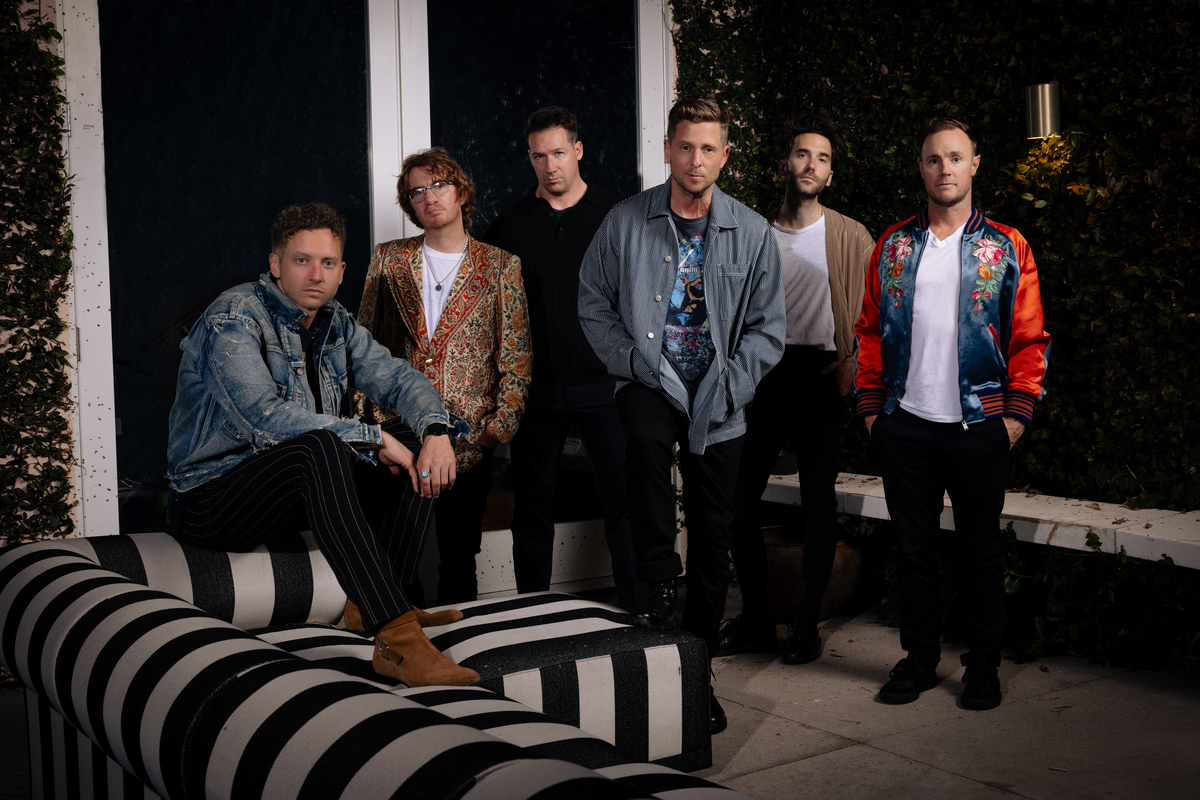
Ryan Tedder has the music tastes of a teenage girl, and it’s what’s been keeping him booked and busy as one of the most successful and prolific songwriter-producers in the world for the last 20 years. Most will know him as the frontman of OneRepublic, but he’s also a 3x GRAMMY award-winning songwriter and producer in his own right, having worked with the biggest names in music on some of their most commercially successful records, including Beyoncé, Adele, and Taylor Swift. Heard a catchy song on the radio in the last 20 years with an infectious, melodic run? Chances are, Tedder wrote or produced it.

And while many artists struggle to reap the financial rewards from Spotify streams, Tedder (or private equity firm KKR, which bought a majority stake in his music catalogue in 2021) has no such problem. This year, Tedder racked up 27.8 billion streams from 316 million listeners across 184 countries. 

At this point, he seems to be carrying the music industry on his back. His recent songwriting credits alone read like a roll call of chart royalty – Rosalía, Tate McRae, Katseye, and Beyoncé and Miley Cyrus’ 2025 Grammy-winning duet II Most Wanted. It’s a level of dominance that cements his status as a writer-producer extraordinaire, a reputation he’s been building ever since OneRepublic’s breakout hit Apologize shattered the US Top 40 radio airplay record with 10,331 spins in a single week.

And before anyone could say, ‘Thank you, another one,’ he needn't have worried about being pushed off the top spot by another artist: his only competition turned out to be himself. The Timbaland remix of Apologize held the no. 1 most played song for five months until Leona Lewis' Bleeding Love – also co-written and co-produced by Tedder – broke that record with 10,665 plays in one week. And as of 2025, Apologize, Bleeding Love, and Beyoncé’s Halo remain among the best-selling singles of all time.

It’s no surprise, then, when grabbing a strict 20 minutes with Tedder to discuss modern songwriting trends and OneRepublic’s first-ever career-spanning album, to discover he eats, sleeps, and breathes music. One gets the impression you could pose him any question on any musical topic, and he’d immediately be able to lurch confidently into an insightful discussion spanning decades, genres, and eras. 

And even though he’s in full-on interview promo mode for OneRepublic’s new album and will have answered every question put to him today countless times already – if not 20 minutes before this interview, then throughout his career – he answers with real depth and expands thoughtfully on each topic. Far from going through the motions, he takes one breath and expels a dizzying stream of well-considered musical knowledge and opinions, complete with tangents, compelling subplots, and whatever the opposite of long story short is.

“I still have a job because I basically have the ears of a 15 or 16-year-old girl. Truly! I have the musical taste of a teenage girl,” he insists when reflecting on his ability to write mega hits across decades. 

“Ultimately, my ear gravitates towards something that young people are going to resonate with. You get really lucky when it's an artist like Adele, or even OneRepublic; I have dads come up to me and they're like, ‘My eight-year-old is blasting I Ain't Worried or Sunshine on our way to school every morning’, while the parents grew up with Apologize, Stop and Stare, or Counting Stars. That's the secret sauce for me anyway.”


I have the musical taste of a teenage girl.

Part of that secret sauce, aside from his undeniable talent for writing smashes, seems to lie in Tedder's signature melodic hooks and unpredictable vocal choices that stand out across his work. 

Take the bridge in Adele’s Turning Tables, for example, or the last run at the end of the chorus on OneRepublic’s Love Runs Out; the anthemic, six-note ‘I’ that leads the pre-chorus on Counting Stars, or the earwormy way Beyoncé dances over four notes in the last belt of Halo. Does Tedder consciously build these interesting melodic choices into his songs as he’s seen what’s been successful for him?

“I think that ultimately the answer is somewhat yes, somewhat no,” he considers. “In terms of the melody choices that I make, if I'm writing a song from the beginning, whether it's Adele’s Turning Tables, or something for Rosalia or Tate McRae, even though they're all three wildly different genres, the best way to put it is, you know when you have an itch somewhere on your body and it's hard to reach and you can't quite figure out where it is, and you're trying to explain to someone else? 

"Like, ‘Hey, can you scratch this part in between my shoulder blades?’ It's one of those things where you're like, ‘No, that's not it…no, up, to the right, to the left, down, down, down, down, down’. It's like there's an itch that I hear once I hear the chords, and even if I'm writing the chords myself or someone else did the track, there's an itch, and I'm trying to scratch it.

“I don't quite know where it is until I land on it, and then I'm like, ‘Yeah, that's it!’ That's what I'm doing, but the itch is the melody. So at the end of the day, I'm really scratching my own itch. And again, that's pretty much the reason I still have a job – because of my ability to execute or scratch that itch, whether it's for something more highbrow, like a super Pitchfork-y indie band or artist, or if it's the most pop, Sugababes thing in the world, and everything in between.”

Once I hear the chords, there's an itch, and I'm trying to scratch it. I don't quite know where it is until I land on it.

Long before Tedder’s first foray into music (he interned at DreamWorks SKG in Nashville, producing demos for songwriters and labels), he worked as a waiter and at Pottery Barn. 

Anyone who’s done their time in retail and hospitality will be all too familiar with the playlists that these establishments cycle through, which, depending on whether one’s memories of that employer were favourable or not, can create something akin to song-PTSD when hearing them again, no matter how much time has passed. Tedder laughs, immediately recalling his days as a waiter:

“My first job waiting tables was at a Joe's Crab Shack in Nashville, and one of my really close friends is Diplo,” he mentions – segue incoming. 

“We were hanging out a couple of months ago and were talking about, of all the places in all the world – I'm not from Nashville – but I was living in this suburb called Hendersonville, working at Joe's Crab Shack in the car park of this really shit mall called RiverGate Mall, and inside that mall, my restaurant faced a shoe shop called Just For Feet. And Wes, or Diplo as everybody knows him, was working in the shoe shop at the same time I was working at Joe's Crab Shack, which is hilarious. 

"Literally, you're talking 30 metres away, and I used to go into that shop and look at shoes. It's just a weird little coincidence, because he's not from Tennessee either. We just both happened to be living there at the same time when we were about 18 years old.

“But anyway,” he says, pulling himself back to answering the question at hand, “in terms of the music at the time, I can tell you specifically the two biggest songs that I remember being on the playlist perpetually: one was Eric Clapton, Change the World. That song played every 15 minutes. It was outrageous. And the number one song that summer, and I remember because I bought the CD, was Goo Goo Dolls’ Iris. I'm pretty sure Chumbawamba’s Tubthumping was also on that playlist. I think they all paid their mortgage off with that song,” he laughs.

Tedder grew up listening to the top 40 at a time when the only way to catch a new song was to listen to the radio or watch MTV. Songwriting and the way tracks break out today look very different. He weighs in on whether or not he’s adjusted his songwriting style to follow industry trends.

“More or less, you're a by-product of your environment,” he says. “I was raised without access to any cool radio stations or record shops. All I had was the top 40 countdown, seven days a week. So naturally, call it two decades of growing up with nothing but the biggest 40 songs in the world, seven days a week – that was my radio station. Because of that, I think my ear is naturally inclined to write things that resonate with the masses, as opposed to more niche music listeners.

“I think in terms of conscious decision-making, I for sure have my own signature style. Songwriters tell me that all the time. To this day, I couldn't articulate what that is other than emotion. I gravitate towards things that are more emotional. I'm chasing goosebumps, chasing that dopamine rush. 

"As I wrote more and more and I got into my late 20s and early 30s, I started to become a student of the – I hate saying formula – but there is a math to melody.”

I'm not one of those guys who can sit around and brag about how cool my record collection was.

He credits this formula to Swedish DJ, music producer, and songwriter. Denniz Pop (who in turn recruited fellow pop hit-maker, Max Martin), co-produced and co-wrote a string of hit songs for Backstreet Boys, Britney Spears, *NSYNC, Robyn, and 5ive.

“He was the guy that created Ace of Base and started the whole Backstreet Boys, *NSYNC thing,” Tedder elaborates. “He more or less developed what you could call melodic math, or what some people in the industry refer to as Swedish pop math.

Once I started working with some of those guys, I quickly became a student of that and did a deep dive into understanding why hits are hits. Because up to that point, everything I'd had was just me shooting from the hip, randomly. Once I unlocked melodic math and that there is a science to hit records, that unlocked a whole new world. It made it easier for me to get out of trouble, as when you're writing songs, sometimes you get stuck.

“I don't like to write with any type of math,” he clarifies, “but when you write as much as I do and you're trying to write hit songs, sometimes you're like, ‘Why does this chorus not feel right? Why is this verse not setting the chorus up?’ When you understand melodic math and shape, it allows you to get out of jail, so to speak. So it's definitely become easier as I've got older. 

"The irony is that it's easier for me to write potential hits the older I get. It's way harder to actually have them because of social media and streaming. There are just too many songs coming out per day. It's made it way harder to connect songs on a global scale.”

I started to become a student of the – I hate saying formula – but there is a math to melody.

Indeed. Since the rise of streaming, the length of pop songs has been steadily shrinking. As platforms reward immediacy and repeat plays, tracks are increasingly squeezed, compressed, and front-loaded with hooks. In 2019 – just two years after TikTok launched – the average song length dropped to 3 minutes and 12 seconds, signalling a major shift in how music was written and consumed.

Today, many TikTok-driven hits skip intros entirely, racing straight to the chorus to grab attention before listeners scroll on (although there are rare exceptions – hello The Weeknd’s Blinding Lights). And when was the last time you sat through an entire film, or even an episode of a TV show, without glancing down habitually at your phone? Our attention spans are just not what they used to be. 

By 2024, the average Spotify charting song sat at around three minutes – nearly 30 seconds shorter than in 2019. Even the Grammys reflect the trend: almost 20% of 2024 nominees ran under three minutes, including 2025 Record of the Year contenders like Sabrina Carpenter’s Espresso and Charli xcx’s 360.

“TikTok and social media have created a situation with the majority of human beings, at least anyone who is on social media, which is probably two-thirds of the world,” Tedder nods. “The constant scrolling and page turning create this endless desire for dopamine, because every time you get a new thing, the first two seconds are the most exciting and they grab you, and then you switch to the next thing. 

"And kids are used to it. Try to find a 13-year-old right now who can sit through a 90-minute movie, unless it's K-Pop Demon Hunters. It's created a situation where everyone is craving these constant, quick, short dopamine kicks. So naturally that was going to pour over into music, and it has.”

It’s easy to blame shrinking song lengths on shortened attention spans in the streaming era, but the truth is that music has always been shaped by the technology of its time. 

When the band was at its height, the dominant ABBA-style song structure kept tracks brief, with the average song running around two minutes and 30 seconds. This wasn’t just an artistic choice – it was a technical necessity. Widely used until the ‘40s, 78 rpm records could only maintain good sound quality for roughly three to five minutes per side.

The ‘50s and '60s brought the rise of the verse-chorus form, although the 12-inch LP could only hold about 22 minutes per side. When CDs became commercially available in ‘82, they expanded the listening canvas dramatically, offering up to 74 minutes of total playtime. 

By the ‘90s, that increased capacity was reflected in the music itself. Tedder explains that he isn’t writing shorter songs now to keep pace with this trend.

“Songs have got shorter,” he confirms. “I wouldn't say that guys like me or any songwriters are intentionally sitting down and going, ‘Okay, whatever we do today, it has to be two minutes 30 or less.’ That is not at all a decision. I mean, let's be real,” he says, changing tack, “if you take it back to the ‘50s and ‘60s, your average Beatles song was about two minutes long. 

"Some of them were less than two minutes, some of them barely over, and the reason was that you could only fit so many songs on a vinyl, and so songs were truncated and shorter. Typically, with a lot of the Beatles stuff, you'd go verse, chorus, verse, chorus, verse, chorus. And if you think of the style of Johnny Cash or June Carter Cash and those songs from the ‘60s and ‘70s, also you'd have a verse, chorus, verse, chorus, verse, chorus, and that was it.”

it's easier for me to write potential hits the older I get. It's way harder to actually have them because of social media & streaming.

He uses Scottish alternative rock band Del Amitri as an example from the ‘90s, and off the top of his head, recalls the song’s exact runtime down to the second. 

“If you think about Roll To Me, look at the song length of that song and then look at the structure. They were doing a super catchy record. I remember the song being something like 2.12, and it was verse, chorus, verse, chorus, verse, chorus, and that's it.

“And as more experimental bands like Led Zeppelin and Grateful Dead came around, they started increasing the lengths of songs and jamming, and songs got longer and longer. 

"And then Radiohead or Coldplay’s song lengths exploded in the ‘90s. I remember back when Corinne Bailey Rae blew up. Her songs were around five minutes long. Or Bleeding Love, my first hit. It's around four minutes and 20 seconds. That's the length of two songs now.”

One casualty of TikTok attention spans and shorter songs is the gradual phasing out of the middle eight, though artists like RAYE and sombr are pushing back (the latter’s 12 to 12 even has a certain Tedder-esque vibe to it), crafting inventive bridges that are standout moments of their tracks. 

Tedder recalls working on what he calls the biggest surprise of his career: Adele’s Grammy-winning 21, the best-selling album of the 21st century, and his favourite project he’s ever worked on.

“The first thing that got killed was bridges,” he acknowledges. “Or in the UK, you say middle eight. If you think about Rumour Has It, that whole middle eight is a song within a song. It used to be my favourite part of songs, and it's a long middle eight in Rumour Has It. That would never work today. Those got killed off pretty instantly.”

Bleeding Love is around four minutes and 20 seconds. That's the length of two songs now.

Tedder is friends with American rapper 24kGoldn, whose catchy single Mood (clocking in at a tight 2.20) took off on TikTok in 2020 before dominating the charts and going quadruple platinum.

“That was the number one song in the world at the beginning of Covid,” Tedder recalls. “The guys that made that – Omer Fedi and Blake Slatkin – who also did Lizzo’s About Damn Time and a few other records – are the next generation of hit-makers. 

"Those guys were young, new hit-makers coming up with TikTok who grew up on social media. I call it the freshman class of hit songwriters. What you started hearing during Covid was songs dropping to two minutes, or 2.20 – it's those guys. They're all my friends, but I blame them all the time: ‘You're the reason songs are two minutes!’ They can't handle anything longer than that. Once the song gets to three minutes, they're bored. They just clock out,” he shrugs.

“So that's what you're seeing. It's a combination of things, but it's not so much an intentional decision…” he trails off. “I have legitimate ADD, but I think everyone's attention has been completely affected, sadly, by social media, so things just get shorter. Pay attention to commercials, pay attention to everything else you see visually, and you'll notice everything has been cut down to size as a result of TikTok.”

I gravitate towards things that are more emotional. I'm chasing goosebumps, chasing that dopamine rush.

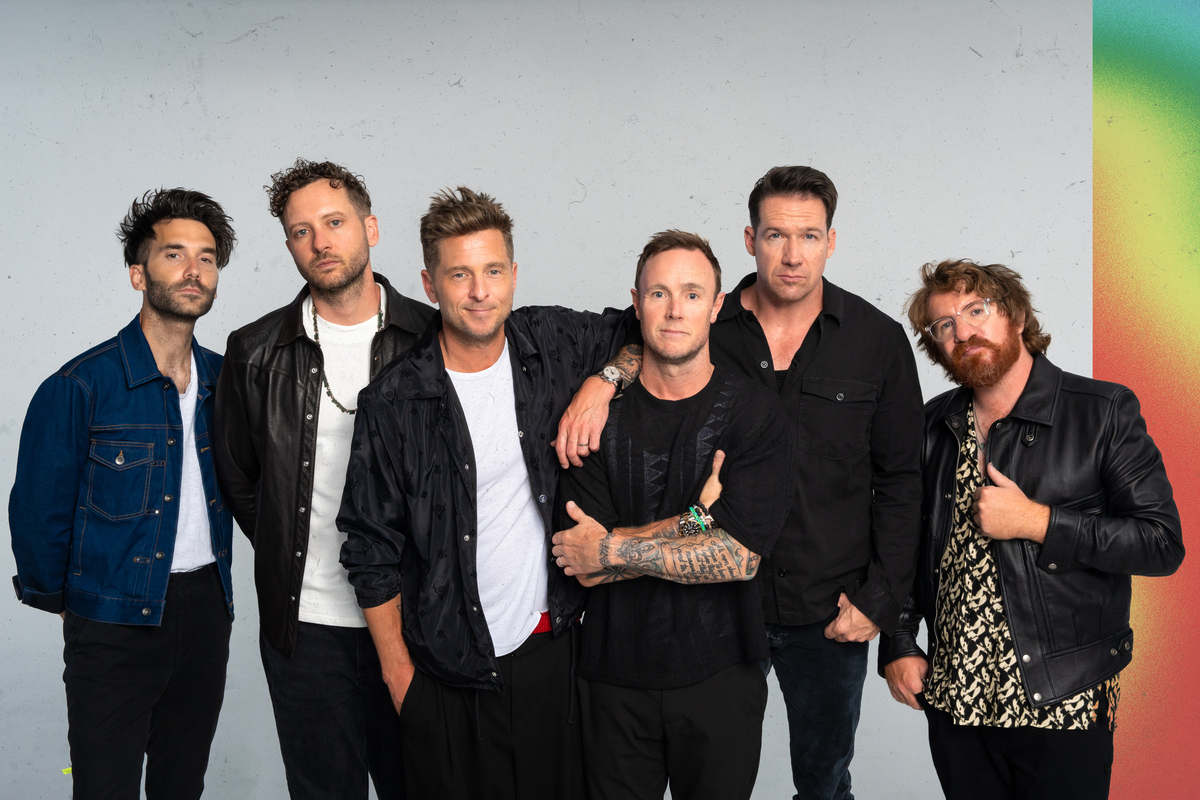
The conversation turns to OneRepublic’s latest album, OneRepublic: The Collection, which assembles nearly two decades of smashes, including generational hit Counting Stars, which earned a rare Diamond certification from the RIAA, I Ain’t Worried, which was originally penned for the blockbuster Top Gun: Maverick soundtrack, Love Runs Out, All The Right Moves, as well as the band’s signature breakout song, Apologize

Headliner notices that the biggest chart hits on the album – Chasing Stars, I Ain’t Worried, Apologize, Love Runs Out – all end in a hard stop rather than a fade out. Is this a personal preference of Tedder’s, a songwriting trend, or simply a decisive choice to just end a song?

“Not necessarily,” he considers. “We've had maybe a few songs that have faded out. Those are more like album cuts that we’re using as transitional elements. I grew up in a single generation,” he reflects. 

“I grew up listening to music, but I'm not one of those guys who can sit around and brag about how cool my record collection was. My cousins were listening to Black Sabbath and Jim Croce and the cool shit, and meanwhile I was listening to Boyz II Men, The Police – which is also really cool,” he clarifies quickly, “but also, random one-hit wonders like Rick Astley.

“Most of those songs had a definitive start and stop. I just grew up listening to so much Top 40 and so much radio. I wasn't blasting Pink Floyd, where you'd have some seven-minute slow fade out. With OneRepublic, it's not like I sit down and make a conscious decision of, ‘Okay, today I'm writing a hit, ’ because that's not how it works. 

"You just sit down and go, ‘Today I'm writing something I love, period’. I just naturally like songs that have hard endings; I think it's as simple as that. It's never been too much of a decision. Frankly, I think it's just more instinctive,” he decides.

OneRepublic are supporting their new album with a tour that spans Asia and Europe, commencing in January 2026.

More on OneRepublic:

Behind the recording of Counting Stars: How the hit song put Santorini's Black Rock Studios on the map