Subscribe
Live

Inside Snowapple’s Utopia with Carolina Anton, Mexico’s leading female live sound engineer

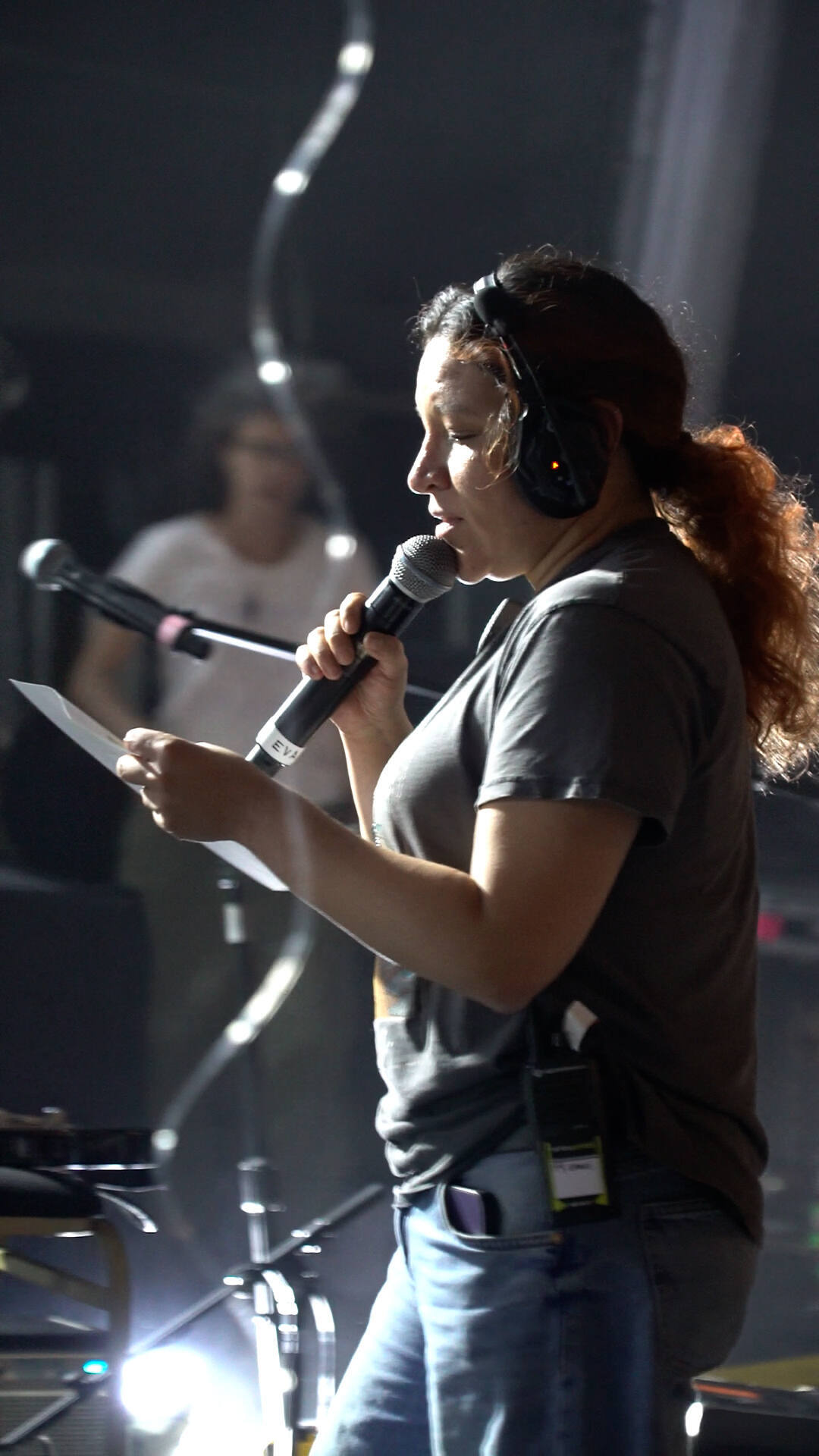
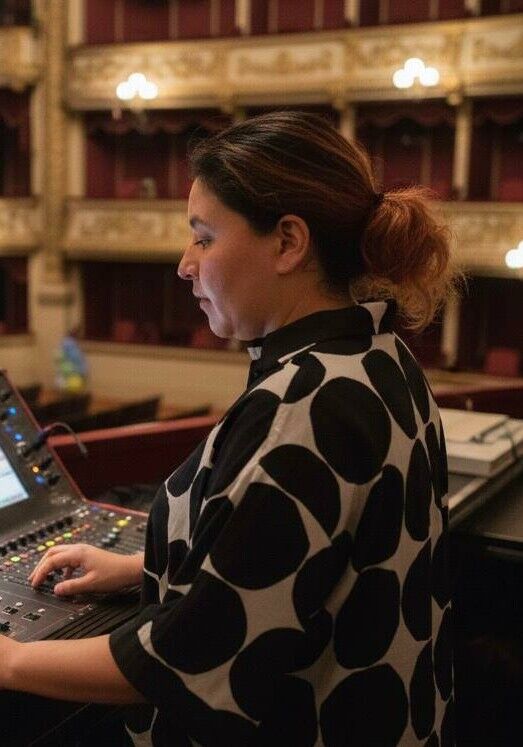
When the lights dimmed inside Mexico City’s historic Teatro de la Ciudad Esperanza Iris, the audience was swept into Snowapple Collective’s Utopia, a breathtaking fusion of music, theatre, dance, and visual art. Behind the scenes, however, another kind of artistry was unfolding: a sonic balancing act led by one of Mexico’s foremost live sound engineers, Carolina Anton.

An internationally recognised force in live sound mixing, system design, and an experienced studio engineer with several Grammy and Latin Grammy nominations, Anton has spent more than 20 years shaping the soundscapes of world-class productions and touring festivals such as KnotFest, PalNorte, and Electric Forest. As co-founder of 3BH, she leads cutting-edge audiovisual integration projects across Latin America, and as SoundGirls.org’s representative in Mexico, she champions women in the live sound industry. 

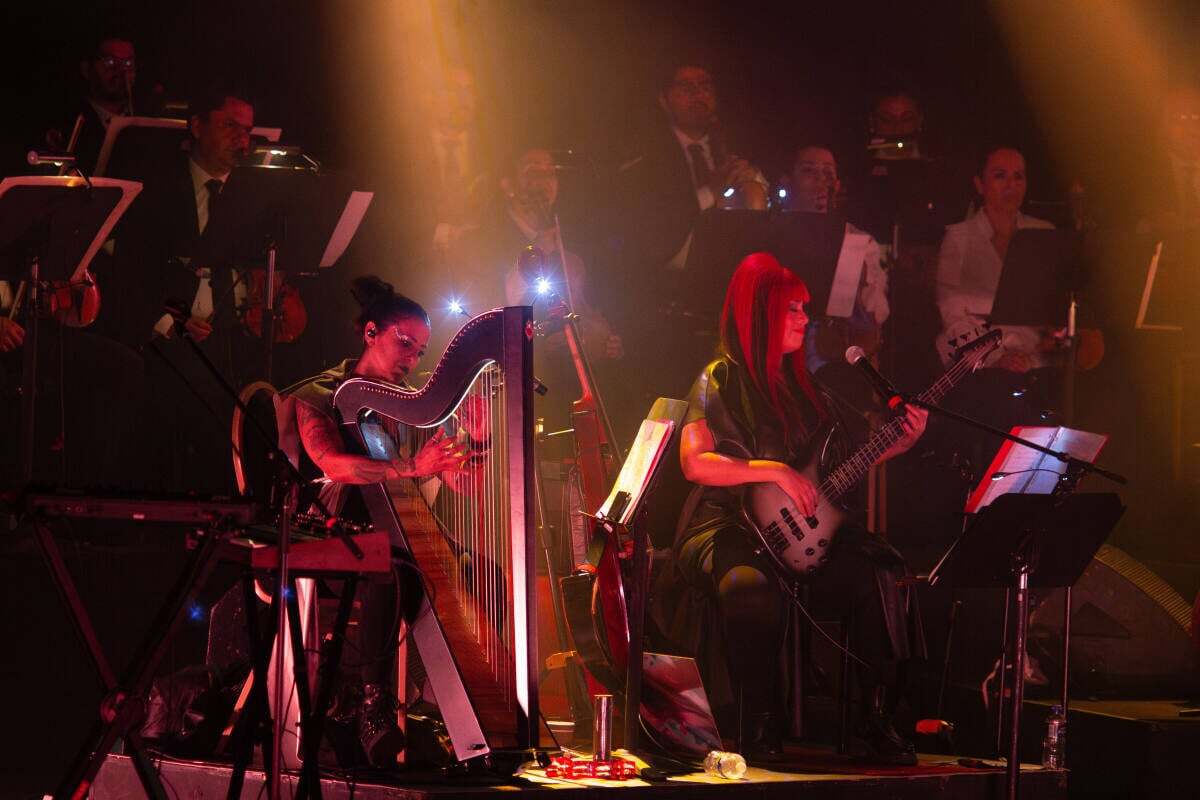
For Utopia, Anton faced a challenge: translating Snowapple’s experimental album into a large-scale, orchestral experience alongside the 30-piece Minería Pops Symphonic Orchestra. The result was a spellbinding 90-minute journey through sound and emotion, where every note, texture, and voice was carefully sculpted.

Headliner caught up with Anton at the Goro Goro immersive lab in Mexico City after experiencing Utopia in concert to talk about being a female engineer in Mexico, the creative and technical process behind scaling Utopia for a symphonic stage, the art of live sound design, and how collaboration and innovation shaped one of Snowapple’s most ambitious performances to date.
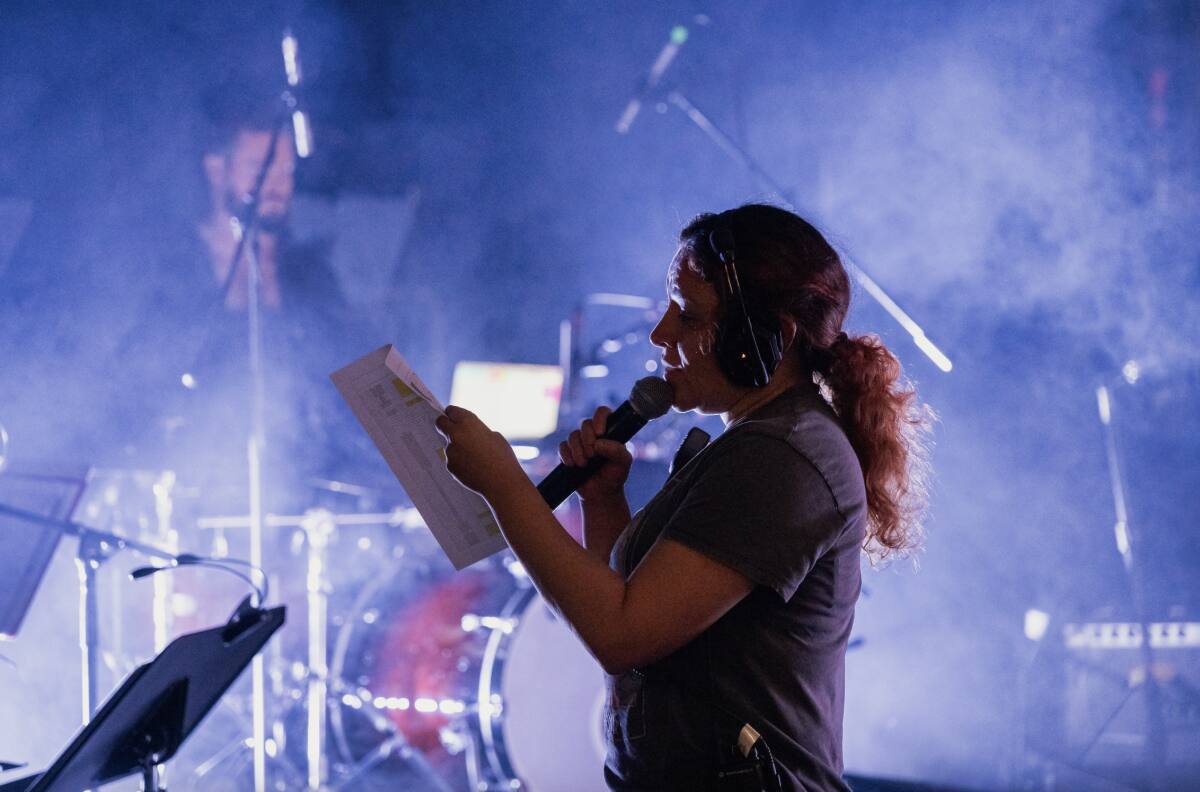
I always try to involve women in every project I work on, helping to break through the so-called glass ceiling.

You’re recognised as one of Mexico’s leading female live sound engineers. How has your journey been in what’s still a male-dominated field?

I think it’s really important. Nowadays, many more women are working in live sound, which is great. I’m also the president of the nonprofit organisation called SoundGirls here in Mexico. Next year, we’ll be celebrating 10 years of SoundGirls’ presence in Mexico, supporting women, showing the value of their work, and helping to break through the so-called “glass ceiling.” 

I’m very happy to be part of it, to connect with other bands, musicians, and productions that are committed to working with women. I always try to involve and support more women in every project I work on.

The Snowapple concert has deep roots in Mexico. What does it mean to you to stage Utopia at Teatro de la Ciudad Esperanza Iris, one of Mexico’s most historic venues?

It was the second show I had done at that venue, but this one felt truly special. That theatre has a remarkable energy, and having done many shows there, I know it well. Being there with Snowapple, with this connection to women and to Mexico, felt very cosy and inspiring.

Working with them in that theatre was amazing. It felt like the perfect place for the final piece of the show to happen. We had considered doing the show in Bellas Artes, but after discussing it, we decided no, it had to be at this theatre.

Being there with Snowapple, with this connection to women and to Mexico, felt inspiring.

Utopia is such a bold, hybrid performance: part concert, part theatre, part visual art. From a sound engineer’s perspective, how do you translate something so multidisciplinary into a cohesive live sound experience?

It was really fun and also a big challenge. All the musicians are amazing, so that was already a huge advantage. It’s definitely challenging to manage everything happening on stage and downstage, especially as there’s a lot of movement. 

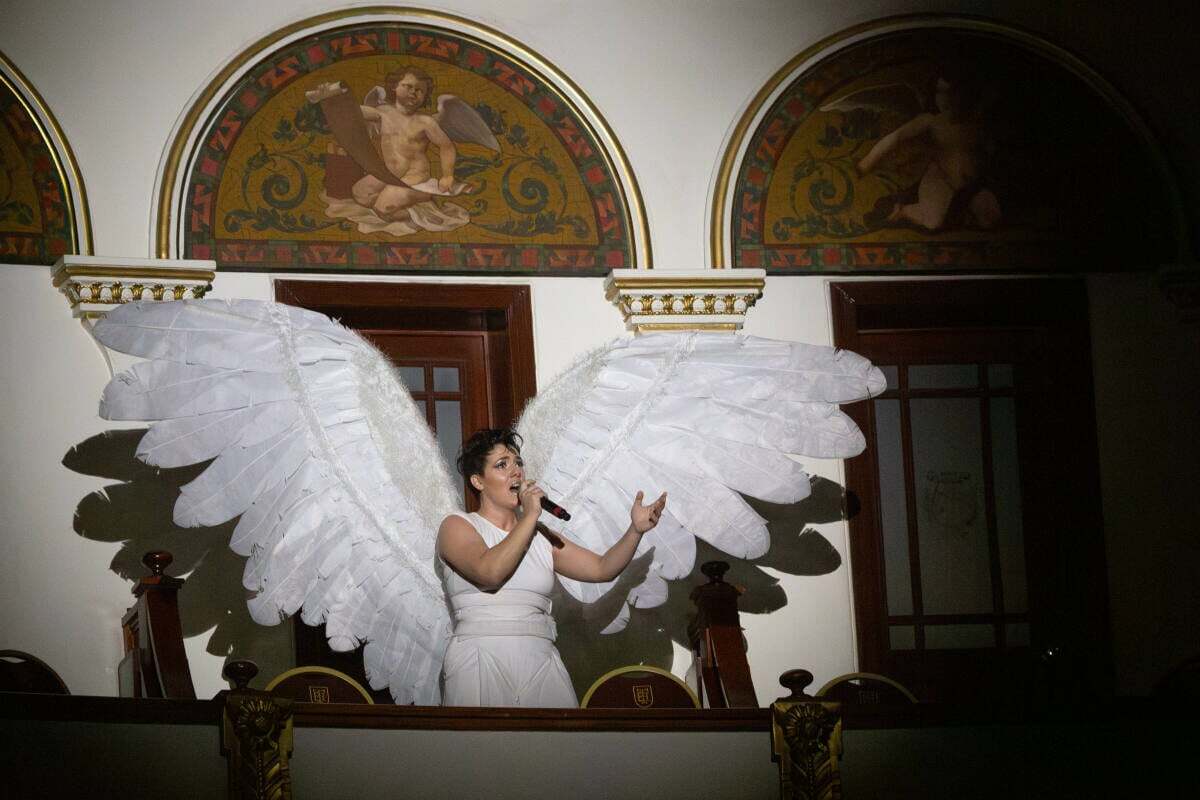
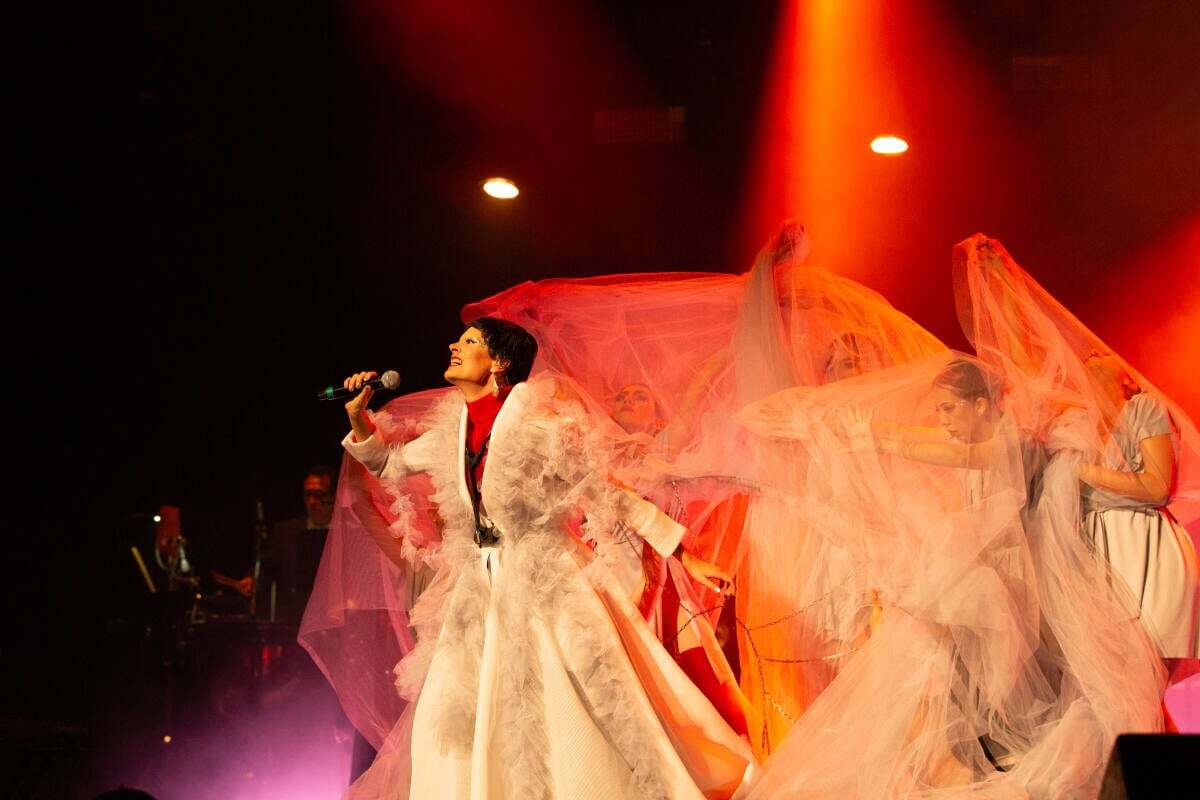
For example, in the part where an angel, played by Caro Martin, performs above the audience, they sing from a very distant balcony, so we had to make sure all the equipment works properly.

I saw how important the percussion and cello were, along with other specific details. That made me realise it should be an immersive experience – not just about the technical equipment, but about how we can truly transmit this music. 

It’s immersive music, meant to draw the audience in, so we needed to think about how to enhance that and make an impact. I needed excellent effects and very high-quality sound, because those small details make all the difference to the music and to the experience we wanted to give the audience.

Everything sounded utopian, futuristic, and mysterious – you don’t quite understand it, but you do feel it.

The section of the concert where the angel appears above the audience in the highest seats was spectacular. This must have presented some technical challenges for you?

Live sound is always a challenge because anything can fail at any moment, and you have to fix it immediately. The most challenging part of the show was definitely the angel scene, because Caro performs from very far away, and everything happens on both sides of the venue. 

I can’t just leave the musicians on stage and focus only on the angel, so at that moment, I have one person following her to check the mic, in-ears and everything else to make sure it’s all working properly.

Another challenge was that the band also loves analogue sound and traditional setups. I wanted everyone to use in-ears and wireless systems, but they preferred not to. They wanted to feel the sound, which makes sense, since there’s an orchestra behind them. For me, though, that meant working with a smaller stage space and figuring out how to reposition all the speakers and monitors. 

From the front of house, it’s usually easier to control everything, but we were using the venue’s PA system, which wasn’t very new. That was another challenge. In the end, I actually liked it, because the music took on this old, analogue quality – almost like the sound of a vintage recording – which gave it a really beautiful character. I decided to make the most of that.

The Utopia album has a dark, atmospheric sound that mixes electronic textures, processed vocals, and orchestral tones. What were your first thoughts about mixing that intricate studio production in a live environment, and with an orchestra?

I’d mixed Snowapple before, and I know the songs by heart. But for this show, everything changed because of the orchestra. The songs weren’t the same, as all the arrangements had been rewritten for orchestral performance. I needed to understand what was happening musically.

When I spoke with Alessandro Balderassi, one of the arrangers and music producers from Italy, he sent me the new arrangements. When I listened to them, I thought, “Oh my God, this sounds like a Tim Burton film score!” I connected immediately – not with the band, but with the orchestra itself – and I was amazed at what they were going to play.

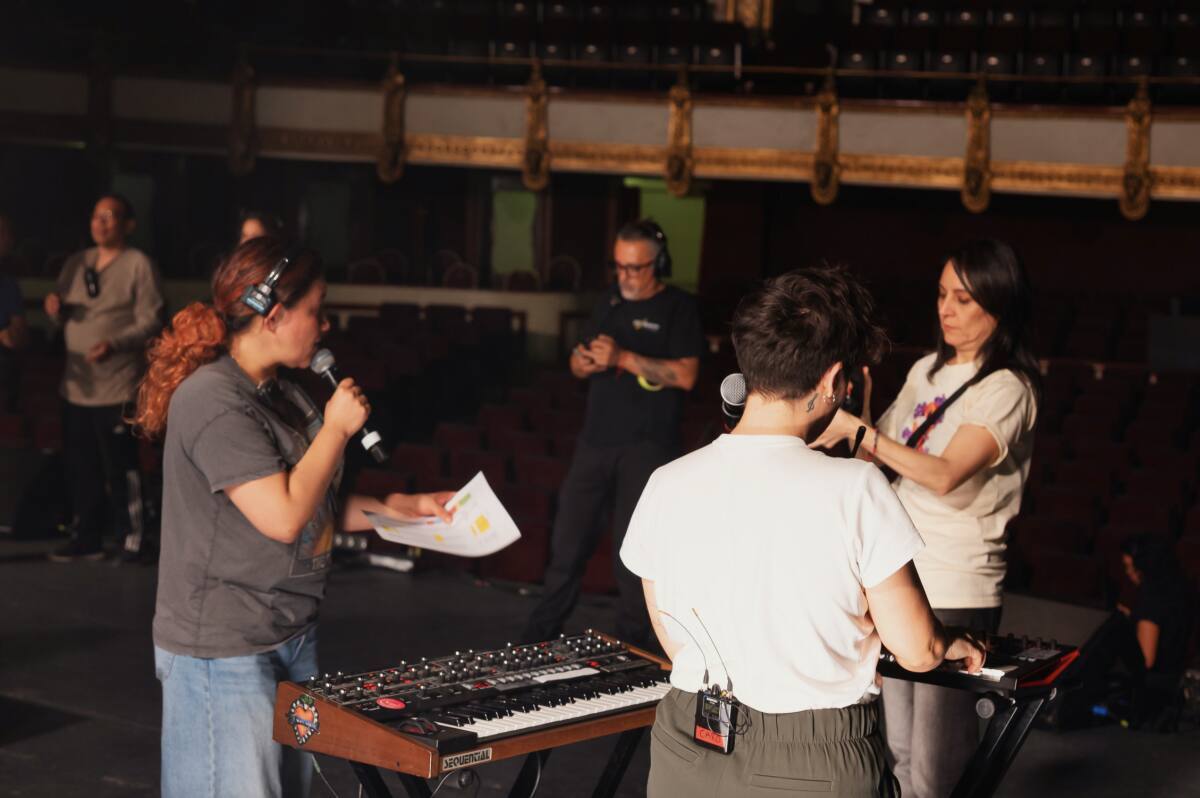
That’s when I started putting all the pieces together. I’d only heard the full arrangements once before the show, and the orchestra had rehearsed them twice, which wasn’t much. So it was really interesting for me to explore how to translate the electronic sound into something that worked with the orchestra and the cinematic scoring.

I thought: this sounds like a Tim Burton film score!

How did you approach maintaining the emotional depth and texture of the album while scaling it up for a 1,000+seat theatre?

I used the space and the sound of the theatre itself. The acoustics of the venue weren’t great because of the room itself. It has a lot of reverberation because it’s an old theatre with a very high ceiling, but I took advantage of that, because it actually suited the music really well.

Everything sounded quite utopian, futuristic, and a bit mysterious – you don’t quite understand it, but you do feel it. So, with that atmosphere, it was quite easy to adapt. Part of the process is good communication between the musicians, the front-of-house engineer, and the monitor engineer in order to adapt the acoustics, the PA, and the wedges to create a full artistic atmosphere.

We decided to build an atmosphere both on stage and in the audience area. We designed very organic and atmospheric wedges – not loud, but soft – to create a space where everyone could hear each other naturally. That way, you didn’t even realise they were using wedges, and from the front of house, the transition between the stage and the audience felt smooth and seamless.

What was your personal favourite moment to mix during the concert?

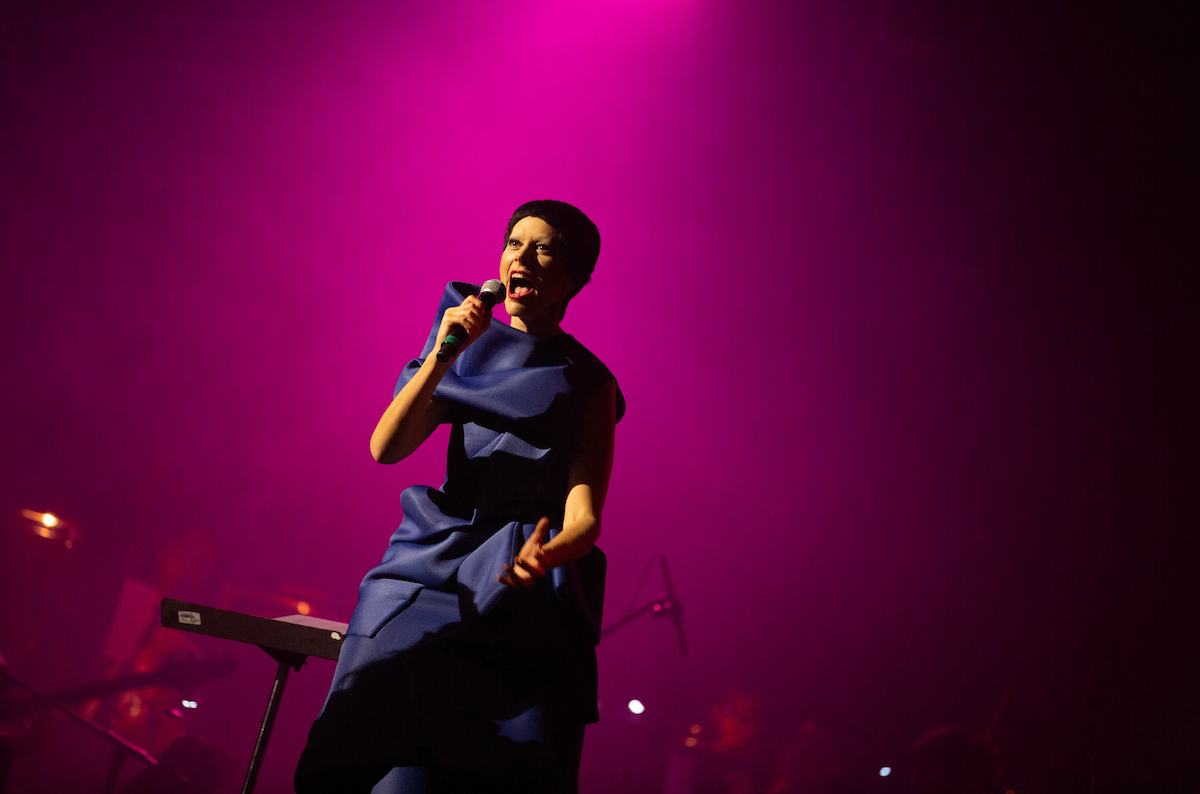
My favourite is I Cyborg, together with the Inter and the angel part. They’re so powerful. I Cyborg especially feels very progressive and electronic, almost confusing in a good way, because everything builds and builds, then suddenly stops and explodes. I love that. And the way Snowapple’s Laurien Schreuder changes her personality and becomes this cyber being – you can really feel it. I find myself getting caught up in it too, like, “Oh yeah, I’m a cyborg!”

For one song, they changed the piano parts to orchestral arrangements. Originally, it was a piano with two vocalists and maybe a cello or a violin, but now the piano was gone, and everything was played by the orchestra. It was so dramatic – such a strong and emotional transformation – because it’s not easy to replace the feeling of a piano with violins, cellos, and the full orchestra.

Laurien likes to have very specific effects in some parts of a song, but not in others, so I had to adapt constantly.

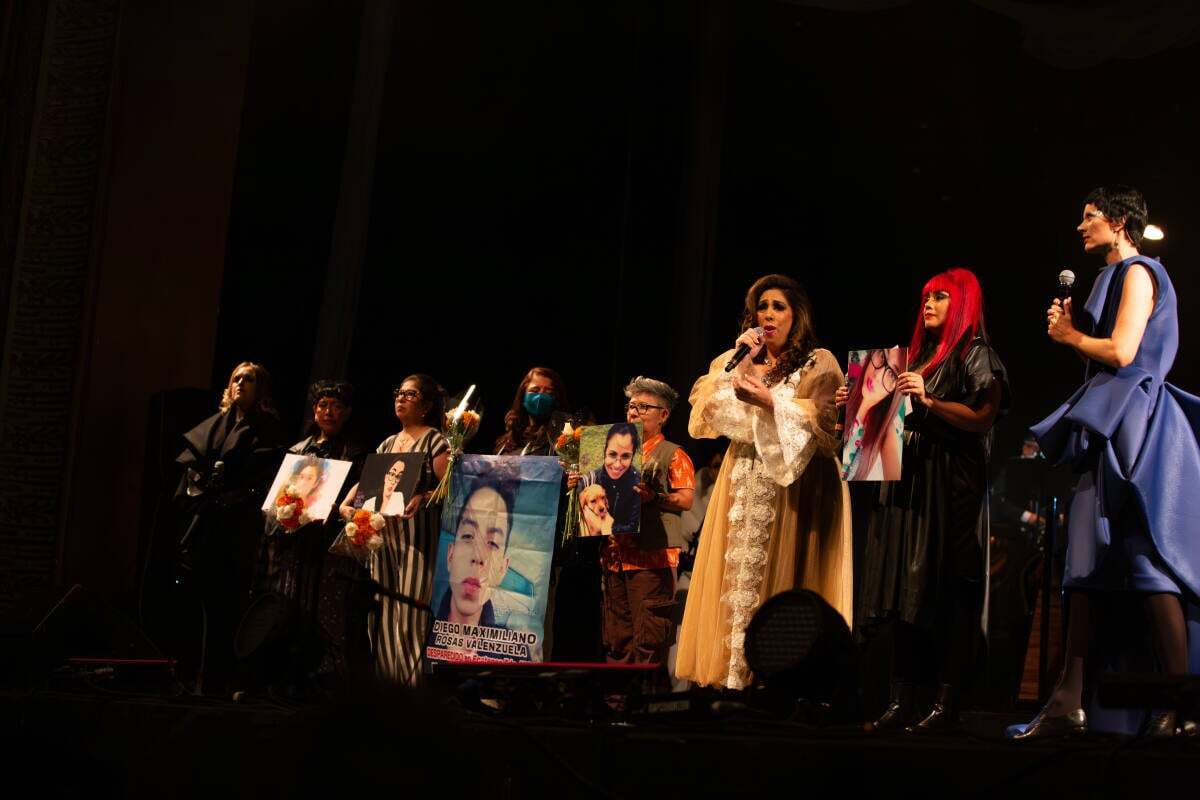
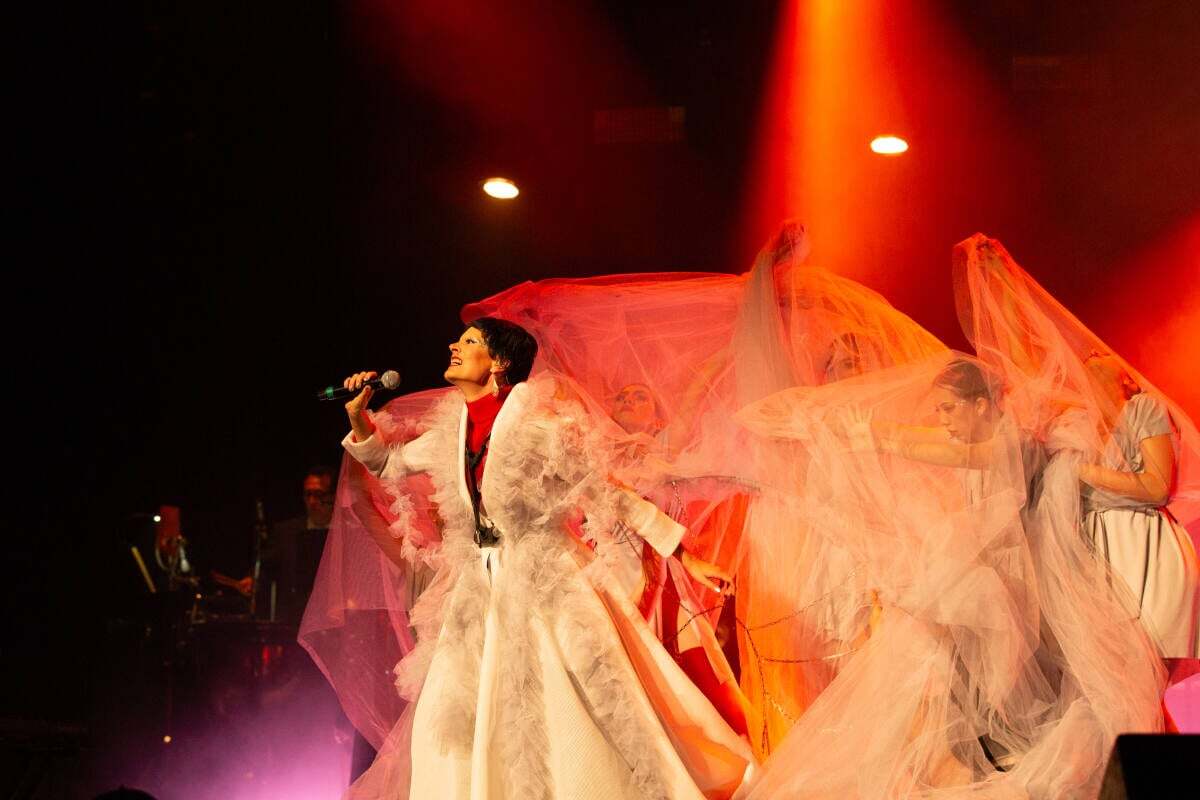
The La Llorona performance, accompanied by the women holding up photos of their missing daughters, was incredibly powerful and clearly struck a chord with the audience; what was it like to experience that moment from your perspective?

La Llorona was so powerful. It’s a very traditional song, and that moment with the women’s pictures is incredibly emotional. In Mexico, we face terrible problems with violence against women, and as a woman myself, I really connect with that pain. It’s a feminine tragedy, with women being killed or simply disappearing without a trace. You never find them. The women who got up on stage are the mothers of those who are missing.

The mothers are searching for their daughters because the government does nothing. They created their own organisations and went out on their own, and they’ve actually found some of them. These women are truly brave and deeply committed. 

As a woman, of course, you connect with that moment – it’s such a terrible reality in Mexico. La Llorona is a very traditional song, and the lyrics speak of a weeping woman who says, “Don’t forget me, don’t leave me, I want to be with you.”

La Llorona means “the crying woman,” and the song is all about loss and death. That moment in the concert was especially powerful, because it also happened during the Day of the Dead season in Mexico. Everything felt incredibly emotional and heavy with meaning. With the sound, the emotion, and the presence of all these powerful women on stage, it’s impossible not to feel it. Many people cried. I cried too.

I wanted everyone to use in-ears and wireless systems, but they preferred not to. They wanted to feel the sound.

Bringing sound to life at this scale is both a technical challenge and an artistic journey. This production used two DiGiCo Quantum 225 consoles and over 70 input channels with a Meyer Sound house PA system. What were the biggest technical challenges in managing such a complex mix?

I love DiGiCo – it’s one of my favourites. I really like their mixers and consoles. I work with them quite often, and as a DiGiCo artist, I enjoy how creative they allow you to be. For this show, we used all the available channels – the mixer was completely full. The effects were also changing all the time, especially because Laurien likes to have very specific effects in some parts of a song, but not in others, so I had to adapt constantly.

I needed a good strategy for arranging the faders, building my banks, and setting up all my shortcuts. I used the Waves server for effects, and I had my laptop there too to control the tempo. All the effects were managed separately. That was probably the most challenging part – handling everything on a small surface. 

But I love this DiGiCo console because you can build your own layout, choose which channels you want, and customise it exactly how you like. The tactile response is great, and the sound quality is excellent. The only real issue was that I had just two banks of 12 faders, which isn’t enough for more than 70 channels!

What is it about this console that gave you the confidence that the audio would be well taken care of for this special concert?

What I love most about the Quantum is the sound – if you compare the older models to these, the difference is huge. The sound is so precise, even when you’re just using the preamps. Also, the processing makes the sound incredibly clear and detailed. 

I especially love the Quantum because you can build and move things however you like. It’s really fast and flexible; you can get anywhere you need to go, even when you’re mixing 76 channels with only 12 or 24 faders.

it should be an immersive experience – not just about the technical equipment, but about how we can truly transmit this music.

What are some of the custom routing or automation techniques you used to handle transitions between the theatrical, orchestral, and electronic parts of the show?

I was thinking how much I’d love to use snapshots, but for this show, I just didn’t have time. We only ran the whole show through once! I did rehearsals, but they were with a different mixer, and the full orchestra wasn’t there. I would really love to use snapshots in the future. 

It’s important for this kind of show because there are so many precise moments to manage. Otherwise, like yesterday, I was muting and adjusting things manually all the time. With snapshots, it would just take one touch, and everything would change instantly.

Still, it was great to have such a smooth show because all the musicians are incredibly professional and in sync. They handle transitions so naturally that I hardly need to do much, so in the end, it was quite easy to manage without using snapshots or extra muting.

It wasn’t just about the sound; it was about what you see and feel. It was like a dream.

How did you decide which mics would be most suitable for balancing between delicate orchestral instruments and high-energy vocals?

I decided on the entire rider myself. I really love DPA microphones, and for the orchestra, they are the best because they are focused and very clean. Recording an orchestra is challenging because of its wide dynamic range. They can play very quietly and then suddenly explode with sound. If you don’t have the right kind of microphone, you end up constantly adjusting the gain, which can cause feedback.

The DPA microphones handled the orchestra perfectly. They captured the full dynamic range precisely and worked well with the mixer, keeping everything in the signal chain stable. I also spoke with the orchestra and the conductor, Raúl Aquiles Delgado, who was concerned about which microphones would be used and who would mix at front of house. 

We discussed having one mic per stand, for example, for the violins. Of course, the first violin, the concertino, needs its own dedicated mic. I suggested hanging some microphones, but they preferred a direct source, so we used DPA clip-on mics in very precise positions. Everything was carefully controlled, and with these precautions – using the clip-ons and overheads – the sound was excellent. We also used a combination of Shure mics.

Vocals are central to Snowapple’s live sound. How did you ensure their voices remain intimate and expressive while surrounded by such a large ensemble?

We used Shure Beta 58As for the singers. This choice was mainly because of the singers’ dynamic range. All three singers – the two guests and, of course, Laurien have very powerful, wide-ranging voices. Their vocals are amazing, almost like sopranos and mezzos in the orchestra. It’s thrilling to work with singers who actually sing properly; nowadays, many singers rely on electronic effects instead.

With these singers, I didn’t have to boost them artificially; they are naturally strong and controlled. The mic technique is excellent, using proximity, which helps enormously. Otherwise, as an engineer, you constantly fight with the faders to catch the dynamics. With these singers, their technique allowed me to mostly control levels and lightly compress their sound because they’re so powerful that, at times, it just overwhelms.

The microphones captured the full body and richness of the voices, with excellent frequency coverage. That’s what matters most for vocals in this context: clarity, fullness, and dynamic control.

It’s thrilling to work with singers who actually sing properly; nowadays, many singers rely on electronic effects instead.

What advantages did the Shure Axient wireless systems offer for a complex hybrid performance like this?

Regarding security, particularly due to RF, almost everyone used wedges. However, the director used in-ear monitors. Regarding the Axient microphones and the in-ear monitors, they were excellent. It was very easy to perform a frequency sweep or analysis. 

It was also interesting because many media personnel were present during the show – photographers, interviewers, everyone using the wireless system. So, before the show, our RF engineer continuously conducted sweeps and frequency analysis to ensure everything was fine.

We identified the optimal frequencies to use, so if any adjustments were needed during the performance, we could do them confidently. With the angel part, when Caro moved far on stage, we simply set some levels for the RF and assigned someone to follow her – mainly for peace of mind. In reality, the equipment functioned perfectly, so it was more about reassurance than necessity.

You recorded this concert for the upcoming Utopia Symphonic release. Were you doing a full multitrack capture or a parallel mix from FOH?

We created a backup of the backup for the backup, just to be safe; it’s always wise to have multiple layers of security! We used Pro Tools to record through this digital interface, which essentially connects via MADI to the computer. The interface links to the DiGiCo racks, so we used two racks per console, giving us four racks for the digital system and two for recording.

We took the main recording from the front-of-house desk and a backup from the monitor desk. That way, if something happened with one mixer, we could cover it with the other. We recorded all the rehearsals and the show itself, including the main rehearsal the day before. So, we were completely covered. I listened to some of the recordings yesterday, and they sounded really good!

After all the preparation and build-up, how was the show?

It was full of ups and downs, emotionally speaking. At times, I found myself thinking, “Oh my God, what is going to happen?” I was worried because the show is very organic. Everyone puts a little of themselves into it, and it’s not entirely predictable. 

But in the end, when I saw the performance, I thought, “This is even better than I imagined.” I was really happy, and everyone else was too. Many people laughed, cried – there were these small, meaningful details, like the flowers, that added depth. It wasn’t just about the sound; it was about what you see and feel. It was like a dream. One year of work has just passed by in an hour and 30 minutes!

Photos by Conseulo Pagaza & Prometeo Lucero

More on Utopia

Headliner reviews the Utopia concert and interviews Snowapple's founder, Laurien Schreuder, about bringing her unique vision to life.

Full Utopia concert cast:

Laurien Schreuder: Musician
Cynthia Martinez: Musician
Malena Duarte: Musician
Giulia Pastorino: Musician
Matteo Cerboncini: Musician
Giovanni Iacovella: Musician
Caroline Martin: Musician
Eva Schumacher: Director / Acting
Angelica Baños: Contemporary Dancer
Samantha Montagna Portejoie: Contemporary Dancer

Guests:
Orquesta de Mineria Pops (31 pax): Orquesta
Regina Orozco: Voz
Denise Gutierrez: Voz
Chula the Clown: Actress
Itza Bernal: Ballet Dancer
Koray García: Ballet Dancer
Wendolyne Ocampo: Ballet Dancer
Aranza Castrejón: Ballet Dancer
Sarah Leon: Ballet Dancer
Violeta Xóchitl Chávez Valencia: Traditional Dancer
Mónica Pérez Pérez: Traditional Dancer