Subscribe
Headliners

Snowapple’s Utopia transforms Mexico City’s Teatro de la Ciudad Esperanza Iris into a cyborg dreamscape

To do justice to a performance by the intriguingly named Snowapple Collective – an international, multidisciplinary group of artists creating original music, theatre, and film – one needs to experience it for oneself. In late October, that's exactly what Headliner did, accepting an invitation to Mexico City to attend a special concert named Utopia, a bold multidisciplinary performance fusing live music, theatre, dance and visual art in a powerful and poetic 90-minute journey at the city's historic Teatro de la Ciudad Esperanza Iris.

Based on Snowapple’s 2025 album, Utopía, the concert invited its audience to ask themselves: What kind of world do we want to live in? And with the album’s themes being an experimental sonic exploration of cyborgs and our conflicted relationship with technology, identity, and embodiment, there surely would be no easy answer to that question.

Alongside a buzzing and bohemian crowd of all ages, Headliner joins the long queue forming outside of the stunning Teatro de la Ciudad Esperanza Iris theatre in bustling Mexico City to experience a sold-out show that promised audiences to transport them through the frozen world, a world without love, the cyborg world, and a world where everybody lives in peace…without a brain. Confused? 

Once you learn more about Snowapple, who explore the emotional and political complexities of our time through experimental, collaborative performances, all soon becomes clear, and Utopia lives up to its promise of being more than just a show, but rather a performative experience beamed in from another dimension.

This concert holds special meaning for Snowapple. With several members hailing from Mexico, the country feels like a second home to them — a place where their roots, music, and deep cultural connections come together. 

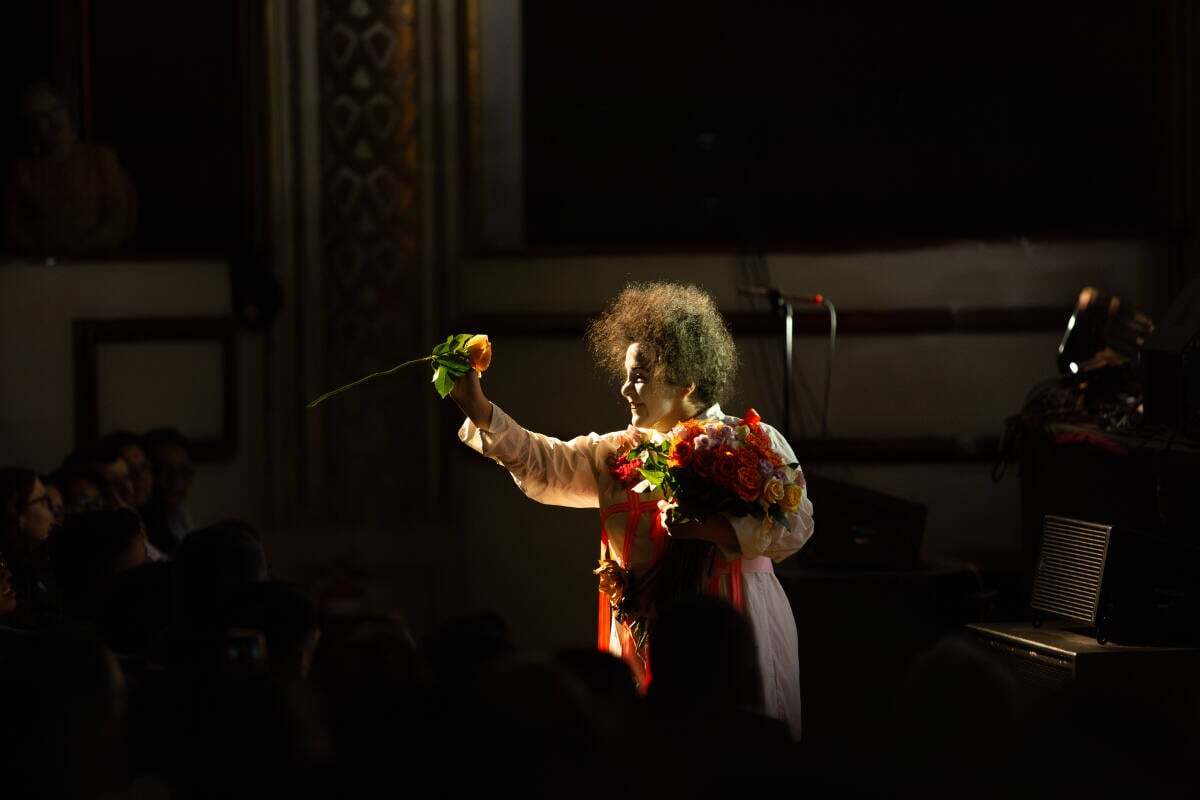
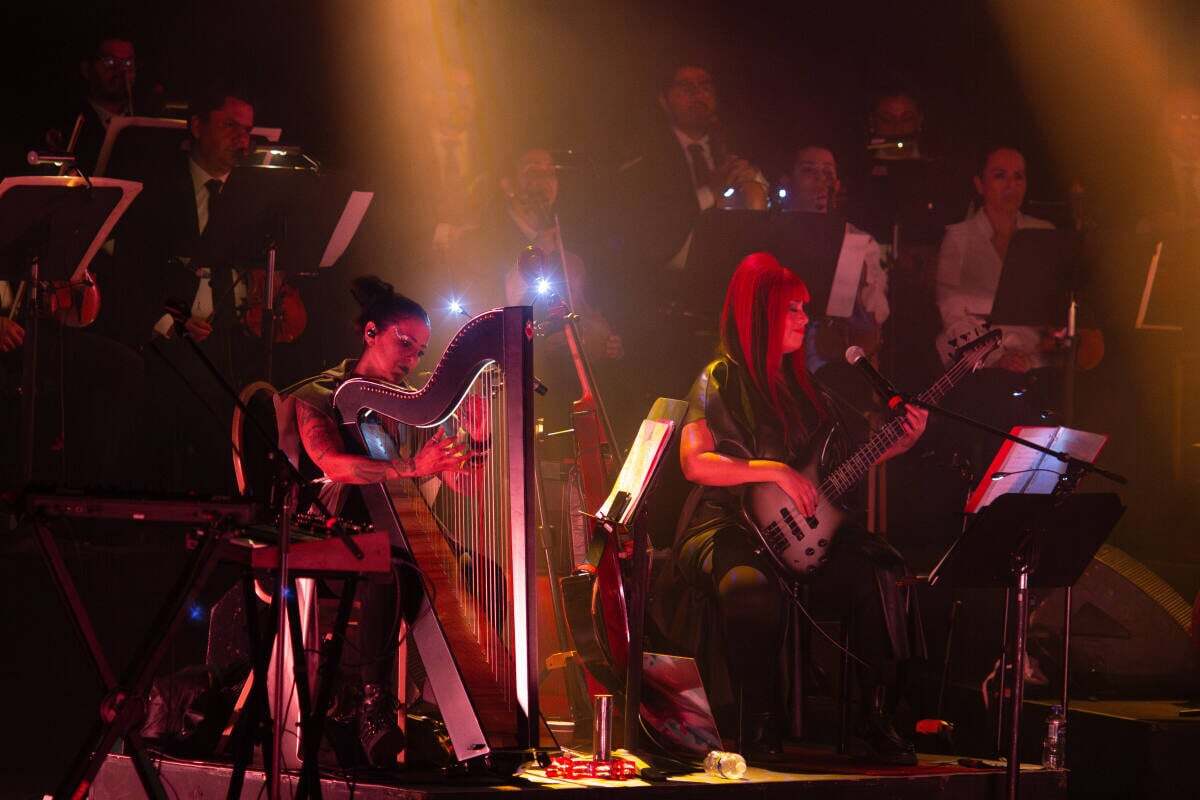
And, plentiful as the collective is, for Utopia, they've brought in reinforcements, with guest artists Regina Orozco, Denise Gutierrez, the delightful, whimsical Chula the clown, and, bringing a sense of prestige and drama to the occasion, Snowapple is joined on stage by the spellbinding Minería Pops Symphonic Orchestra, renowned as one of Mexico’s finest. Meanwhile, mixing the action was one of Mexico’s top female live sound engineers, Carolina Anton.
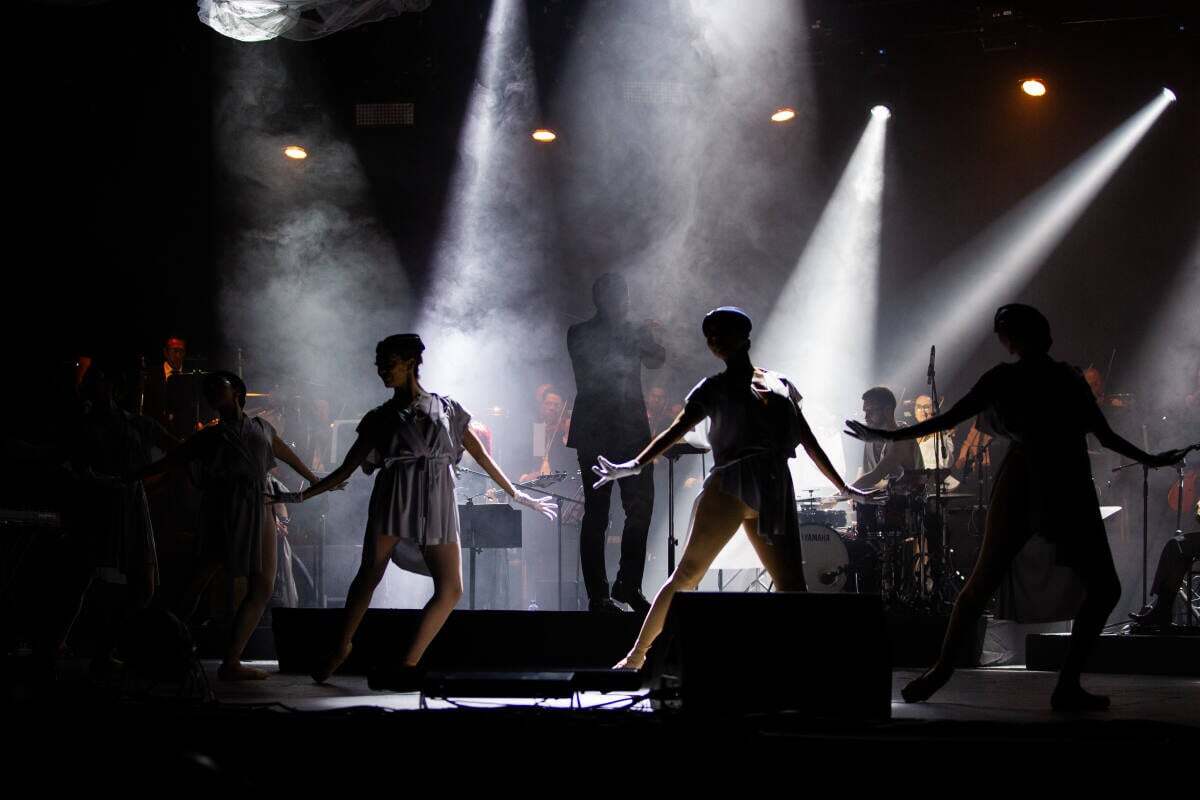
Utopia is a performative experience beamed in from another dimension.

With everyone settled in their seats, a hush of anticipation falls over the audience. A lone guitar string hums in the dark; simple, yet haunting. Suddenly, five dancers drift into view, moving like dream fragments before the stage. 

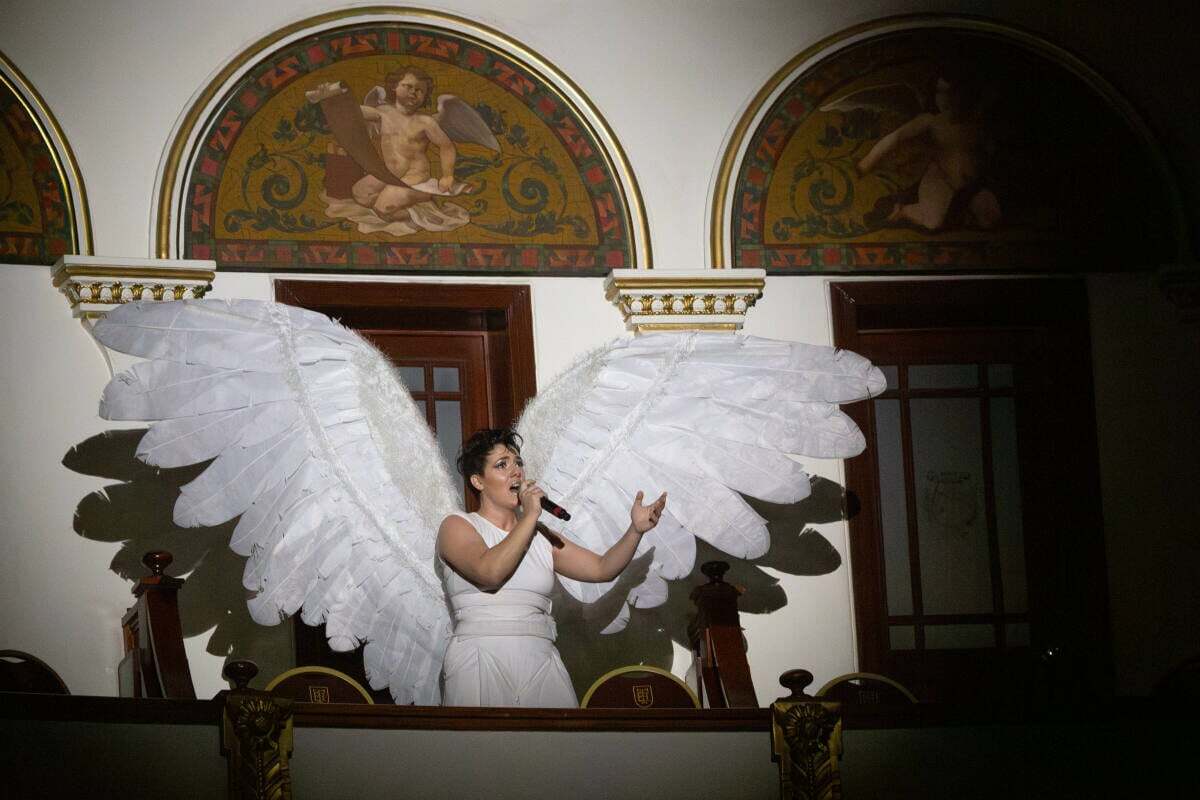
For a concert that feels like anything could happen, fittingly, the performance spills beyond the fourth wall: dancers glide through the aisles, lean over velvet seats into the audience, hand out roses, and in a spectacular, breathtaking finale segment, an angel emerges high above the audience, flanked by a magnificent pair of enormous angel wings.

When the curtain finally rises, an orchestra gleams behind it, and the Minería Pops ensemble is more than ready to propel this sonic odyssey forward. What followed was a plunge into a surreal yet somehow deeply human world.

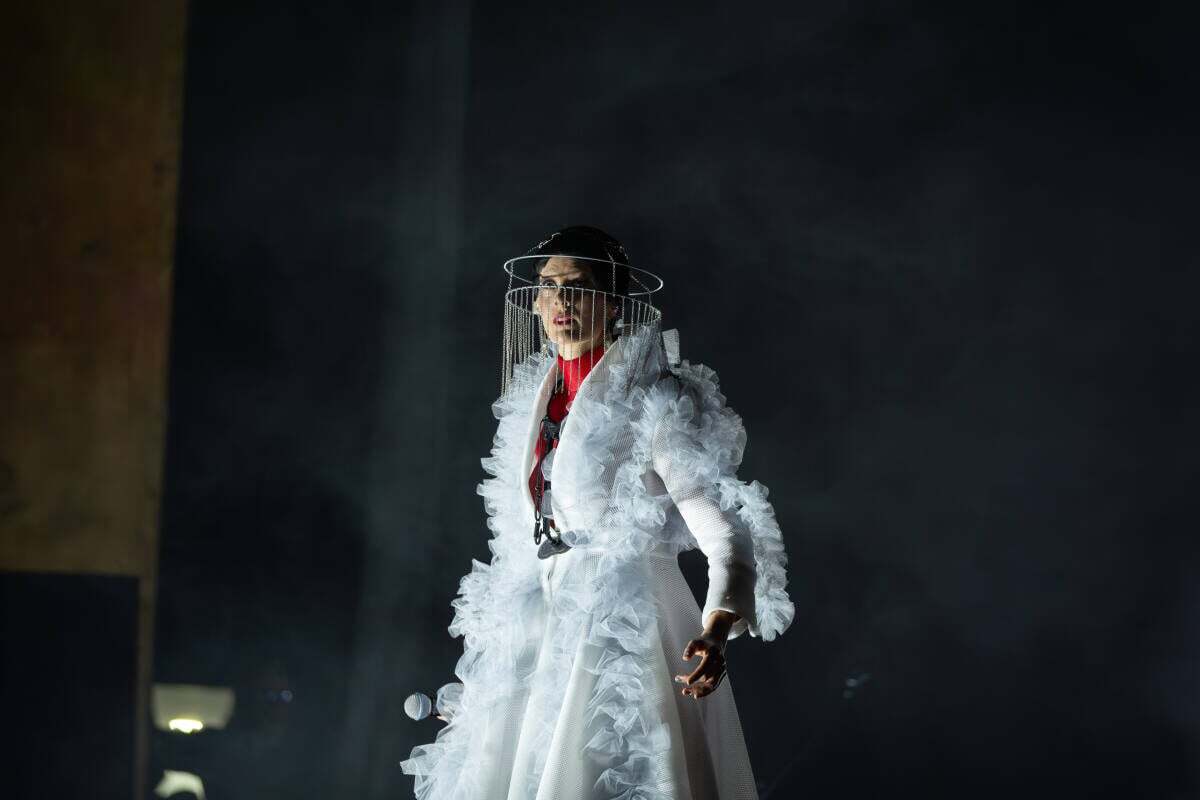
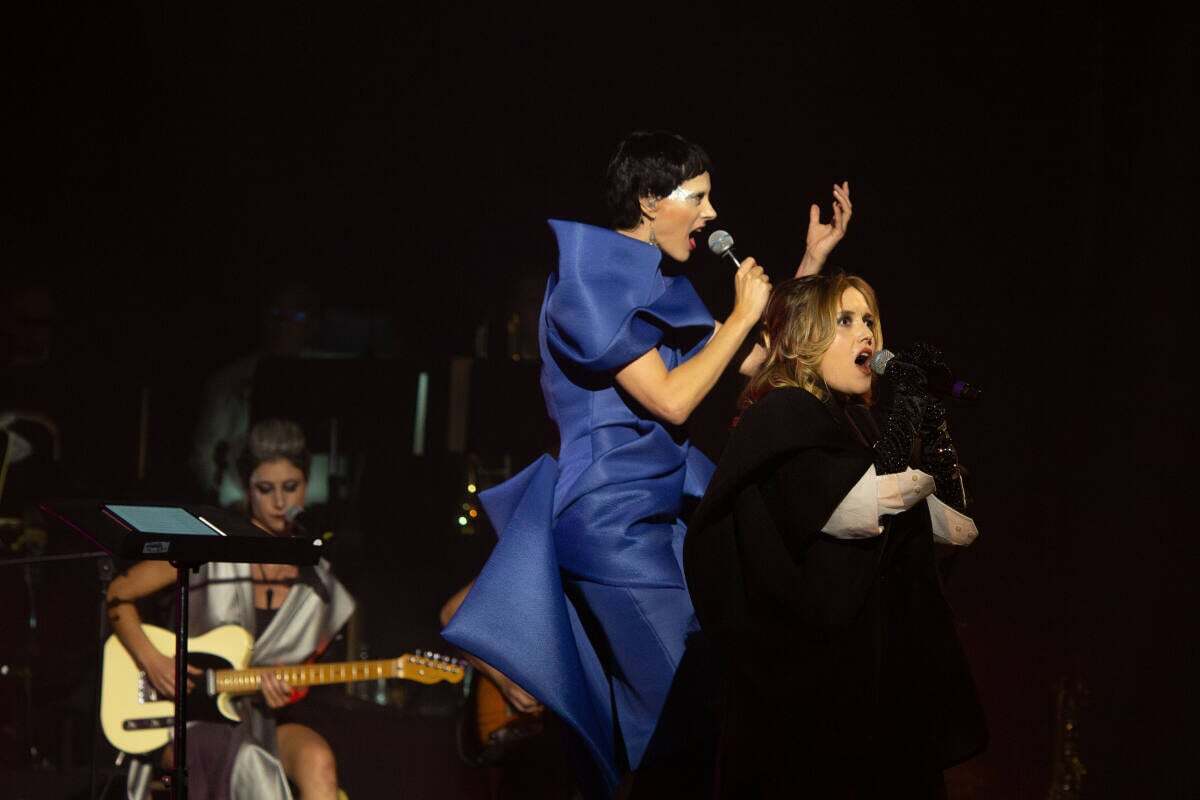
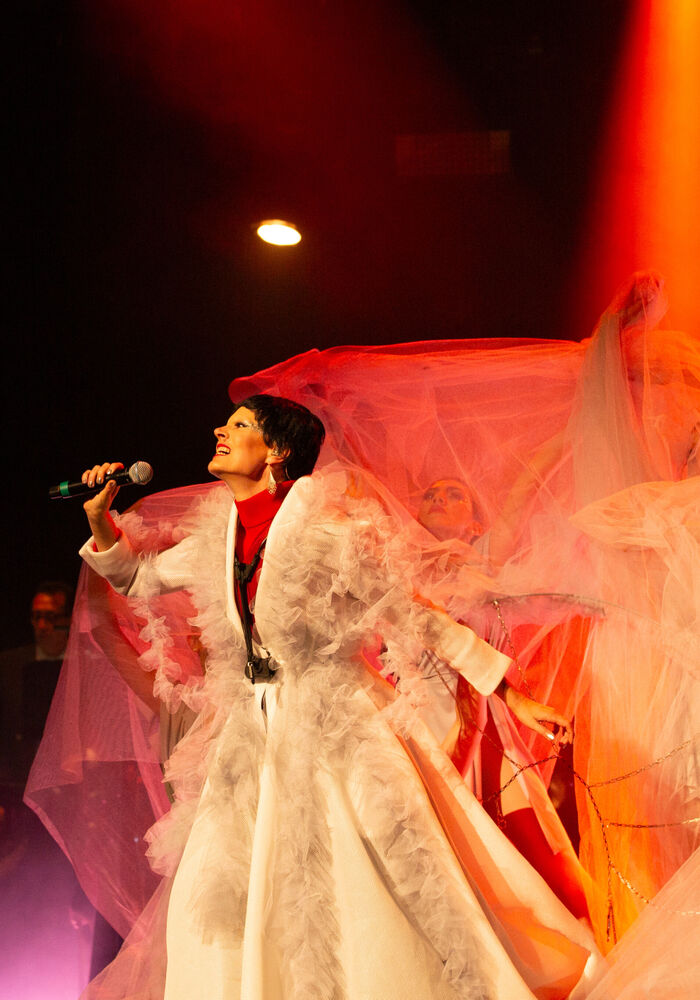
With Snowapple (who are exquisitely and theatrically dressed, by the way – Lady Gaga would be proud), the magic lives in the layers. Every costume, gesture, and lighting cue carries meaning, and somehow every part of the show feels at once spontaneous yet precise.

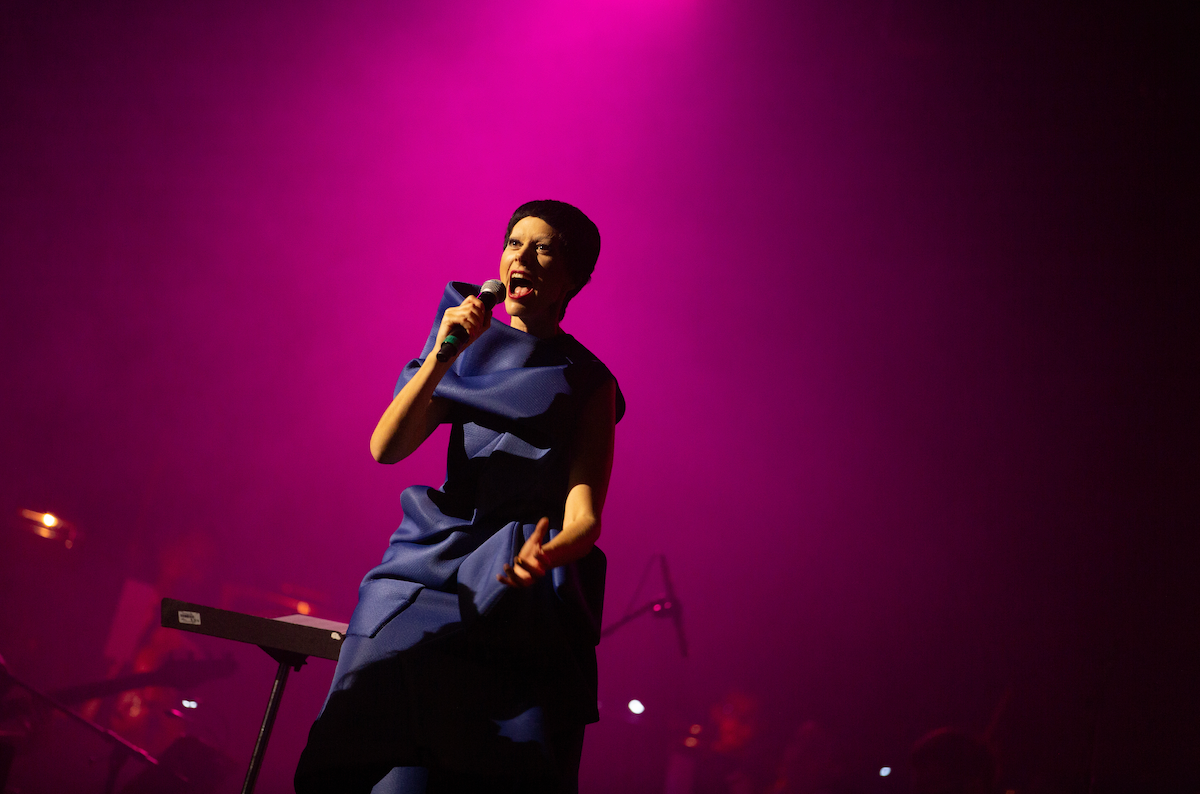
Snowapple are nothing but a joy to behold on stage; as well as being talented vocalists and instrumentalists, their passion is palpable, and it’s clear they’re having the time of their lives up there. 

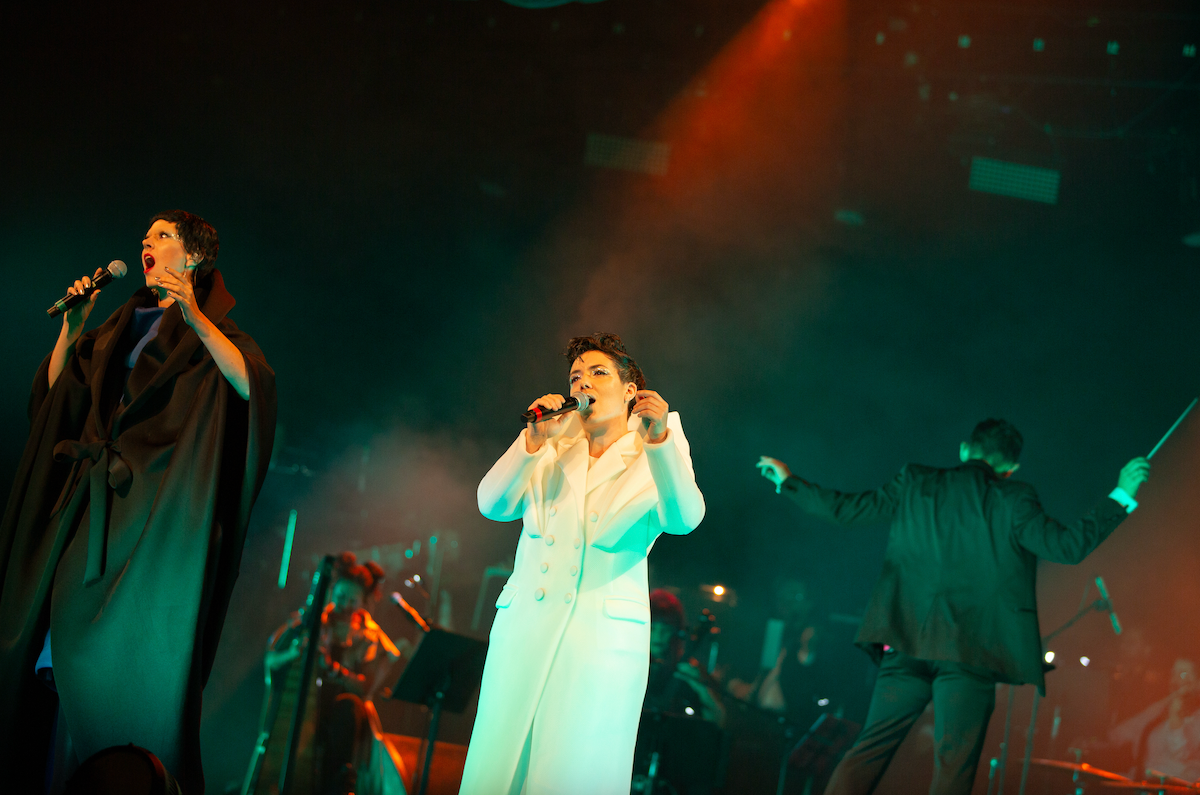
In one moving, standout segment, the three lead vocalists perform a sublime, goosebumps-inducing operatic rendition of La Llorona, which tells the Hispanic American tale of a vengeful ghost who is said to roam near bodies of water, mourning her children whom she drowned in a jealous rage after discovering her husband was unfaithful to her. 

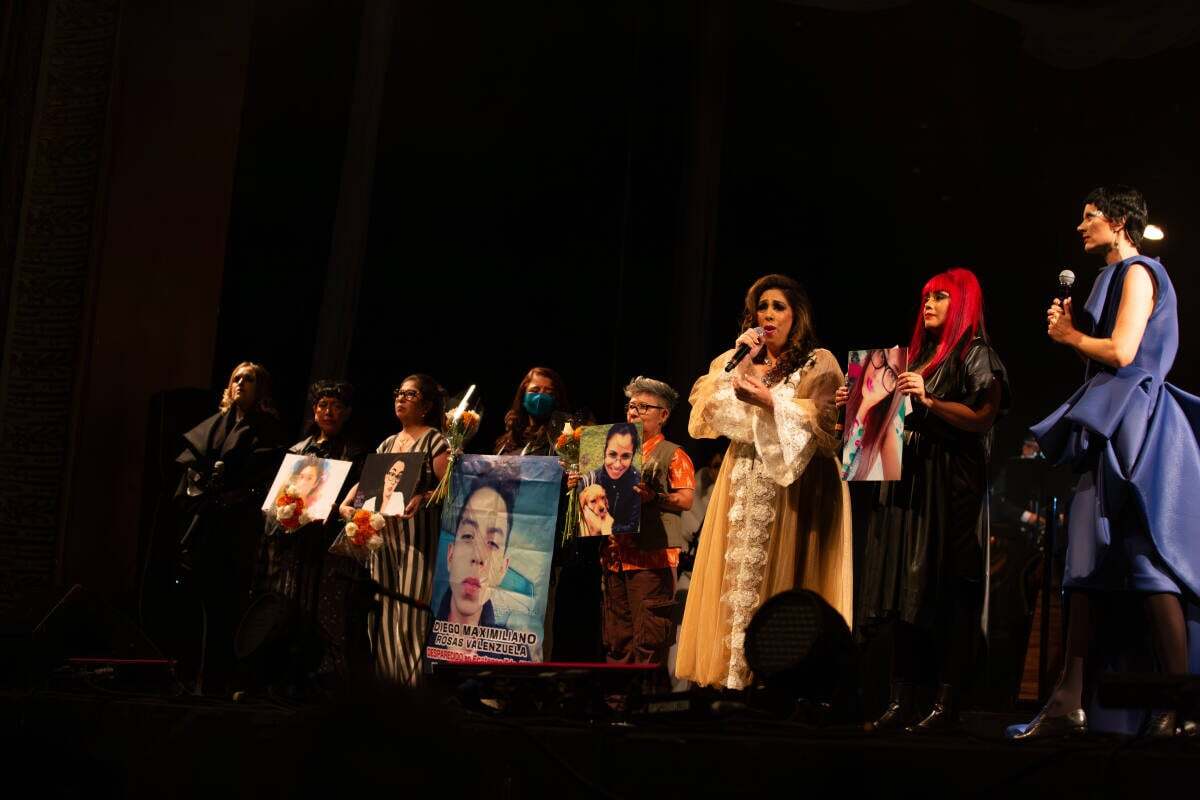
Here, Snowapple is joined on stage by the mothers of numerous missing local women, who hold up photos of their forgotten (by the government, at least) children whilst crying out for justice and answers. Many of the audience are moved to tears, although in other, more playful moments, the concert brought the laughs too. At one point, the conductor joins in on the show’s playful energy, dashing offstage mid-cue. 

Later, two dancers humorously resist the “stand up, turn around” instructions, turning into comic foils in a moment that perfectly balances chaos and choreography.

That spirit of experimentation is central to Snowapple. We don’t copy anyone; we’re finding our own paths.

Another standout moment arrives with My Body, a driving, visceral anthem built from claps, a pounding kick drum, and harmonies that feel both primal and liberating. The orchestra amplifies the emotion, lending weight and grandeur to the song’s raw physicality. 

In another moment, a lone drum throbs like a heartbeat, accompanied by a dazzling light show pulsating along with it, enveloping the audience in colour and sound. The result is total immersion – Utopia is a concert you don’t just watch, you inhabit.

True to Snowapple’s promise to pay tribute to the Mexican artists who continue to shape the soul of the collective, as the performance closes, every member of the ensemble is introduced and thanked – from the musicians, to the dancers, to the technicians, making the Teatro de la Ciudad Esperanza Iris feel like a family home for one night.

Utopia is unpredictable, daring, and deeply thought-provoking – an avant-garde, eccentric ride that sweeps you through dreamscapes of cyborgs, life and beyond, leaving Headliner with a nagging question: in the context of cyborgs and human creativity, what does utopia look like in a world that’s being destroyed by humans whilst being overtaken by AI?

One performer one can’t fail to take one’s eyes off is Snowapple Collective’s enchanting artistic director and founder, Laurien Schreuder, whom Headliner catches up with the following day at the tranquil Casa Snowapple Mx. Located in the heart of Mexico City’s vibrant Coyoacán area, Casa Snowapple is a calm oasis amongst a brightly-coloured, bustling neighbourhood. 

Born in 2021, Casa Snowapple Mx opened its doors as a creative sanctuary. It's a place where artists from around the world can step away from daily noise and dive deep into research, experimentation, and creation.

I hope the audience sees these powerful people in their full strength, but also together, giving each other space and taking space.

Run by women and rooted in inclusivity, it becomes immediately apparent that Casa Snowapple is more than just a space; it’s a living, breathing (dog-friendly) community where everyone stands on equal ground. Here, music, art, and ideas intertwine through intimate concerts, talks, residencies (applications are open now!), wellness activities, dance, and more, all designed to nurture collaboration, spark imagination, and expand a vibrant global artistic network.

“I am over the moon,” says Schreuder of the positive reaction to last night’s concert, immediately welcoming Headliner into the heart of the Collective’s HQ, which also houses a Genelec-equipped recording studio.

“Many artists dream of moments like this, and I had dreamt of it for a long time. This was truly the moment where everything came together in terms of complexity and the multiple layers of the show.”

Utopia is the biggest production Snowapple has ever turned into a reality, and Schreuder, who is from the Netherlands but spends months at a time in Mexico City, reveals that the collective had been perfecting the show for five years. “This was the cherry on top of the entire process,” she smiles.

Schreuder is a key figure in the creation of Utopia, having co-produced and co-written the album, with lyrics by Eva Schumacher. “I consider myself the artistic director of the collective; the ‘web weaver’ who gathers all ideas and opinions and gives direction, while valuing each contribution,” she says unassumingly.

Snowapple began as a modest trio. “We were so innocent back then,” she recalls dreamily, “just singing with guitars.” Their early music was charmingly rough around the edges: “We were barely instrumentalists; our skills were very amateurish, yet that gave our music a quirky, charming feel – something everyone always described as ‘quirky pop-folk.’”

We always leave room for the unexpected. That's where the magic happens.

Over time, they started collecting second-hand instruments – a banjo, a glockenspiel, even a vintage blockers’ bell – and their sound began to expand. “As our ambition grew, we became more conscious of musical arrangements and what additional musicians could bring to the sound,” Schreuder reflects.

Collaboration became their natural language: “On a tour to Japan, we wanted to play with Japanese musicians, so we did,” she beams, adding that each encounter added new layers, from folk to experimental, and even Japanese lyrics on their album, Tracks. “Perhaps it’s a very feminine way of making music,” she considers, “going with the flow and letting the work evolve naturally.”

But Snowapple soon outgrew the label of ‘band.’ As they welcomed filmmakers, costume designers, visual artists, and a theatre director, the project transformed. “It started to feel unfair to call ourselves simply a band,” she explains. 

“We wanted a more horizontal, collaborative structure, so we began calling ourselves an artist collective.” With this new identity came greater vision and structure. “I started writing an annual artistic vision, and we decided to work with a yearly theme, ensuring all disciplines had a shared focus.”

One of those themes evolved into Cyborg Experiments, a multidisciplinary laboratory of sound, performance, and philosophy. “My character became, ‘She who wasn’t I anymore,’ exploring the idea of losing one’s ego – a playful challenge for someone as ego-driven as me,” she says, half self-deprecating, half serious, “yet deeply tied to the collective consciousness.”

Their latest project, Utopía, continues this evolution “While we often discuss dystopia versus utopia, the search itself is what matters most; a collective journey to imagine better worlds,” she shares.

Given that the live Utopia show is a large-scale theatrical concert – blending orchestra, dance, and visuals, and weaving experimental electronics with rich orchestral textures to transport audiences through multiple worlds – Headliner was curious how Snowapple managed to translate the album’s intimate sound into such an expansive, multidisciplinary experience.

It was a process of experimentation,” answers Schreuder. “It was like solving a puzzle; we had all these concepts, though not all of them made it onto the album,” she points out. “From the album, the live show naturally evolved. So, in a way, the process went: experiment and theatre-album-live show.”

it’s not the case that every pop artist’s work translates well with an orchestra, because it can easily overwhelm simple melodies.

Translating the album into a live show was a fascinating challenge. “We wanted to reflect visually what was happening in the music – the tension between order and chaos, the interplay of organic and digital elements,” she enthuses, the memory of last night still fresh in her mind.

“That’s when we decided to incorporate ballet dancers as highly structured, almost robotic figures – like cyborgs, stewards, or flight attendants – alongside contemporary dancers. Or, there’s one character, the Angel [Caro Martin], who features in two songs on the album: Inter and Angel. 

"Lyrically, she’s an angel intent on destroying humanity to save the Earth. To reflect this in the show, we used a striking visual element: large wings salvaged from an opera production, enhancing the contrast between appearance and intent.”

Each scene in Utopia is a living tableau: a world frozen in time, dancers moving in slow motion; a society where people live separated from their own bodies; a glimpse of collective joy in a broken system. Snowapple doesn’t predict dystopia; it offers a poetic resistance, imagining futures rooted in empathy, imagination, and community. “It feels like an extension of the album, but really, it’s an evolution, because it took the songs to an entirely new stage,” says Schreuder of the concert.

It’s no coincidence that Headliner noticed that Snowapple was having the most fun on stage when performing the rousing, My Body. Schreuder reveals it’s one of her favourites.

It deals with really deep topics, like the dissociation people sometimes feel with their own bodies – something I think almost everyone can relate to,” she notes.

“I wrote it as a tribute to Patti Smith as a kind of spoken-word punk song. But then it took on a life of its own. What made yesterday especially memorable was having Denise Gutiérrez perform with us. We invited her to participate in the concert, and she really wanted to sing Snowapple songs,” Schreuder says, sounding surprised. 

“I thought, ‘Wow; this iconic, hugely famous rock singer from Mexico wants to perform our music?’ That was such an honour. I was so curious to hear how she would interpret the songs. What followed was partly improvised, and it was amazing to watch her shine and truly inhabit the song. On stage, she went full out; it was electrifying. It all felt really magical.”

This iconic, hugely famous rock singer from Mexico wants to perform our music? That was such an honour.

Indeed. Utopia doesn’t feel like a regular concert, but an avant-garde world; one has no choice but to take the plunge and immerse oneself in it. Through original music and powerful visual storytelling, the show reflects on disconnection, transformation, and the deep human need for connection. Schreuder reveals what she hopes audiences felt or questioned after the performance.

“I always hope that the audience feels something, because we often lose touch with our feelings,” she considers. “I certainly do, all the time. Sometimes something small can spark inspiration or dreams. I hope the audience sees these powerful people in their full strength, but also together, giving each other space and taking space. I really believe that's how we should interact in the world. We should appreciate our differences, rather than expecting everyone to be like us. Audience participation is also very important to us,” she stresses.

“We want to move beyond the idea of an ‘ivory tower’ performer with the audience merely watching from below. We want to feel equal with them. We are just in this moment, telling a story, and hopefully, the next story will come from them. We all have voices, and we should all be able to speak. That’s why breaking the fourth wall and interacting is so important to us.”

breaking the fourth wall and interacting is so important to us.

At the heart of Utopia is contrast. The soundscape merges the electronic with the orchestral, with Minería Pops Symphonic Orchestra joining Snowapple for this special concert. This called for every song to be rearranged to suit the incorporation of an orchestra, which at first was not an easy process for Schreuder.

“I tend to want to be involved in everything, while at the same time I deeply want to respect everyone’s individual talent,” she admits, smiling. “So there’s a constant friction; it’s a difficult balance to maintain. The choice of whom to work with was extremely important for me because I wanted each collaboration to bring something different to the table. But it suits our music. 

"Of course, it’s not the case that every pop artist’s work translates well with an orchestra, because it can easily overwhelm simple melodies. The conductor, Raúl Aquiles Delgado, did an incredible job, as did the orchestra, coming into it with such an open mind, because I don’t think every orchestra would. I was genuinely surprised at how well it worked for us.”

Schreuder turned to Utopia’s arranger and musical collaborator, Alessandro Balderassi, for help with arrangements for the concert. As someone who was involved in the album’s design and conceptualisation, he was the perfect person to scale the album up to an orchestral rendition.

What impressed me most was that he wasn’t afraid to push to extremes,” she says. “For example, the song She Ella, which I composed on the piano, already had its melodies and emotional core. But as we layered in other musicians and Alessandro reworked the arrangement, he stretched certain sections, and it transformed the song. 

"That allowed us to turn one section into a full theatrical moment in the live show, complete with the big dress descending moment. We were extremely fortunate to have a conductor so open-minded that he could follow the orchestra even when we integrated unusual samples.

“Then there was the ‘feel-good strings’ approach, which I wanted – as an opera diva – with a lyric singer background,” she elaborates. 

“I wanted to hear the songs expanded with lush, cinematic arrangements. That’s when we brought in Juan Duarte from Mexico, a fantastic arranger who leans more towards film score and classical music. He added depth to specific songs like Plants, Frozen, and I Cyborg, making them bigger and more layered.”

We wanted to reflect the tension between order and chaos, the interplay of organic and digital elements.

Snowapple also took a chance on a young arranger from southern Mexico. “She grew up in a tiny village where her mother led a brass orchestra, and she learned music through daily practice in her community. I was amazed by her talent, so we allowed her to arrange for the symphonic orchestra, specifically for the song Angel. With some guidance from Juan, she delivered an incredible arrangement. 

"This was also an experiment for us: seeing how our music would respond to different arrangers with different backgrounds. And it really worked – the flow of the story moved naturally from feel-good to experimental to theatrical. Of course, it was a gamble, because it was the first time we had worked with all three for symphonic arrangements – but it paid off beautifully.”

Built in 1918 in the heart of Mexico City, the Teatro de la Ciudad Esperanza Iris stands as a living monument to art, elegance, and history. Originally named after the celebrated operetta diva Esperanza Iris – born María Esperanza Bonfil in Tabasco – the theatre was her grand gift to the city’s cultural life. 

Rising on the site of the former Teatro Xicoténcatl, its stage has since hosted generations of performances that echo her legacy. Today, nestled on Donceles Street 36 in the city's historic centre, it remains one of Mexico City’s most iconic venues — a place where music, theatre, and magic converge beneath its century-old arches.

I have a very strong connection with this venue. I first saw it in some pictures and I immediately thought, ‘Wow, I need to play there,’” enthuses Schreuder. “So when the opportunity arose, I was determined: no matter what it took, we had to take this chance. Esperanza means hope, and Iris was the first woman in Mexico to run a theatre company of over a hundred members. She was incredibly successful, travelling all over the world to perform for kings and queens. 

"I felt an immediate connection with her; she became my icon. She was an opera singer who ran her own independent theatre company. That was exactly what I aspired to be. She even made a fortune from it. There’s a story that her husband once tried to kill her to claim her money,” she adds, “he placed a bomb on her plane, but the plane didn’t crash. Whether strictly true or not, it reflects the challenges she overcame to create a theatre like that in the heart of the city, as a woman, over a hundred years ago.”

Whether it’s hope or dreams, I don’t want humanity to lose its imagination.

As our conversation draws to a close, it’s clear that Snowapple isn’t just a collective, it’s a living, breathing experiment in creativity, collaboration, and courage. “For me,” Schreuder says thoughtfully, “being an artist isn’t an obligation, but an opportunity – to really be present with an audience, to reach them, to bring something beautiful into their lives. Whether it’s hope or dreams, I don’t want humanity to lose its imagination.”

That belief – in imagination as a lifeline – sits at the heart of Snowapple’s mission. “When that energy flows, people don't lose hope and don’t stagnate,” she continues. “That’s one of the core missions of Snowapple: to connect rather than polarise, and to show that countless individual talents can all shine when they work together.”

Part of that connection comes from the collective’s openness to experiment. “Everything we do is a new era, a new tryout,” she smiles. “I studied experimental physics, and that shaped me. It’s all about trying, exploring, and finding new ways. That spirit of experimentation is central to Snowapple. We don’t copy anyone; we’re finding our own paths.”

Snowapple’s ambition, Schreuder concludes, isn’t about fame or scale; it’s about depth. “We want to make beautiful, meaningful art, and we’re immersed in it 24/7. The lyrics matter. The music matters. How we connect matters. Even the smallest details: the artwork, the stage outfits, the stories between songs – they all matter.”

If you think this all sounds meticulously planned, you’d be wrong: “We plan a lot, but we always leave room for the unexpected,” she smiles. “That's where the magic happens.”

Photos by Conseulo Pagaza & Prometeo Lucero

More on Utopia

Headliner interviews Utopia's FOH engineer, Carolina Anton, who opens up about being a female engineer in Mexico, the creative and technical process behind scaling Utopia for a symphonic stage, the art of live sound design, and how collaboration and innovation shaped one of Snowapple’s most ambitious performances to date.

Full Utopia concert cast:

Laurien Schreuder: Musician
Cynthia Martinez: Musician
Malena Duarte: Musician
Giulia Pastorino: Musician
Matteo Cerboncini: Musician
Giovanni Iacovella: Musician
Caroline Martin: Musician
Eva Schumacher: Director / Acting
Angelica Baños: Contemporary Dancer
Samantha Montagna Portejoie: Contemporary Dancer

Guests:


Orquesta de Mineria Pops (31 pax): Orquesta
Regina Orozco: Voz
Denise Gutierrez: Voz
Chula the Clown: Actress
Itza Bernal: Ballet Dancer
Koray García: Ballet Dancer
Wendolyne Ocampo: Ballet Dancer
Aranza Castrejón: Ballet Dancer
Sarah Leon: Ballet Dancer
Violeta Xóchitl Chávez Valencia: Traditional Dancer
Mónica Pérez Pérez: Traditional Dancer